




Vitamin and Mineral Test at Home – Comprehensive Nutritional Deficiency Test (39 Parameters)
Test Parameters

A vitamin and mineral blood test evaluates essential micronutrients such as Vitamin B12, Vitamin D, iron, ferritin, and electrolytes to detect hidden nutritional deficiencies. The Comprehensive Nutritional Deficiency Plus Test (39 parameters) helps assess energy levels, immunity, metabolism, and blood health. With MyDiagnostics, individuals can book a vitamin and mineral blood test online with convenient at-home sample collection and receive accurate reports from an NABL-certified laboratory.
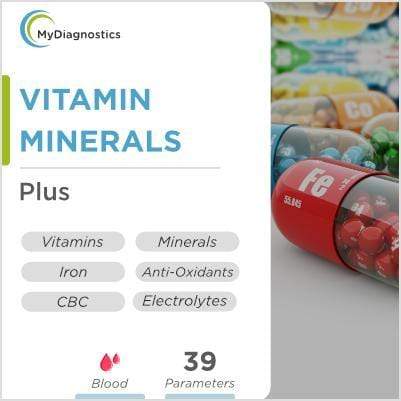
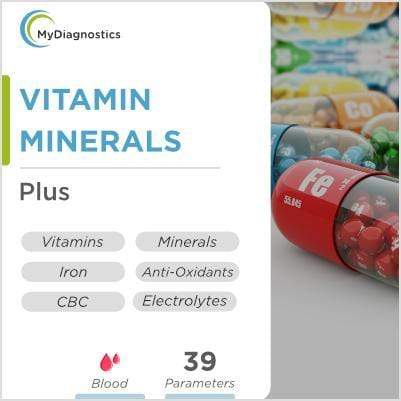
The Nutritional Deficiency Plus Test (39 parameters) is a comprehensive vitamin and mineral blood test that evaluates micronutrients, iron status, electrolytes, and blood health markers to detect hidden nutritional deficiencies.
Booking Grid:
-
Price: ₹3,699
-
Method: At-home
-
Turn Around Time: 2 days
According to the World Health Organization, more than 2 billion people worldwide suffer from micronutrient deficiencies. Hence, it is important to perform a H-prick blood test or a venous blood test for vitamin deficiency testing. Vitamin tests can be performed at home or in a clinic, depending on your preference. You can perform a finger-prick test on your own using a lancet.
The Vitamin and Mineral Blood Test at Home – Comprehensive Nutritional Deficiency Test (39 Parameters) is a detailed diagnostic test. It is designed to evaluate essential vitamins, minerals, and key biomarkers that influence overall health. Vitamin B12 and D are commonly included in vitamin test packages to assess deficiencies.
This test helps identify hidden micronutrient deficiencies that may affect energy levels, immunity, metabolism, and blood health. Early detection of deficiencies in vitamins such as B12, D, and essential minerals like iron, magnesium, and zinc can help prevent long-term health complications and support better dietary and lifestyle decisions.
This convenient at-home testing option allows individuals to monitor their nutritional health without visiting a laboratory, making proactive health management easier and more accessible.
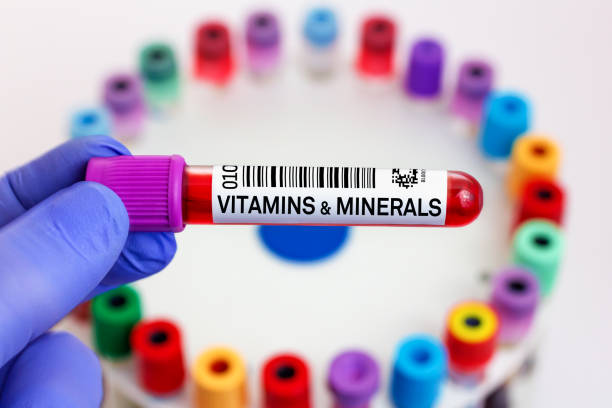
Test Overview: Nutritional Deficiency Plus Test
The Nutritional Deficiency Plus Test provides a comprehensive assessment of your nutritional health by evaluating essential vitamins and minerals. It helps identify essential micronutrient deficiencies that may affect overall health and metabolic function.
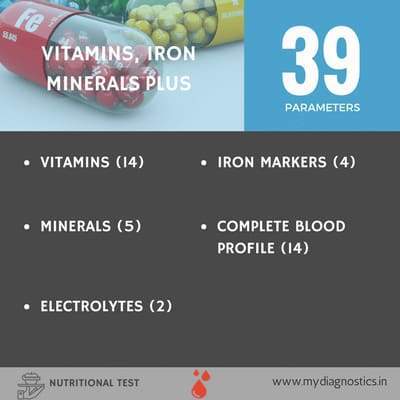
This advanced nutritional deficiency test analyzes 39 important biomarkers that reflect vitamin levels, mineral balance, iron status, electrolyte levels, and blood health indicators.
A micronutrient test measures essential vitamins and minerals required for normal cellular function, immune defense, hormone regulation, and energy production. Even mild nutrient deficiencies may affect physical performance, cognitive function, and metabolism.
The nutrition blood test provides a detailed overview of important biomarkers, including:
- Vital vitamins including Vitamin B12, Vitamin D and Folate.
- Important minerals and micronutrients.
- Iron profile indicators
- Electrolyte balance markers
- Parameters of complete blood count.
- Commonly tested nutrients include Vitamin D, Vitamin B12, Iron, Folate, Calcium, Magnesium, and Zinc.
This test measures specific vitamins and nutrient levels to identify deficiencies or excesses, allowing for targeted nutritional or medical interventions.
Deficiencies in essential vitamins and minerals can significantly affect multiple body systems.
- Energy levels- Low vitamin B12 or iron can lead to weakness and persistent fatigue.
- Immune action- Vitamin D and zinc are protective to the immune system.
- Metabolism- Micronutrients promote enzyme functions and metabolic routes.
- Blood health- Iron and folate are essential for the production of healthy red blood cells.
- Electrolyte balance- Sodium and potassium maintain water balance and nerve conduction.
Electrolytes such as sodium and potassium help regulate fluid balance, nerve signaling, and muscle function. Early detection of deficiencies through vitamin and mineral blood tests allows individuals to correct nutritional imbalances before they lead to long-term health complications.
This test plays a key role in preventive measures by allowing for early identification and correction of nutritional deficiencies.
Book your Nutritional Deficiency Plus Test online with MyDiagnostics for convenient home sample collection.
What Is a Nutritional Deficiency Blood Test?
A nutritional deficiency blood test is a diagnostic test conducted to determine the levels of vitamins, minerals, and other biomarkers to identify possible nutrient deficiencies in the body.
This type of nutrition profile test examines blood samples to determine whether the body is receiving adequate micronutrients required for normal physiological functioning.
There are various nutrition tests, which are:
Vitamin Blood Test
A blood test of vitamin levels, also known as a vitamin level test, measures the levels of certain vitamins like Vitamin B12, Vitamin D, and Folate. These are crucial nutrients required in nerve, immunity and the manufacturing of red blood cells. A vitamin level test is used to assess individual vitamin status and identify specific deficiencies.
Micronutrient Test
Micronutrient test is a test that assesses vitamins and minerals jointly to determine the deficiencies that could influence metabolism, muscle performance or the immune system.
Nutrition Profile Test
Nutrition profile test is a more general view of the nutritional condition of the body as it incorporates the vitamin markers, mineral levels, electrolyte balance and blood health indicators.
Blood tests are considered the most reliable way to identify vitamin and mineral deficiencies for several reasons:
- Blood reflects the current nutrient levels in the body.
- Laboratory analysis gives an accurate measurement of biomarkers.
- It assists in the detection of deficiencies before they start to manifest themselves.
Vitamin tests are especially important for individuals with specific risk factors for deficiencies, such as pregnant women and older adults.
The best method of assessing nutritional health and informing dietary or supplementary intervention is therefore a blood test for deficiencies of vitamins and minerals.
Vitamin deficiency tests play an important role in preventive healthcare because many individuals may unknowingly have micronutrient deficiencies.
Here is a clear comparison table explaining the differences between a vitamin blood test, micronutrient test, and nutrition profile test.
|
Test Type |
What It Measures |
Scope of Test |
Common Nutrients Included |
Purpose |
When It Is Recommended |
|---|---|---|---|---|---|
|
Vitamin Blood Test |
Measures the levels of specific vitamins in the blood. |
Narrow and targeted test focusing only on individual vitamins. |
Vitamin B12, Vitamin D, Folate, Vitamin B6, Vitamin A, Vitamin E. |
Identifies deficiencies in particular vitamins that affect nerve health, immunity, red blood cell production, and metabolism. |
Recommended when symptoms suggest a specific vitamin deficiency such as fatigue, anemia, nerve problems, or weakened immunity. |
|
Micronutrient Test |
Evaluates both vitamins and essential minerals required for cellular and metabolic functions. |
Broader than a vitamin test because it includes multiple micronutrients. |
Vitamins (B12, D, Folate) and minerals like Iron, Magnesium, Zinc, Calcium, Selenium. |
Detects deficiencies that may affect metabolism, muscle function, energy production, and immune response. |
Useful for individuals experiencing chronic fatigue, muscle cramps, poor immunity, or suspected nutrient imbalance. |
|
Nutrition Profile Test |
Assesses overall nutritional health using multiple biochemical markers. |
Most comprehensive test that includes vitamins, minerals, electrolytes, and blood health indicators. |
Vitamins, minerals, electrolytes (Sodium, Potassium), iron studies, hemoglobin, ferritin, and metabolic markers. |
Provides a complete overview of nutritional status and helps identify hidden deficiencies affecting overall health. |
|
What Does this Nutritional Deficiency Test Check?
The Nutritional Deficiency Plus Test is aimed at evaluating a number of key issues of nutritional and metabolic health by means of the analysis of the blood biomarkers. This test also checks markers related to energy metabolism, which is essential for maintaining overall health and preventing deficiencies.
The test of vitamin deficiency aids the healthcare provider and individuals to know whether the body is getting sufficient micronutrients that are necessary to ensure proper functioning.
The test evaluates the following areas of health
Diagnose Vitamin Deficiencies: The panel serves to test the deficiency of vitamins in the blood by detecting the levels of the vital vitamins B12, D, Folate, and vitamin E. Vitamin E is important for neurological health and immune function, making its measurement essential in a comprehensive vitamin profile test. These nutrients are essential for nerve function, immune defense, and cellular metabolism.
Assess Iron and Anaemia potential: The iron profile markers are useful in identifying iron deficiency, which is a widespread cause of fatigue and anemia. Iron levels also aid in the determination of iron storage and transport in the body.
Assess Electrolyte Balance: Electrolytes regulate fluid balance, nerve signalling, and muscle contractions. The cardiovascular and neurological functioning can be influenced by abnormal sodium or potassium levels.
Examine the Health Indicators of Blood: Complete Blood Count (CBC) markers give information on the oxygen-carrying capacity, immune cell functioning and platelet functioning.
Determine Micronutrient Imbalances: Micronutrient deficiency test aids in identifying nutritional imbalances, which are likely to disrupt metabolism, immunity, and energy production in cells.
Benefits of Taking a Nutritional Deficiency Test
Nutrient deficiency testing is a good way to obtain valuable health information that can be used to avoid the development of other complications in the long term due to the unrecognized deficiency of certain micronutrients.
This test is especially important for individuals at risk of bone disorders, such as weak bones and osteoporosis, as it helps identify deficiencies that may contribute to bone health problems.
Unexplained fatigue and hair loss may indicate deficiencies in vitamins like B12 or D. Common symptoms of vitamin deficiencies include fatigue, lack of energy, weakness, and dizziness.
Among the key advantages, there are:
- Early Diagnosis of Vitamin and Mineral Deficiencies: Low vitamin levels could be detected by a vitamin deficiency test before serious symptoms set in.
- Better Energy levels and Metabolism: Vitamin deficiencies may be corrected to enhance energy generation in the mitochondria and decrease fatigue.
- Increased Immune System: Vitamin D, zinc, and iron are some of the nutrients that are essential in the defense of the immune system and prevent infections.
- Long-Term Health Complications Prevention: Uncorrected deficiencies of nutrients can result in anemia, bone weakness, nerve damage or metabolic dysfunction.
- Bone Health and Strength: Vitamin D supports bone strength, bone health, and calcium absorption, which are vital for maintaining skeletal strength and preventing bone disorders.
- Individualized Nutrition and Supplement Counseling: The outcomes of the tests enable medical workers to prescribe specific dietary interventions and vitamin supplements on the basis of the unique nutritional requirements.
Parameters Tested in the Nutritional Deficiency Plus Test
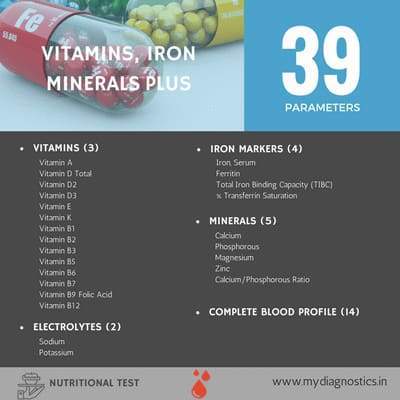
The Nutritional Deficiency Plus Test is a vitamin level test that measures vitamin and mineral levels in your blood to assess for deficiencies and support better health management. It measures 39 health parameters in a variety of biomarker categories that will give a complete picture of nutritional status and blood health.
Vitamin Profile Markers
These biomarkers measure vital vitamins which are used in energy production, the immune system, brain conditions and bone metabolism.
Markers include:
- Vitamin B12
- Vitamin D (25-OH)
- Folate
- Vitamin E
Vitamin E is important for neurological health and immune function and should be measured in a comprehensive vitamin profile test.
This type of vitamin profile blood test can be used to identify deficiencies that can cause fatigue, nerve issues, poor immunity, or bone issues. Regular vitamin screening can help ensure adequate micronutrient levels.
Mineral and micronutrient markers
Minerals and trace elements facilitate the functioning of enzymes, nerve transmissions, muscle contraction, and metabolism.
Key markers include:
- Magnesium
- Zinc
- Other trace minerals
A micronutrient blood test is used to determine mineral deficiencies that could have an impact on metabolism, immune health, and muscle performance.
These tests can also help identify issues with nutrient absorption, especially in individuals with digestive disorders such as celiac disease or Crohn's disease, or those with a history of gastrointestinal surgery.
Certain groups, such as pregnant women and older adults, often require different nutrient levels due to changes in absorption and nutritional needs. Routine vitamins and mineral tests are used to maintain optimum nutrition balance.
Iron Profile Markers
Iron biomarkers are also needed to identify iron deficiency and assess the risk of anemia. Certain imbalances in minerals and vitamin D metabolism may be associated with kidney stone formation.
If abnormal vitamin D levels or calcium metabolism issues are detected, such as in cases of osteoporosis or kidney stones, a parathyroid panel test may be recommended for further evaluation.
Markers include:
- Iron
- Ferritin
- Total Iron Binding Capacity (TIBC)
The vitamin and iron profile blood test measures iron storage, iron transport capacity, and the iron in circulation.
Electrolytes
Electrolytes help regulate fluid balance, nerve signalling, and muscle contractions.
Markers include:
- Sodium
- Potassium
Electrolyte blood tests help identify dehydration, electrolyte imbalances, and certain metabolic disorders.
Blood Health Markers (CBC)
Complete Blood Count (CBC) parameters will give information about the oxygen delivery, immune response, and the blood clotting ability.
Markers include:
- Hemoglobin
- RBC (Red Blood Cells)
- WBC (White Blood Cells)
- Platelet Count
A Complete Blood Count (CBC) helps detect anemia, infections, immune abnormalities, and other blood-related conditions.
|
Category |
Parameters (39 Total) |
|---|---|
|
Vitamin Profile |
Vitamin B12, Vitamin D (25-OH), Folate (Vitamin B9), Vitamin E |
|
Minerals & Micronutrients |
Magnesium, Zinc, Calcium, Phosphorus |
|
Iron Profile |
Serum Iron, Ferritin, Total Iron Binding Capacity (TIBC), Unsaturated Iron Binding Capacity (UIBC), Transferrin Saturation |
|
Electrolytes |
Sodium, Potassium, Chloride |
|
Complete Blood Count (CBC) |
Hemoglobin, Red Blood Cell Count (RBC), White Blood Cell Count (WBC), Platelet Count |
|
Red Blood Cell Indices |
Hematocrit (HCT/PCV), Mean Corpuscular Volume (MCV), Mean Corpuscular Hemoglobin (MCH), Mean Corpuscular Hemoglobin Concentration (MCHC), Red Cell Distribution Width (RDW) |
|
White Blood Cell Differential |
Neutrophils, Lymphocytes, Monocytes, Eosinophils, Basophils |
|
Platelet Indices |
Mean Platelet Volume (MPV), Platelet Distribution Width (PDW), Plateletcrit (PCT) |
|
Inflammation & Protein Markers |
ESR (Erythrocyte Sedimentation Rate), Total Protein, Albumin, Globulin, Albumin/Globulin Ratio |

Who should take this Vitamin and Mineral Blood Test?
A person's medical history can help determine the need for a vitamin test, as past health issues may increase the risk of deficiencies. The vitamin and mineral blood test is suggested for people who can possibly be exposed to micronutrient deficiencies or for people who desire to keep track of the nutritional health of the body.
Healthcare professionals can help interpret test results and recommend dietary or medical interventions based on the findings.
Certain health conditions, such as Crohn's disease and celiac disease, can impair nutrient absorption and increase the risk of deficiencies. Older adults are at risk of vitamin deficiencies due to reduced ability to absorb nutrients and dietary limitations.
Pregnant women and small children are at significant risk for nutrient deficiency due to their higher micronutrient needs. Individuals with limited sun exposure should consider testing for vitamin deficiencies, particularly vitamin D.
Patients with Deficiency Symptoms
Common symptoms of vitamin deficiencies include fatigue, lack of energy, weakness, and dizziness.
Vitamin deficiency test should be considered by people with symptoms of vitamin deficiencies, and they are:
- Chronic fatigue
- Hair loss
- Weak immunity
- Poor concentration
People with Dietary Restrictions or Nutritional Gaps
There are some eating habits that can predispose an individual to deficiencies.
This includes:
- Vegetarians
- Vegans
- People who have low-quality diets.
Individuals who lack vitamin intake due to dietary restrictions, such as pregnant women, are at higher risk for deficiencies. In fact, more than 30% of people are at risk of a vitamin deficiency.
Individuals with Medical Conditions
This group comprises those individuals with health needs that are not immediately evident. Certain illnesses may hamper the absorption of nutrients or raise the nutritional demands.
Digestive disorders, such as celiac disease or Crohn's disease, can impair nutrient absorption, increasing the risk of vitamin and mineral deficiencies.
This includes:
- Thyroid disorders
- Digestive disorders (which can affect nutrient absorption)
- Those persons are at high risk of anemia (for example, due to vitamin B12 and folate deficiencies, which can cause anemia, memory issues, and numbness)
Preventive Health Examination
The frequent vitamin checkups are also beneficial even with healthy people.
Preventive testing is useful in:
- Routine vitamin monitoring
- Early diagnosis of nutritional imbalances
- Primary preventive wellness testing
Incorporating preventive measures, such as regular vitamin and mineral tests, allows for early detection and timely intervention, which are key to preventing complications related to vitamin deficiencies.
Test Preparation Guidelines
The vitamin and mineral blood test results would be accurate when properly prepared.
Significant guidelines comprise:
- Sample necessary: Blood sample.
- Fasting: 10-12 hours suggested before testing.
- Avoid alcohol: Avoid excessive alcohol consumption within 24 -48 hours before testing.
- Keep hydrated: Take enough water prior to the collection of the sample.
These guidelines can be useful in ensuring that measurements of biomarkers are reliable.
How the At-Home Blood Test Works
It is easy and convenient to book a vitamin profile blood test home collection.
The process includes:
- Register the test online on the MyDiagnostics site.
- Choose a home sample collection slot based on your schedule.
- A registered phlebotomist comes to your house to collect samples.
- Blood samples are collected using sterile equipment to ensure a safe and comfortable procedure.
- The sample is transported to the laboratory using secure and temperature-controlled logistics.
- Electronic report provided between 24-48 hours.
This is a home-based blood test of nutritional deficiency that is convenient because it does not require a visit to a diagnostic facility. Most people would opt to use at-home lab testing in India due to comfort and safety.
Nutritional Deficiency Blood Test Price in India
The cost of blood test of vitamins and minerals in India depends on various factors, which may include the number of biomarkers, the technology of the lab and home sample collection. Book the Nutritional Deficiency Plus Test with MyDiagnostics for ₹3,699 with home collection.
Detailed panels including several vitamins, minerals, iron levels, blood health markers, and others, are usually more diagnostic than simple vitamin tests.
Test Price
-
MRP: ₹5,999
-
Discounted Price: ₹3,699
You can contact MyDiagnostics to get a detailed price idea.
What Influences Vitamin Profile Test Cost
The price of a vitamin profile test depends on several factors:
- Biomarkers contained in the panel.
- Accuracy of laboratory technology and testing.
- NABL quality standards and accreditation.
- Home sample collection services.
These aspects determine the end price of the vitamin deficiency test price, the vitamins and minerals test price and the general vitamin profile test price.
Why Choose MyDiagnostics for Nutritional Deficiency Testing
MyDiagnostics provides convenient at-home vitamin and mineral blood testing with certified laboratories and trained phlebotomists.
We offer reliable and easy-to-use testing services to assist people in tracking and enhancing their health in terms of nutrition.
NABL-Certified Diagnostic Laboratory
Scientific laboratory, certified by NABL. The test is conducted in an NABL-certified laboratory, which guarantees standard procedures and quality control as well as valid diagnostic outcomes.
Home Sample Collection by Certified Phlebotomists
Qualified phlebotomists collect blood samples in a safe, clean and painless way in your home.
Comprehensive 39-Parameter Nutritional Panel
The Nutritional Deficiency Plus Test is more informative than simple vitamin tests as it examines 39 biomarkers.
Fast and Reliable Digital Reports
Digital test reports are provided in 24-48 hours, and you can access your health data easily.
Simple Online Booking
Within a few minutes, users can order a vitamin and mineral blood test online on the MyDiagnostics website.
Service Areas for At-Home Nutritional Deficiency Testing
MyDiagnostics offers the services of at-home nutritional tests in key Indian cities. Temperature-controlled logistics are used to ensure sample integrity during transport.
Major Service Cities are:
Book Your Vitamin and Mineral Blood Test
The Nutritional Deficiency Plus Test is a supplement that allows you to take charge of your nutritional health.
Benefits include:
- Convenient at-home blood sample collection.
- Proper testing in a laboratory that is certified by NABL.
- Quick electronic reports in 24-48 hours.
Book your Nutritional Deficiency Plus Test today to detect vitamin and mineral deficiencies early and take control of your health.
With MyDiagnostics, you can conveniently order a vitamin and mineral blood test online and then get sound health information from the comfort of your home.


