Offer
Provide additional details about the offer you're running.
FLASHSALE


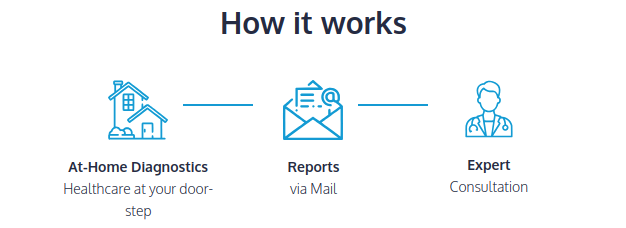
MyDiagnostics offers a 14-day CGM (continuous glucose monitor) in Delhi for ₹4,999. A trained technician applies the Abbott FreeStyle Libre Pro sensor patch to your upper arm at home. It records glucose every 15 minutes (1,344 readings) for 14 days with no daily finger pricks. The technician removes it, and you get a glucose pattern report within 24 hours to review with your doctor. Book online or call 080-4716-6161.
Sample Required: None
Test Mode: At Home
Turn Around Time: 24 Hours
Fasting Time: None
Other Instructions: None
Recommended for: Type 1/2 Diabetics, Pre-diabetes
The CGM price in Delhi is ₹4,999 at MyDiagnostics, including the professional sensor service and report. WHO emphasises that diabetes technologies should be safe, quality-assured and affordable, making transparent pricing an important part of access to diabetes technology.
The cost can be lower than buying a complete consumer CGM setup because this is a professional, service-based assessment rather than a device-ownership package. You receive the sensor application, monitoring period, data retrieval and report without needing to purchase equipment for ongoing personal use. Book CGM at Home from MyDiagnostics.
A CGM is a wearable glucose-monitoring device that uses a small sensor on the upper arm to measure glucose in the fluid beneath the skin. Abbott's FreeStyle Libre Pro is a professional glucose-monitoring system designed for healthcare-professional review, with the sensor worn for up to 14 days.
The FreeStyle Libre Pro records glucose measurements at 15-minute intervals, providing 1,344 measurements over 14 days in the commonly described professional CGM configuration.
The sensor is water-resistant for normal use. Abbott's India information describes the sensor as water-resistant up to 1 metre for up to 30 minutes.
As this is a blinded professional CGM, you can not use it like a consumer CGM that continuously displays readings on your phone.
Is It Needle-Free or Non-Invasive?
A CGM does not require daily finger-prick testing, but it is not technically non-invasive. The application introduces a thin, flexible filament just beneath the skin. Abbott describes the FreeStyle Libre Pro filament as approximately 5 mm long and 0.4 mm wide.
The application is generally brief and may feel like a quick pinch or pressure rather than a prolonged injection. The CDC similarly notes that CGM insertion may feel like a quick pinch and that most people do not feel the sensor once it is in place.
During the 14-day wear period, you do not need repeated blood draws or routine daily finger pricks solely to operate the professional CGM. However, CGM readings and blood-glucose readings can differ, so people using insulin should continue to have access to an appropriate blood-glucose meter and follow their clinician's instructions.
For searches such as needleless, prickless, without blood and non-invasive glucometer, it is important to distinguish marketing terminology from the technology itself. The current professional CGM is minimally invasive, not completely non-invasive.
Your continuous sugar test at home in Delhi includes the sensor and the professional service required to complete the 14-day monitoring cycle.
The aim is to make the process convenient by bringing application and removal to your home rather than requiring repeated clinic visits.
The report is intended to help you and your healthcare professional understand glucose patterns rather than serve as a standalone diagnosis.
The ADA's 2026 Standards recognise CGM metrics and 10–14-day assessments as useful for evaluating glycaemic status in appropriate people with diabetes.
The home application process is designed to cover the complete monitoring cycle from sensor placement to data download. The technician brings the required sensor and applies it professionally at your home.
The application itself is normally a short procedure. The CDC recommends cleaning the sensor site and allowing it to dry completely before CGM application because lotion or moisture can affect sensor adhesion.
During the monitoring period, keeping a simple diary of meals, exercise, sleep and medicines can provide useful context when glucose patterns are reviewed. CGM data can show patterns that occasional glucose checks may miss, including changes around meals and overnight.
Your CGM report can include an Ambulatory Glucose Profile (AGP) and graphical representations of glucose patterns across the monitoring period. Abbott describes AGP as a visual summary that helps healthcare professionals review glucose levels, trends and patterns.
Depending on the reporting software and clinical review, the report can include time in range, average glucose, glucose management indicator (GMI), variability, time above range and time below range. The ADA identifies time in range and related CGM metrics as useful measures of glycaemic status.
Daily graphs can help identify recurring patterns such as overnight lows, morning rises or post-meal glucose excursions. These observations should be interpreted alongside your medical history, medications and other glucose measurements rather than used independently to change treatment.
To book the service, select the CGM package online or call 080-4716-6161 and request a home application appointment. You can then choose an available date and service slot, after which the technician visits your address with the sensor and performs the application.
Fasting is not required for sensor application. Before the visit, wear loose sleeves and avoid applying lotion or moisturiser to the intended sensor area because the application site should be clean and completely dry.
CGM home application can be offered across covered parts of South Delhi, West Delhi, North Delhi, East Delhi and Central Delhi, subject to technician availability and address confirmation.
NCR coverage: Gurugram, Noida, Ghaziabad and Faridabad are also serviceable areas.
CGM can be particularly useful when a healthcare professional wants more information about glucose patterns than occasional measurements can provide.
The ADA's 2026 Standards identify CGM as particularly useful for people with diabetes who are at risk of hypoglycaemia and type 2 diabetes.
People with type 1 or type 2 diabetes may use professional CGM data to help assess how current treatment, meals and daily routines are affecting glucose.
The American Heart Association also notes that people with diabetes may use home glucose monitors or CGMs to monitor glucose between healthcare visits.
A professional CGM may also be considered when someone has unexplained highs or lows, elevated HbA1c despite apparently acceptable fasting readings, or wants a more detailed picture of glucose responses.
For gestational diabetes, CGM should be used under appropriate medical guidance because pregnancy-specific glucose targets and treatment decisions require clinical supervision. Similarly, people using insulin should not change insulin doses solely from this report without following their clinician's instructions.
A CGM and a glucometer answer related but different monitoring needs. A glucometer provides individual blood-glucose measurements, while CGM captures repeated glucose measurements over time and can reveal patterns that isolated checks may miss.
|
Feature |
14-Day CGM |
Glucometer |
|
Readings |
Repeated measurements throughout wear period |
Individual checks |
|
Finger pricks |
No routine daily finger pricks for CGM operation |
Usually required |
|
Night-time pattern |
Captures overnight data |
Only if you test overnight |
|
Meal-related patterns |
Shows trends across the day |
Depends on when you test |
|
Pattern analysis |
Strong |
Limited by testing frequency |
|
Best for |
14-day glucose-pattern assessment |
Point-in-time blood glucose checks |
The ADA specifically states that people using CGM should still have access to blood-glucose monitoring, particularly where blood glucose checks are clinically required.
Therefore, a professional 14-day CGM complements rather than automatically replaces a glucometer. This distinction is particularly important for people using insulin or those who need confirmatory blood-glucose testing when CGM readings do not match symptoms or clinical circumstances.
For people searching for the best prickless blood sugar monitor in Delhi, a professional CGM can substantially reduce routine finger-prick testing during the monitoring period.
MyDiagnostics brings the professional CGM process to your home, reducing the need to travel to a clinic for sensor application and removal. The service uses an Abbott FreeStyle Libre Pro professional CGM, which is designed to collect glucose-pattern data for retrospective clinical review.
The service is structured around professional application, 14-day monitoring, sensor removal, data download and a report. Abbott describes FreeStyle Libre Pro as a professional system that provides healthcare professionals with glucose data and an AGP-style view of glucose patterns.
Choose MyDiagnostics for the following reasons;
Genuine Abbott FreeStyle Libre Pro sensor
Professional home application
Home sensor removal
14-day glucose-pattern assessment
PDF report after data download
Convenient Delhi home service
Medical-grade glucose-monitoring technology
Results that can be shared with your treating doctor
Book your CGM at home with MyDiagnostics and discuss the report with your doctor before changing medicines, insulin, or treatment.


