Offer
Provide additional details about the offer you're running.
FLASHSALE


MyDiagnostics offers a 14-day CGM test in Jaipur for ₹4,999. A trained practitioner applies a FreeStyle Libre Pro sensor patch to the back of your upper arm at home. It records glucose every 15 minutes (1,344 readings) with no daily finger pricks.
The service uses an Abbott FreeStyle Libre Pro professional CGM sensor, which records glucose in interstitial fluid every 15 minutes over 14 days—and is reviewed after the wear period. This is a blinded professional CGM: you cannot view live glucose readings on your phone during the monitoring period. The digital report is delivered within 24 hours of sensor removal.
CGM data can help you and your healthcare professional review glucose patterns, including possible hypoglycaemia (low glucose) and hyperglycaemia (high glucose). It does not replace medical diagnosis or personalised treatment advice.
The MyDiagnostics 14-day CGM service costs ₹4,999 in Jaipur and includes one Abbott FreeStyle Libre Pro sensor, professional home application, and a clinician-reviewed digital report.
What is included:
One single-use, 14-day Abbott FreeStyle Libre Pro sensor.
Professional sensor application at home, subject to confirmation of the address and appointment slot.
Clinician-reviewed digital report with glucose trends, time-in-range and glucose variability.
Report delivery within 24 hours after sensor removal.
Home sensor removal: Home sensor removal is included in the ₹4,999 package.
The service does not include ownership of a reusable CGM reader or sensor. No separate reader purchase is required for this blinded professional CGM service.
Payment, cancellation and refund terms are governed by MyDiagnostics’ booking policy.
**Book your 14-day CGM — ₹4,999**
The MyDiagnostics offer is a 14-day glucose-monitoring service, not a purchase of a reusable glucose-monitoring machine.
A CGM sensor measures glucose in interstitial fluid through a small filament beneath the skin. The sensor is worn for its specified period and then removed. The professional Libre Pro service is intended for retrospective clinical review rather than live personal monitoring.
To book a continuous sugar test at home in Jaipur, place an online order or call MyDiagnostics at +91 08047166161, then confirm address coverage and the appointment slot.
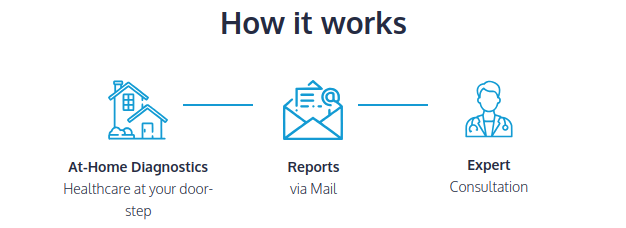
1. Book your CGM service: Place your order online or call +91 08047166161 to request CGM sensor application at home in Jaipur.
2. Confirm your appointment: The team confirms your address, home-visit date and available time slot.
3. Get the sensor applied: A qualified practitioner applies the sensor to the recommended site. Follow the device instructions provided by the practitioner.
4. Wear the sensor and receive your report: Wear the sensor for 14 days. Arrange removal according to the confirmed package terms. Your clinician-reviewed digital report is delivered within 24 hours after removal.
**Book your 14-day CGM — ₹4,999**
Home CGM application is arranged only after MyDiagnostics confirms service availability for your complete Jaipur address.
Enter your locality and PIN code when booking, or call +91 08047166161 to confirm coverage and appointment availability. Unverified locality names have been removed rather than presented as confirmed service areas.
A qualified practitioner applies the sensor at home when your address and appointment are confirmed.
If you prefer a clinic visit, contact MyDiagnostics to confirm whether a participating clinic is available in Jaipur and request its verified address and appointment details.
A wearable CGM patch is a small sensor worn on the skin that tracks glucose trends throughout its wear period.
The sensor measures glucose in interstitial fluid using a fine filament just beneath the skin. Unlike a conventional glucometer, which measures blood glucose from a finger-prick sample at a single point in time, CGM data can show patterns across the day and night.
How Does a Glucose Monitor Patch Work?
The sensor sits on the skin and measures interstitial glucose at regular intervals during the wear period.
Wearable design: The sensor is attached to the back of the upper arm by a trained practitioner.
Recording: The service described here uses a 15-minute interval, equivalent to 1,344 readings over 14 days; confirm against the exact sensor model before publishing.
Everyday activities: Follow the specific manufacturer instructions for showering, exercise and water exposure.
MyDiagnostics’ Jaipur service uses Abbott FreeStyle Libre Pro professional CGM: the data are blinded to the wearer during monitoring and are reviewed by a clinician afterward.
Professional CGM is designed to collect glucose data for retrospective review. Personal CGM systems may provide readings to the wearer through a compatible phone or reader, depending on the model. These are different device categories and should not be described interchangeably.
|
Feature |
Professional CGM (FreeStyle Libre Pro) |
Personal CGM |
|
Who reviews the data? |
A healthcare professional reviews glucose data after the monitoring period |
The wearer can review glucose readings and trends, depending on the device |
|
Live phone readings |
No. Readings are blinded to the wearer during monitoring |
May be available through a compatible smartphone app or reader, depending on the model |
|
Typical purpose |
Helps healthcare professionals identify glucose patterns, including potential highs and lows |
Supports ongoing personal glucose monitoring and self-management, depending on the device |
Confirm the exact sensor model with the operations team before publishing this section. If the service uses FreeStyle Libre Pro, describe it as professional CGM monitoring with clinician review rather than promising live readings on the user's phone. If it uses a personal FreeStyle Libre sensor, explain the compatible app or reader requirements instead.
CGM can show glucose trends without a separate finger-prick sample for every reading, but it is not completely non-invasive.
The sensor applicator inserts a fine filament just beneath the skin. CGM measures interstitial glucose, which can lag behind blood glucose when levels are changing rapidly. Keep access to a conventional blood glucose meter if your healthcare professional or device instructions advise confirmatory testing. The US FDA has warned consumers not to rely on smartwatches or smart rings that claim to measure glucose without piercing the skin.
A CGM is useful for understanding glucose patterns over time, while a glucometer is useful for checking blood glucose at a specific moment; the appropriate choice depends on clinical needs.
|
Feature |
14-Day Professional CGM |
Conventional Glucometer |
|
Measurement |
Measures interstitial glucose to track glucose trends |
Measures blood glucose at the time of testing |
|
Recording frequency |
Records glucose data at 15-minute intervals for the service described here |
Provides a separate reading each time a test is performed |
|
Finger pricks |
No routine finger-prick blood sample is needed for each CGM record |
Usually requires one finger prick per test |
|
Night-time patterns |
Helps identify overnight glucose trends and fluctuations |
Measures glucose only when a test is performed |
|
Live readings to the wearer |
No. Libre Pro is a blinded professional CGM, so the wearer cannot view glucose readings in real time |
Displays the blood glucose result immediately after testing |
A conventional glucometer provides a spot measurement and may miss glucose changes between tests.
Each test usually requires a new finger-prick sample, and overnight changes may go unnoticed unless a test is performed. A CGM provides more data about trends, but costs more upfront, requires wearing a sensor and measures interstitial rather than blood glucose. CGM results can differ from blood glucose readings, particularly when glucose levels are changing quickly.
The report summarises glucose patterns and may include time-in-range, time below range, time above range, glucose variability and an Ambulatory Glucose Profile (AGP).
For many non-pregnant adults with diabetes, the International Consensus on Time in Range gives the following reference targets. Targets must be individualised by a healthcare professional.
Time in Range (70–180 mg/dL): greater than 70%.
Time Below Range (below 70 mg/dL): less than 4%.
Time Below Range (below 54 mg/dL): less than 1%.
Time Above Range (above 180 mg/dL): less than 25%.
Coefficient of Variation (CV): 36% or lower.
Pregnancy uses a tighter target range of 63–140 mg/dL; pregnancy-specific targets and interpretation should be set by the treating clinician. Glucose Management Indicator (GMI) is an estimate derived from sensor glucose and is not the same as a laboratory HbA1c result.
These are consensus reference targets, not a diagnosis or a guarantee that an individual’s results should match them.
A clinician may recommend a 14-day CGM assessment to understand glucose patterns, including possible hypoglycaemia or hyperglycaemia.
It may help some people with type 1 or type 2 diabetes, people using medicines that can cause low glucose, or people whose clinician wants to assess glucose trends. CGM may also be considered in selected cases of prediabetes or for lifestyle-related questions, but it should not be used to diagnose or treat a condition without appropriate clinical guidance. Use during pregnancy or in children should be discussed with a doctor.
Why Book Your CGM with MyDiagnostics in Jaipur?
MyDiagnostics offers a ₹4,999 professional CGM service with home application by a qualified practitioner and a clinician-reviewed digital report.
The service is designed to make short-term glucose pattern assessment more convenient. CGM technology should be selected for an individual’s circumstances and needs, with training and interpretation from a healthcare professional.
Follow the sensor manufacturer’s instructions and the practitioner’s guidance throughout the monitoring period.
Before application: Fasting is generally not required for sensor placement unless your clinician gives different instructions.
MRI, CT or X-ray: Tell the healthcare team that you are wearing a CGM sensor and follow the exact device instructions about removal before imaging.
If the sensor loosens or falls off: Do not reinsert or reattach it. Contact MyDiagnostics to ask about replacement options and any charges.


