Offer
Provide additional details about the offer you're running.
FLASHSALE


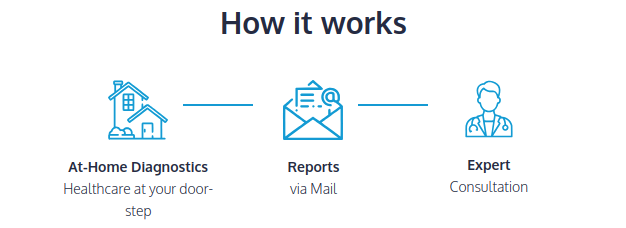
A CGM (continuous glucose monitor) is a wearable sensor patch that records your glucose every 15 minutes for 14 days without repeated finger pricks. MyDiagnostics offers a 14-day CGM sensor in Kolkata for ₹4,999, including home application by a trained practitioner, removal, and a glucose report within 24 hours of removal. Book online or call 080-471-66161.
Sample Required: None
Test Mode: At Home
Turn Around Time: 24 Hours
Fasting Time: None
Other Instructions: None
Recommended for: Type 1/2 Diabetics, Pre-diabetes, Athletes, Weight Loss
The CGM sensor price in Kolkata is ₹4,999, including the 14-day sensor service and the listed home-application and reporting components.
Continuous glucose monitoring (CGM) measures glucose in interstitial fluid beneath the skin and can provide a broader picture of glucose patterns than isolated finger-prick measurements.
The American Diabetes Association recognises CGM metrics such as time in range, time above range and time below range as useful measures of glycaemic status. You can buy a continuous sugar test at home in Kolkata for your daily glucose level monitoring.
The ₹4,999 package is designed as an end-to-end 14-day CGM service rather than a sensor-only purchase. The sensor is applied at home by a trained practitioner, followed by the agreed mid-wear check, sensor removal and report delivery.
|
Included service |
What you receive |
|---|---|
|
CGM sensor |
14-day glucose sensor |
|
Application visit |
Practitioner visit at home for sensor application |
|
Mid-wear check |
Follow-up/check during the wear period |
|
Sensor removal |
Practitioner-assisted sensor removal |
|
CGM report |
Glucose-pattern report after the monitoring period |
Booking a CGM sensor application at home in Kolkata is designed to combine the sensor supply, professional application and follow-up into one service. You can book online or call the service team, after which the available appointment slot is confirmed.
Book your CGM service with MyDiagnostics today and track your glucose patterns conveniently from home. Call MyDiagnostics at 080-4716-6161 to check availability and book your home CGM appointment.
A mid-wear check provides an opportunity to identify practical issues with sensor adhesion, wear and data collection during the 14 days.
The sensor should remain on the back of the upper arm for the manufacturer's specified wear duration; Abbott states that its FreeStyle Libre sensor is designed for up to 14 days of wear.
At the end of the monitoring period, the sensor is removed according to the service protocol and the collected data are used for the final report. Customers should not extend sensor wear beyond the manufacturer's stated period.
A CGM uses a small wearable sensor positioned on the back of the upper arm, with a thin flexible filament positioned just beneath the skin to measure glucose in interstitial fluid.
The device is therefore different from a glucometer, which measures glucose from a blood sample. The CDC describes CGMs as wearable devices that use a tiny tube to monitor glucose from interstitial fluid beneath the skin.
For the monitoring protocol described on this page, glucose data are collected at 15-minute intervals, giving 96 readings per day and 1,344 readings across 14 days.
This continuous pattern can show overnight changes, post-meal rises, and periods of higher or lower glucose that isolated spot checks may miss. The ADA notes that 10–14 days of CGM data can be useful for assessing time in range and other glycaemic metrics when sufficient sensor data are available.
You can generally shower, exercise and sleep while wearing a compatible FreeStyle Libre sensor, subject to the specific model's manufacturer instructions. The sensor must be removed before MRI, CT or diathermy.
Abbott states that its sensor can be worn while bathing, showering, swimming and exercising and advises against submerging it deeper than 1 metre or for more than 30 minutes.
For sleep, position and clothing should allow the sensor to remain undisturbed on the upper arm. During exercise, avoid deliberately hitting, pulling or pressing the sensor, particularly during contact activities.
For travel or medical imaging, check the specific manufacturer's instructions because some procedures, including certain imaging or radiation procedures, may affect CGM devices.
For FreeStyle Libre Pro, the wearer may not have access to the sensor's glucose data through the consumer FreeStyle LibreLink app; Abbott specifically states that LibreLink does not display data from FreeStyle Libre Pro sensors.
In that professional-monitoring model, the main output is the report generated after sensor removal rather than live readings viewed by the wearer. If the supplied device is a consumer Libre model instead, readings may be available through the compatible reader or app, depending on the model.
A CGM is minimally invasive, not completely non-invasive. A small applicator places a thin filament just beneath the skin during the initial application, after which the wearer does not need repeated finger-prick blood samples for routine sensor readings.
The CDC confirms that CGMs measure glucose from interstitial fluid rather than directly from a finger-stick blood sample. Most people tolerate sensor application well, although there can be brief discomfort, pressure or a small amount of bleeding at insertion.
CGM and finger-prick testing answer related but different monitoring needs. CGM provides a sequence of glucose measurements over time, while a glucometer provides a blood-glucose result at the moment a person performs a test.
The AHA notes that people with diabetes may use either home glucose monitors or CGMs and recommends discussing the appropriate monitoring method with a healthcare professional.
A finger-prick check can still be important when a CGM result does not match symptoms or when the device's instructions recommend confirmation. The FDA similarly advises checking blood glucose with a fingertip test when readings do not match how a person feels in relevant circumstances.
Devices marketed as completely non-invasive glucose monitors should not automatically be treated as equivalent to validated CGMs or blood-glucose meters. WHO's current diabetes-technology work emphasises the importance of safe, quality-assured and affordable devices for diabetes management.
A validated CGM measures glucose from interstitial fluid using a sensor placed under the skin, so it is not technically non-invasive. MyDiagnostics therefore focuses this service on an established CGM-based monitoring approach rather than making unsupported claims about completely non-invasive glucose measurement.
A glucometer is designed for individual blood-glucose checks using a blood sample and test strip, whereas a CGM is designed to collect glucose information repeatedly during sensor wear. The difference is particularly relevant when the goal is to identify patterns around meals, sleep, activity or other daily events.
WHO recognises both glucose meters and other diabetes technologies as components of diabetes monitoring, while the ADA provides specific clinical metrics for interpreting CGM data.
|
Factor |
14-day CGM |
Glucometer |
|---|---|---|
|
Readings |
Every 15 minutes under this service protocol; 1,344 over 14 days |
One reading per prick |
|
Finger pricks |
None required for routine CGM collection after application |
Required for each blood-glucose test |
|
Overnight patterns |
Captured automatically during sensor wear |
Missed unless a person wakes and tests |
|
Post-meal patterns |
Can show glucose changes over time |
Requires testing around meals |
|
Main use |
Finding glucose patterns and trends |
Spot checks and blood-glucose measurements |
|
Consumables |
Sensor |
Strips and lancets |
The two technologies are not necessarily competitors: some people may use both depending on their treatment plan and healthcare professional's advice. A CGM reading represents interstitial glucose, which can differ from blood glucose, particularly when glucose is changing rapidly.
CGM can be particularly useful for people with type 1 diabetes, people with type 2 diabetes who use insulin, and people who need more information about glucose patterns or hypoglycaemia.
The ADA states that CGM is particularly useful for people at risk of hypoglycaemia and supports its use across several diabetes populations.
A short-term CGM assessment may also be considered for people with prediabetes, unexplained glucose highs or lows, metabolic-health goals, weight-management tracking or athletic performance monitoring, depending on the clinical purpose.
These uses should not be presented as a diagnosis or as a replacement for standard diabetes testing. The CDC notes that CGMs are increasingly used by people with diabetes and, in some circumstances, by people interested in nutrition, health or fitness information.
Speak with your doctor before using CGM to make medication, insulin or treatment changes, particularly if you have diabetes or experience recurrent high or low glucose.
A 14-day CGM report can summarise average glucose, time in range, time above range, time below range and glucose patterns across different periods of the day. The ADA identifies 70–180 mg/dL as the standard time-in-range band used for many adults with diabetes, while individual treatment targets can differ.
The report can also help identify post-meal rises, overnight patterns and periods when glucose repeatedly moves outside the target range, improving understanding of how glucose changes through the day. These patterns can provide useful information for discussion with a healthcare professional but should not be interpreted independently as a diagnosis.
CGM metrics should be considered alongside the person's medical history, symptoms, medication and other laboratory results, and in some cases CGM may also be used for gestational diabetes under a doctor's guidance.
MyDiagnostics combines a 14-day CGM sensor with professional home application, follow-up and report delivery, allowing customers to complete the monitoring process without making repeated clinic visits.
The service is structured around a practitioner-applied sensor and a report designed to show glucose patterns over the monitoring period. The CDC and ADA both recognise CGM as a useful technology for collecting and interpreting glucose information in appropriate users.


