Offer
Provide additional details about the offer you're running.
FLASHSALE


MyDiagnostics offers a 14-day FreeStyle Libre Pro professional CGM service by Abbott in Mumbai for ₹4,999, including sensor application at home and removal. The small wearable glucose monitor is placed on the back of the upper arm and measures glucose in interstitial fluid through a thin filament beneath the skin.
The sensor stores glucose readings at 15-minute intervals, with Abbott specifying up to 1,340 readings over 14 days. It helps reduce the need for routine finger-prick testing during the monitoring period, although a finger-prick check may still be needed in certain circumstances. We provide the recorded glucose data in a report within 24 hours after sensor removal and successful data retrieval.
Continuous glucose monitoring can complement HbA1c and conventional glucose testing, but it does not replace medical diagnosis or professional advice. The American Diabetes Association recognises 10–14 days of CGM data, with adequate sensor wear, as useful for assessing glycaemic status in appropriate clinical settings.
The FreeStyle Libre Pro 14-day CGM service by Abbott costs ₹4,999 in Mumbai. We provide the sensor, professional home application, sensor removal and glucose report as part of the service. The report is delivered within 24 hours after removal and successful data retrieval.
Before booking, confirm the appointment location and the precise service inclusions, particularly whether a mid-wear check or an alternative removal arrangement is available.
|
Service component |
What's included |
|---|---|
|
CGM sensor |
A wearable sensor intended for a monitoring period of up to 14 days |
|
Home application |
Sensor placement by a trained professional |
|
Mid-wear check |
Confirm availability when booking; do not assume it is included |
|
Sensor removal |
Home removal as listed for the service; confirm the appointment arrangements |
|
CGM report |
A report generated from the recorded glucose data |
|
Doctor review |
Confirm the scope of the doctor review and report delivery arrangements before booking |
We offer the 14-day monitoring service for ₹4,999, including professional home application and removal. The 24-hour report turnaround begins after sensor removal and successful data retrieval, not after the initial application appointment.
In this professional CGM service, you are paying for a single-use wearable sensor and the associated application, removal, and reporting service, rather than a separate machine for home use. The sensor records glucose data during the wear period, which can subsequently be reviewed to identify patterns.
Professional CGM systems may be designed to collect data for a healthcare professional to interpret after the monitoring period.
We use the FreeStyle Libre Pro professional CGM system by Abbott. It is a blinded monitoring system: glucose data are recorded by the sensor and retrieved for professional review after the monitoring period. You cannot rely on it to display live glucose readings or alerts on your personal smartphone during the 14-day wear period.
A self-applied consumer CGM and a professionally applied CGM can both help users understand glucose patterns, but the overall experience differs.
Consumer systems may offer access to readings through a compatible smartphone or reader, whereas professional systems may collect data for later review by a healthcare professional. Application support, report interpretation, and removal arrangements can also differ between services.
|
Feature |
Self-applied consumer CGM |
Professional CGM service |
|---|---|---|
|
Sensor application |
Usually performed by the user according to the instructions |
Performed by a trained professional |
|
Access to readings |
Depends on the device; some provide live readings |
May be blinded, with data reviewed after wear |
|
Data interpretation |
User can review available data, with clinical support when needed |
Data can be reviewed by a healthcare professional |
|
Application support |
Depends on the seller or service |
Included when specified in the service |
|
Removal |
Usually performed by the user according to device instructions |
May be included as part of the booked service |
|
Cost comparison |
Depends on the sensor, starter kit, replacements, and accessories |
Consider the complete service price and its inclusions |
If you want to buy a continuous glucose monitor in Mumbai, first decide whether you need a personal CGM with live readings or a professional CGM for retrospective glucose analysis.
A self-applied consumer CGM may provide readings through a compatible phone or reader. Our FreeStyle Libre Pro service is designed for professional monitoring, with home application, post-monitoring data retrieval and a glucose report.
A completely non-invasive glucose monitor measures glucose without inserting a filament beneath the skin or collecting a blood sample. However, the FreeStyle Libre Pro is not a completely non-invasive device. It uses a small filament inserted just beneath the skin to measure interstitial glucose.
It can reduce the need for repeated finger-prick testing, but it should not be advertised as a sugar testing machine without blood because sensor insertion is still required.
On February 21, 2024, the US FDA issued a safety communication warning consumers against using unauthorised smartwatches and smart rings that claim to measure blood glucose independently without piercing the skin.
You can book the FreeStyle Libre Pro CGM service online through MyDiagnostics or call 080-4716-6161. We arrange professional sensor application at home in Mumbai for eligible PIN codes. If you are looking for diabetes check machine home delivery, this service provides home sensor application rather than delivery of a standalone glucometer or CGM machine.
Open the CGM service page, select the service, and provide your contact details and Mumbai PIN code so the team can reach out to confirm your requirements and appointment details. You can also call 080-4716-6161 to ask about the price, appointment slots, and the home application process. Confirm the final price and the included services before placing your order.
Share relevant information about your diabetes history, current medicines, reason for testing, and any concerns about low or high glucose. A doctor or the designated clinical team can review the details and advise whether professional CGM monitoring is appropriate. Do not change insulin doses or other diabetes medicines solely on the basis of a CGM booking or report without medical advice.
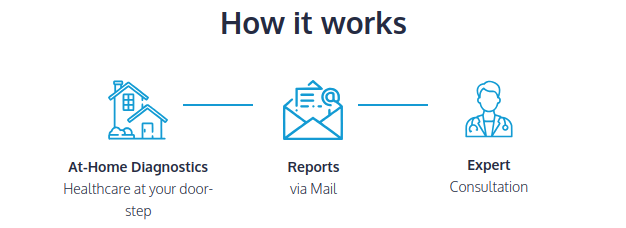
A trained professional visits your home at the confirmed appointment time and prepares the application site on the back of your upper arm. The sensor is placed using its applicator, which is inserted beneath the skin with a thin, flexible filament and secures the sensor to the surface.
Application generally takes only a few minutes, although the complete visit may take longer. Some CGM systems are also inserted in the fatty tissue of the abdomen, but this service is applied to the upper arm.
After placement, the sensor may require a warm-up period before recording usable data. Follow the instructions provided for the specific device and ask the professional when the monitoring period begins, as monitoring starts once the sensor begins to measure glucose levels.
Wear the sensor for the prescribed monitoring period and follow the device's instructions for bathing, exercise, and skin care. The sensor helps track glucose patterns through meals, physical activity, sleep, and daily routines. Avoid pulling at the patch or placing pressure on the sensor, and contact the service team if it loosens or becomes uncomfortable.
Arrange removal according to the appointment instructions, generally after the 14-day monitoring period has finished. The recorded data are then downloaded or retrieved, processed, and presented in a report for clinical interpretation. The listed service turnaround is 24 hours; confirm whether that period begins after removal and successful data processing.
Home application depends on the service team's actual coverage and available appointments, so the service should be confirmed using your PIN code before booking. You can ask the booking team to confirm whether your specific address is serviceable and whether any additional travel or appointment charges apply.
|
Area or locality |
Booking guidance |
|---|---|
|
Andheri |
Confirm service availability by PIN code |
|
Bandra |
Confirm service availability by PIN code |
|
Powai |
Confirm service availability by PIN code |
|
Thane |
Confirm separately; coverage may depend on the service zone |
|
Navi Mumbai |
Confirm separately; coverage may depend on the service zone |
|
Other Mumbai suburbs |
Share your PIN code for confirmation |
We provide home application only at addresses covered by our active service network. Thane and Navi Mumbai should be treated as separate coverage zones unless the operations team confirms otherwise.
The FreeStyle Libre Pro sensor is applied using an applicator that inserts a thin, flexible filament just beneath the skin. There is no conventional blood draw during application, and most people experience only a brief pinch. However, the procedure is not completely painless, and temporary discomfort, irritation or adhesive reactions are possible.
The sensor measures glucose in interstitial fluid, the fluid surrounding cells just beneath the skin, rather than directly measuring glucose in a blood sample. Glucose levels in interstitial fluid can lag behind blood glucose changes, especially when glucose levels are changing rapidly. Follow the device instructions and your clinician's advice about when a finger-prick check may still be necessary.
The applicator makes sensor placement quick, but the sensor filament still enters the skin. People who are anxious about needles can discuss the process with the trained professional before application. Anyone with adhesive allergies, damaged skin, or a skin condition near the proposed application site should seek advice before proceeding.
A 14-day glucose monitor patch records glucose measurements throughout its intended wear period, helping reveal patterns that a single glucose test may miss. The sensor is generally worn on the back of the upper arm and remains attached using an adhesive patch. Its precise size, reading frequency, and data-access method depend on the confirmed device model.
The sensor is a small, wearable patch placed on the back of the upper arm, following the manufacturer's application instructions. It is designed to remain attached during everyday activities, although friction, sweat, or incorrect placement can affect adhesion. The application professional should select an appropriate site and explain how to protect the patch during wear.
Some professional CGM systems collect glucose measurements at regular intervals throughout the day and night. If the device records one measurement every 15 minutes for 14 complete days, that would amount to approximately 1,344 readings.
The resulting profile can show changes during meals, physical activity, and sleep. A clinician can use the data to understand patterns in blood glucose levels across meals, activity, and sleep, but individual readings must be interpreted in the context of the person's health and treatment.
You can generally continue many normal activities while wearing a CGM, provided you follow the instructions for the specific sensor. Water resistance varies by model, so check whether showering or swimming is permitted and for how long. Avoid activities that may pull the patch off, and ask the application professional how to protect it during exercise or travel.
Medical scans: Some CGM models must be removed before MRI, CT, or other specified procedures, while requirements differ across products and versions.
Do not assume that instructions for one FreeStyle Libre model apply to another. Tell the radiology team that you are wearing a sensor and follow the exact manufacturer's guidance. The FreeStyle Libre Pro safety information specifically lists removal before MRI and CT scans.
The distinction between professional and consumer CGM systems is important when choosing a product. A professional or blinded sensor may record glucose data without displaying readings to the wearer during the monitoring period; the healthcare professional retrieves and reviews the data afterwards.
A consumer CGM may instead display glucose readings through a compatible reader or smartphone application, and Real-Time Glucose Monitoring (RT-CGM) is one type of CGM that can show readings in real time during wear.
For this service, confirm the exact device and whether it is blinded before booking. Do not assume that you can check live glucose values or receive high- and low-glucose alerts during the 14 days unless those functions are explicitly supported by the device being supplied, as some CGM systems also include features like alert customization and trend arrows.
A CGM report summarises glucose patterns recorded during the monitoring period and helps a healthcare professional assess how glucose levels vary over time.
Depending on the device and report format, it may include a glucose profile, average glucose, time in range, time above range, time below range, and measures of variability. These results can provide additional context to HbA1c and conventional glucose tests.
An ambulatory glucose profile (AGP)-style graph brings glucose data together in a standardised visual summary, where supported by the reporting system. It can help identify recurring rises and falls across the day, including patterns around meals and overnight. The exact graphs and metrics depend on the device and report generated.
Time in range (TIR) is the percentage of recorded time glucose remains within a specified target range. For many nonpregnant adults with diabetes, the ADA cites 70–180 mg/dL as the usual range and a general TIR goal above 70%, although individual targets may differ.
A clinician can also review time above range, time below range, and possible overnight lows to decide whether further evaluation is needed.
The glucose profile may help identify how glucose levels change around meals, exercise, sleep, and stressful periods. Keeping a simple diary of meal times, activity, sleep, and symptoms can help the clinician interpret the data more meaningfully. The sensor alone cannot establish that a particular food or activity caused a glucose change.
HbA1c estimates average glucose exposure over roughly two to three months, while a conventional glucometer measures glucose at the time a finger-prick sample is taken.
CGM provides a time-based picture of glucose patterns over the days monitored, including periods that may not be captured by occasional spot checks. These tests provide different kinds of information and may be used together when clinically appropriate.
Discuss the report with a doctor who can interpret the findings alongside your medical history, medicines, symptoms, HbA1c, and other test results. A report may help identify patterns that warrant changes to diet, activity, or treatment, but treatment decisions should be made with a qualified healthcare professional. If nutrition guidance is needed, ask whether a nutrition consultation is available as part of the service or separately.
A continuous sugar test at home in Mumbai may be useful when a clinician wants to understand glucose fluctuations across different times of day. It is commonly considered for people with type 1 or type 2 diabetes, particularly those using insulin or undergoing treatment adjustments. It may also be considered in selected cases where a clinician wants additional information about glucose patterns beyond routine tests.
CGM can be a valuable tool for people with diabetes and their healthcare teams to understand glucose trends and assess how well a treatment plan is working. It is particularly relevant for people using insulin or those who experience frequent highs or lows. Any changes to medication or insulin dosing should be based on an appropriate clinical plan rather than the report alone.
Some people with prediabetes or borderline HbA1c may be interested in understanding how glucose changes throughout the day. A clinician can advise whether CGM is likely to add useful information in an individual case. CGM is not, by itself, a substitute for standard laboratory tests used to diagnose diabetes or prediabetes.
CGM may help identify glucose patterns that occur between conventional checks, including during sleep. This can be useful when a clinician is investigating suspected glucose fluctuations or reviewing treatment. If you experience severe symptoms of low or high glucose, seek appropriate medical care rather than waiting for a CGM appointment.
Some people use short-term glucose monitoring to explore how meals and physical activity relate to their glucose patterns.
However, CGM readings alone do not diagnose insulin resistance, metabolic disease, or the cause of weight changes. For people without diabetes, the decision to use CGM should be based on a clear purpose and appropriate clinical guidance.
Speak with your doctor before booking if you are pregnant, have a skin condition or adhesive allergy near the application site, or have an upcoming MRI, CT scan, or other procedure that may affect the sensor.
Pregnancy requires specific glucose targets and clinical assessment, so a general CGM report should not be used in place of pregnancy-specific care. Your doctor can help determine whether the particular sensor is suitable for your circumstances.
CGM, a blood glucose monitoring (BGM) glucometer, and HbA1c each provide different information about glucose control. CGM tracks patterns across the monitoring period, a glucometer measures glucose at a specific moment, and HbA1c reflects average glucose exposure over a longer period. The most appropriate option depends on your symptoms, diagnosis, treatment, and clinician's recommendations.
|
Comparison |
CGM |
Finger-prick glucometer (BGM) |
HbA1c blood test |
|---|---|---|---|
|
Readings per day |
Many readings over the wear period; frequency depends on the device |
Each test gives one reading |
One laboratory result per test |
|
Pricks |
Sensor insertion is required; routine finger-prick checks may still be needed |
Requires a finger-prick for each test |
Requires a blood sample |
|
Shows trends |
Yes, across the monitoring period |
Only if readings are recorded over time |
Shows average glucose exposure over roughly 2–3 months |
|
Night data |
Can record overnight patterns while worn |
Only if a person tests at night |
Does not show individual overnight changes |
|
Cost |
Depends on sensor and service inclusions |
Meter plus strips and lancets |
Depends on the laboratory or provider |
|
Best for |
Reviewing glucose patterns across days |
Checking glucose at a particular time |
Assessing longer-term glycaemic status and supporting diagnosis |
For many people, these options complement one another rather than compete. A doctor may recommend CGM for detailed patterns, a glucometer for immediate checks, and HbA1c for longer-term assessment.
You generally do not need to fast simply to have a CGM sensor applied, and the current MyDiagnostics service listing specifies no fasting requirement.
Continue eating and taking prescribed medicines as directed unless your clinician gives you different instructions for a separate test or medical reason. The goal is to record your usual routine, not to change your behaviour solely to influence the readings.
Before application, keep the skin clean and dry and avoid applying lotion or oil to the intended sensor site. Follow the device-specific guidance for bathing, swimming, exercise, alcohol, and skin care. Alcohol should not be used to alter your routine or treatment without medical advice. If anything is unclear, ask the provider for preparation details and wear instructions before your appointment.
If the patch loosens or falls off, contact the service team rather than attempting to reinsert the sensor or assuming it can be reused. The sensor should be applied by a trained professional following the manufacturer's instructions and appropriate hygiene procedures.
This supports correct placement and helps reduce avoidable application problems, although no procedure can guarantee that irritation or sensor detachment will not occur. Ask the team for the device instructions and the policy for early sensor loss before your appointment.
MyDiagnostics offers a 14-day CGM service in Mumbai for ₹4,999, including home sensor application and removal, with a stated 24-hour report turnaround. A home appointment can make the process more convenient for people who prefer not to travel for sensor placement.
Before booking, confirm the exact sensor model, whether it is blinded, the doctor's review arrangements, and your area's service availability. You can add the service to cart online or call to confirm the details before payment.
The service page shows a 4.8 rating, but customers should check the rating source, number of reviews, and whether the feedback is specifically from Mumbai customers before relying on it.
The report should be interpreted by an appropriately qualified healthcare professional, and the device should be used according to its instructions. Transparent service inclusions and clear medical guidance are important when selecting a glucose-monitoring option, consistent with WHO's emphasis on safe, appropriate, quality-assured health technologies.
Book your 14-day CGM sensor in Mumbai for ₹4,999 with MyDiagnostics. Call 080-4716-6161 or use the online service page to confirm availability, included services, device details, and the expected report timeline before booking.


