Offer
Provide additional details about the offer you're running.
FLASHSALE


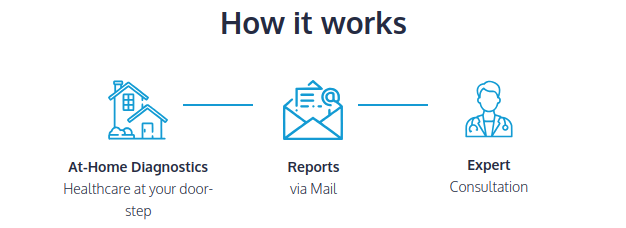
MyDiagnostics offers a 14-day continuous glucose monitoring (CGM) test in Pune for ₹4,999 using the Abbott FreeStyle Libre Pro sensor. A trained practitioner applies the coin-sized sensor to your upper arm at home. It records glucose every 15 minutes (1,344 readings) with no daily finger pricks, and a doctor-reviewed report is emailed within 24 hours of removal.
The CGM machine price in Pune for this MyDiagnostics service is ₹4,999 for a 14-day Abbott FreeStyle Libre Pro monitoring package. The package includes one sensor, home application, removal, glucose-data download and a doctor-reviewed AGP report.
The package price includes the home application and removal visits, with no separate visit or removal charge assumed within the advertised service.
|
Package component |
Included |
|---|---|
|
One Abbott FreeStyle Libre Pro sensor |
Yes |
|
Home application by a trained practitioner |
Yes |
|
Removal after the monitoring period |
Yes |
|
Download of recorded glucose data |
Yes |
|
Doctor-reviewed AGP report |
Yes |
|
Separate home application or removal fee |
No, within the stated package |
|
Separate reader to purchase for this professional service |
Not required from the customer |
The World Health Organization highlights the importance of access to safe, quality-assured and affordable health technologies for diabetes management. A clearly itemised price helps customers understand what they receive before booking a medical monitoring service.
A conventional blood glucose monitor (BGM) measures glucose from a finger-prick blood sample, and ongoing use generally requires test strips and lancets. A 14-day CGM service provides a different type of value by collecting glucose-pattern data across meals, sleep and everyday activities without requiring repeated finger pricks for each sensor reading.
The better choice depends on whether you need an immediate spot check, repeated self-monitoring or a longer glucose profile for clinical review.
|
Feature |
Conventional glucometer |
MyDiagnostics professional CGM |
|---|---|---|
|
Measurement |
Finger-prick blood sample |
Interstitial fluid |
|
Monitoring |
Individual spot checks |
Recorded glucose profile over 14 days |
|
Consumables |
Test strips and lancets |
One sensor for the monitoring period |
|
Overnight patterns |
Only if you perform checks |
Recorded automatically during sensor wear |
|
Main benefit |
Convenient individual readings |
Wider view of glucose trends |
|
Best use |
Routine checks as advised |
Pattern assessment with a clinician |
People searching for a non-invasive glucometer price in Pune often want to monitor glucose without repeatedly pricking a finger. CGM reduces the need for routine finger-prick measurements during sensor wear, but it is minimally invasive, not completely non-invasive, because a small filament sits just beneath the skin.
Watches or rings that claim to measure glucose without piercing the skin should not be treated as validated substitutes for established glucose-monitoring devices.
Booking CGM sensor home application in Pune allows you to complete the application process without travelling to a clinic solely to have the sensor fitted. With MyDiagnostics, a trained practitioner brings the sensor, prepares the application site and applies the device for the 14-day monitoring period. You do not have to assemble the applicator or perform the initial sensor application yourself.
Home CGM application can be arranged for selected locations in Pune, subject to practitioner availability and confirmation of the service address.
Areas to check for coverage include Baner, Hinjewadi, Wakad, Kothrud, Viman Nagar, Hadapsar and selected localities in Pimpri-Chinchwad (PCMC). Confirm that your exact locality and PIN code are serviceable before choosing an appointment slot.
The practitioner checks the back of your upper arm and selects a suitable application site with intact, clean skin. After preparing the area according to the Libre Pro-specific facts verified against the Indian IFU. The initial application generally takes only a few minutes, although the full visit may take longer for preparation and instructions.
A practitioner brings the Abbott sensor to your home and applies it for you. This helps people who prefer not to handle the applicator or set up the professional monitoring process independently. The service also includes the planned removal, data download and doctor-reviewed report as described in the ₹4,999 package.
If you want to buy a continuous glucose monitor in Pune, first decide whether you need a personal CGM for individual use or a professional CGM for a doctor-reviewed glucose profile.
Personal systems may allow users to view readings through a compatible phone or reader, while the professional Libre Pro service described here is intended for clinical interpretation of the collected data.
|
Feature |
Pharmacy-bought personal CGM |
MyDiagnostics professional CGM |
|---|---|---|
|
Application |
Usually self-applied according to instructions |
Applied by a trained practitioner |
|
Access to glucose readings |
Depends on the compatible system and setup |
Data are downloaded for the professional report |
|
Live phone readings |
Available on compatible personal systems |
Not provided by the professional Libre Pro service described here |
|
Clinical report |
Depends on the system and whether a clinician reviews the data |
Doctor-reviewed AGP report included |
|
Removal |
Usually performed by the user according to instructions |
Scheduled removal visit included in the stated package |
|
Suitable for |
People wanting personal monitoring |
People seeking a clinician-reviewed glucose profile |
MyDiagnostics offers a professional CGM service that brings sensor application, monitoring, removal and report preparation together in one package.
The service is designed for people who prefer trained assistance rather than applying a sensor themselves and who want their recorded glucose patterns reviewed by a doctor.
Before booking, verify the sensor model, appointment coverage and report-delivery arrangements in your confirmation. You can then arrange the home application through MyDiagnostics and discuss the resulting glucose profile with your treating clinician.
A sugar testing machine without blood may sound like a device that measures glucose without touching or penetrating the skin, but established CGM technology works differently. The Abbott FreeStyle Libre Pro sensor measures glucose in interstitial fluid beneath the skin through a thin, flexible filament, reducing the need for repeated finger-prick checks during monitoring.
It is therefore more accurate to describe this service as minimally invasive rather than completely non-invasive.
The FDA has warned consumers against relying on smartwatches and smart rings that claim to measure glucose independently without piercing the skin. These products should not replace clinically established glucose-monitoring methods or medical advice.
Most people experience a brief pinch or pressure when a CGM sensor is applied, although the sensation varies between individuals. The applicator places a small filament beneath the skin, and many people become less aware of the sensor once it is attached. Tell the practitioner if you have sensitive skin, adhesive allergies or a history of reactions to medical dressings.
A 14-day professional CGM profile can capture glucose patterns throughout the day and night without requiring a finger prick for every recorded measurement. At a 15-minute recording interval, a complete 14-day profile could contain up to 1,344 readings (96 per day × 14 days), assuming complete data capture. Whether this is the best option depends on your clinical needs: CGM offers a broader view of trends, while a conventional glucometer remains useful for individual checks when required.
A wearable glucose monitor in Pune is attached to the back of the upper arm, where its sensor filament measures glucose in the interstitial fluid beneath the skin. The glucose monitor patch in Pune automatically records glucose data at regular intervals, including overnight and between meals, for up to 14 days, depending on the device model and its instructions. This provides a more detailed picture of glucose fluctuations than occasional finger-prick tests alone.
Abbott's official documentation explains that the sensor measures interstitial glucose more frequently and stores readings at 15-minute intervals. A complete 14-day record can contain up to 1,344 readings at 15-minute intervals, provided the data are available for the entire monitoring period.
A personal CGM is designed to provide glucose information to the user through a compatible reader or phone app, depending on the model. Professional Libre Pro monitoring is designed to collect glucose data for later download and clinical interpretation.
So, you can't expect live readings on your personal phone from the service described on this page. This distinction matters when choosing between a sensor for everyday self-monitoring and one intended to support a doctor's assessment.
Protect the sensor from knocks, excessive rubbing and anything that may loosen its adhesive, including during workouts, and follow the supplied instructions for bathing, exercise and skin care.
Vitamin C and aspirin or other salicylates can affect readings on certain FreeStyle Libre systems, but the effect depends on the exact model and medication; do not stop prescribed medication or change your supplement routine without medical advice.
For MRI, CT and X-ray procedures, check the instructions for the exact sensor model and tell the imaging team that you are wearing a CGM, rather than assuming that all sensors have the same restrictions.
A continuous sugar test at home in Pune may be useful for people with Type 1 or Type 2 diabetes whose clinicians want a closer look at glucose patterns.
It may also help selected people with prediabetes, unexplained glucose highs or lows, recent medication changes, weight-management concerns or exercise-related glucose fluctuations when a clinician considers CGM appropriate.
A CGM profile is an assessment tool, not a standalone diagnosis of diabetes or a substitute for laboratory testing.
The American Diabetes Association recognises CGM as useful for assessing glycaemic status and guiding care in appropriate people with diabetes. Whether a professional 14-day sensor is suitable depends on the person's medical history, monitoring goals and the device's approved use.
Speak to a clinician before booking if you are a pregnant woman, considering CGM for a child, or have a skin condition, wound, adhesive allergy or infection near the intended application site.
Pregnancy and childhood may require specific monitoring approaches, and the suitability of a professional Libre Pro service for patients must be confirmed against the exact device labelling and clinical circumstances.
Gestational diabetes is typically assessed with clinician-directed testing during pregnancy rather than with this page’s CGM service alone, especially for pregnant women.
Anyone taking insulin or medication that can cause hypoglycaemia should also ask how to respond to symptoms and whether additional blood glucose checks are needed.
A doctor-reviewed AGP report summarises glucose patterns collected during the monitoring period. Depending on the device report and the amount of usable data, it may show average glucose, time in range, time above and below range, glucose variability, post-meal patterns and overnight lows.
These metrics help a clinician identify patterns that may warrant changes to diet, activity, medication or further assessment. Reviewing them can support blood sugar control, contribute to better blood sugar control, and help reduce the risk of diabetes complications through early detection when issues are addressed promptly; diabetes can lead to heart disease, kidney failure, and nerve damage.
For many adults with diabetes, the ADA uses 70–180 mg/dL as the standard time-in-range band, with a general goal of more than 70% of readings in range for many adults; individual targets vary. The report must be interpreted in the context of your health, medication and symptoms rather than used to make treatment changes independently.
Review the AGP report with your treating doctor, who can interpret glucose patterns alongside your symptoms, medicines, HbA1c and other clinical information to support diabetes control. Do not change insulin doses or stop prescribed medication based solely on a report without medical guidance.
Follow-up review also supports early detection of patterns that may increase the risk of diabetes-related complications and allows more personalized care. If you need additional support with meal planning, you can ask MyDiagnostics whether a nutrition consultation is available with your booked service.
CGM and blood glucose monitoring (BGM) answer related but different questions. A glucometer provides an individual blood glucose measurement at the time of testing, while CGM records interstitial glucose trends over an extended period. Your clinician may recommend one or both, depending on your treatment and the need to confirm a reading.
|
Comparison |
CGM |
Conventional glucometer (BGM) |
|---|---|---|
|
Readings |
Repeated recorded measurements during sensor wear |
Individual measurements when tested |
|
Finger pricks |
Not required for every sensor reading |
Usually required for each test |
|
Overnight data |
Recorded while the sensor is worn |
Requires a separate overnight test |
|
Trends |
Helps show patterns and variability |
Multiple tests are needed to build a pattern |
|
Consumables |
CGM sensor |
Test strips and lancets |
|
Cost |
Higher upfront cost for a professional monitoring package |
Device cost plus ongoing strips and lancets |
|
Best use |
Reviewing glucose trends with a clinician |
Immediate spot checks and confirmation when indicated |
CGM values may differ from blood glucose readings because the sensor measures interstitial fluid rather than blood, and there can be a time lag when glucose changes rapidly. Follow the device instructions and your clinician's advice about confirming unexpected readings, particularly if symptoms do not match the sensor data.
You generally do not need to fast before a CGM sensor application because the sensor records glucose patterns during your normal routine. Arrive at the appointment with the back of your upper arm accessible by wearing a loose sleeve, and keep the application site clean and free from creams or oils.
Tell the practitioner about skin irritation, adhesive allergies or any other concerns before application, and follow the device-specific instructions supplied during the visit.


