Offer
Provide additional details about the offer you're running.
FLASHSALE


Rs. 21,000
Regular price Rs. 12,500
NIPT test in India, also known as noninvasive prenatal testing, is a screening method that analyzes cell free DNA. Thus, it finds out the risk for certain chromosomal abnormalities, including Down syndrome (trisomy 21), trisomy 18 (Edwards syndrome), or trisomy 13 (Patau syndrome). It is a screening check that can be finished during pregnancy and indicates fetal gender.
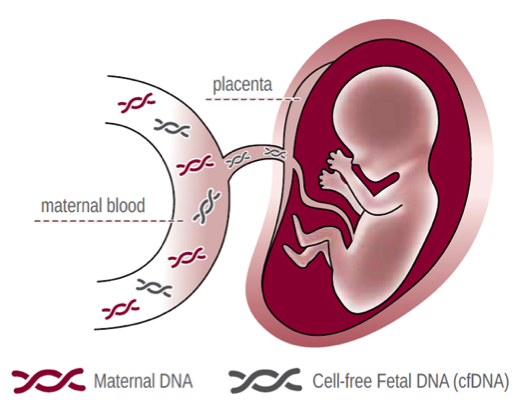
NIPT can also be known as noninvasive prenatal screening (NIPS) or cell-free DNA (cfDNA) screening. It is essential to keep in mind that screening assessments can measure the condition of the fetus and provide highly accurate result. Testing through NIPT is elective for expectant parents . Your healthcare expert will provide you with evidence of prenatal genetic testing, as well as offer genetic counseling to discuss your options .
The test procedure involves drawing blood that consists of fetal DNA fragments. This test is beneficial as it allows clinical specialists to offer statistics about fetal chromosomal abnormalities and the fetus's genetic ability by analyzing fetal cfdna . The lab experts will have a look at the blood sample for particular congenital conditions. However, all chromosomal or genetic problems may not be determined via NIPT testing.
NIPT screening analyzes small DNA fragments that circulate in the mother's blood. This test mainly screens to detect chromosomal abnormalities that include;
Trisomy 18, 13, and Down syndrome all result from an extra chromosome. Sex chromosome screening, can help determine the sex of the fetus. Turner syndrome, Klinefelter syndrome, Triple X syndrome, and XYY syndrome are the most common sex chromosome abnormalities that can be found through NIPT.
NIPT panels do not test for all conditions, so it’s crucial to discuss certain genetic abnormalities and additional chromosomal abnormalities your particular conditions, especially if you have an increased risk, with your healthcare provider.
|
Category |
Condition |
Cause |
Key Notes |
|
Common Trisomies |
Trisomy 21 (Down syndrome) |
Extra copy of chromosome 21 |
Most common condition screened by NIPT; associated with intellectual disability and developmental delay |
|
|
Trisomy 18 (Edwards syndrome) |
Extra copy of chromosome 18 |
Severe condition; often linked with heart defects, shortened lifespan |
|
|
Trisomy 13 (Patau syndrome) |
Extra copy of chromosome 13 |
Rare but serious; associated with multiple congenital abnormalities |
|
Sex Chromosome Conditions |
Turner syndrome (Monosomy X) |
Missing one X chromosome in females (45,X) |
Affects females only; linked with short stature, infertility, heart issues |
|
|
Klinefelter syndrome (XXY) |
Male has an extra X chromosome (47,XXY) |
May cause reduced fertility, learning challenges, taller height |
|
|
Triple X syndrome (XXX) |
Female has an extra X chromosome (47,XXX) |
Often mild or no symptoms; may affect fertility and learning |
|
|
Jacobs syndrome (XYY) |
Male has an extra Y chromosome (47,XYY) |
Usually normal development; may be taller and have mild learning difficulties |
Note: UnderPC-PNDT Act, NIPT is allowed only to detect certain types of abnormalities in the fetus (genetic, chromosomal, congenital, etc.). They cannot be used for sex determination. If NIPT reveals sex (in labs that include that), communicating that is illegal.
non invasive prenatal test include understanding how it determines low risk and high risk factors .
Pregnant women who are 35 years of age or older, have a family history of chromosomal issues, or have had normal outcomes from other prenatal screening tests are especially advised to consider NIPT. Anyone who is at least ten weeks pregnant should consider this test.
The NIPT can provide information about the risk assessment of specific genetic conditions based on the fetal fraction, without the need for invasive testing, but may also indicate the need for further diagnostic testing, allowing the mother and father to make informed decisions about their pregnancy.
The NIPT blood test procedure undergoes a few steps that include;
Simple Blood Draw: For NIPT, first, the technician draws blood from the tiny DNA fragments of the expectant mother.
Lab Analysis: The expert lab experts carefully analyzes the cell-free fetal DNA (cfDNA) obtained from a simple blood test.
Receive Your Report: After analyzing the technicians, send the report to the dedicated lab. In this report, you will get thorough explanations of the test results. You will also know about low-risk and high-risk conditions. For better understanding, you must consult with your doctor.
While a low-risk result is comforting, it does not ensure that a baby is completely healthy. A high-risk result indicates greater risk and indicates that referral for confirmatory testing (e.g., amniocentesis, chorionic villus sampling (CVS)) is needed for definitive diagnosis if there are abnormal results, while also considering the possibility of false negative results .
The NIPT helps to analyze whether the pregnancy is at "low risk" or "high risk" for common chromosomal conditions, such as Down syndrome, Edwards syndrome, or Patau syndrome.
|
Result Type |
What It Means |
Next Steps |
Key Notes |
|---|---|---|---|
|
Low-Risk Result |
No increased risk detected for the chromosomal conditions tested (e.g., Down, Edwards, Patau syndromes). |
Continue with routine prenatal care. Follow up with regular ultrasounds and doctor visits. |
- Does not guarantee a completely healthy baby.- Some rare genetic conditions may still be missed.- Offers reassurance but is not a diagnosis. |
|
High-Risk Result |
Suggests a higher chance of chromosomal abnormality in the fetus. |
Confirmatory testing recommended (Amniocentesis or CVS). Seek genetic counseling to understand results. |
- Not a 100% diagnosis—false positives are possible.- Helps in early decision-making.- Urgent follow-up testing is important. |
In some cases, repeat testing can be necessary if some results are inconclusive due to insufficient fetal DNA. This can be the case if tests were done too early, for example, in some cases with higher maternal body mass index (BMI).
It implies that no increased threat for the examined chromosomal issues is observed by using the NIPT. The result is comforting; however, it no longer rules out any genetic or developmental troubles. It no longer assures a healthy baby; however, it does imply a decreased probability, but additional assessments or further testing may still be advisable .
It suggests that the baby is much more likely to have one of the chromosomal issues that had been screened for. It suggests that more diagnosis regarding the fetus's genetic makeup is required to verify the consequences; it isn't an analysis. Your doctor will recommend a diagnostic method, together with amniocentesis or Chorionic Villus Sampling (CVS), to make a definitive prognosis.
The NIPT test cost in India varies from INR 10,000 to INR 20,000. For better and accurate test procedure, we recommend MyDiagnostics. Here, the NIPT test price is INR 12,500. Here, our experienced healthcare experts provide the best information and suggest you the best under any circumstances.
Comprehensive NIPT panels that cover a much wider range of genetic conditions are higher priced than fundamental screening. Also, high-volume diagnostic labs that employ cutting-edge testing methods may also charge a higher fee. The price also varies according to different places. For an additional price, a few labs provide health practitioner consultations or quicker results.
|
Type of NIPT Test |
What It Covers |
Approx. Cost (INR) |
Notes |
|---|---|---|---|
|
Basic NIPT Panel |
- Common trisomies: 21 (Down syndrome), 18 (Edwards), 13 (Patau) - Fetal sex (not disclosed in India due to PC-PNDT Act) |
₹10,000 – ₹13,000 |
Usually sufficient for most pregnancies; higher accuracy for trisomy 21. |
|
Advanced NIPT Panel |
- All conditions in Basic panel - Sex chromosome abnormalities (Turner, Klinefelter, XXX, XYY) - Some microdeletions/duplications (depends on lab) |
₹14,000 – ₹20,000+ |
More comprehensive; costlier due to wider screening and advanced technology. |
|
Add-On Services |
- Genetic counseling - Faster turnaround (express results) |
₹1,000 – ₹3,000 extra |
Optional, depends on lab offerings. |
Non-Invasive Prenatal Testing (NIPT) at MyDiagnostics provides the same benefits as modern NIPT. These consist of the capacity to provide early records faster than the different screening strategies of non invasive prenatal testing, high accuracy in screening for not unusual chromosomal conditions, including Down syndrome, Patau syndrome, etc. Here's how we can help you with;

Prenatal screening tests like NIPT can appropriately and non-invasively hit upon chromosomal abnormalities within the fetus. This check gives pregnant ladies peace of mind and can be completed as early as 10 weeks of pregnancy, enabling early diagnosis . So, book your NIPT test today through MyDiagnostics for early, safe, and accurate screening.


