Offer
Provide additional details about the offer you're running.
FLASHSALE


Time to read 15 min
Table of contents
Bad breath that seems to come from the stomach, sometimes described as a “bad smell from the stomach,” may be associated with acid reflux, H. pylori infection, or other digestive conditions. However, most persistent halitosis originates in the mouth. Oral causes such as tongue bacteria, gum disease, dental problems, and dry mouth are much more common. If bad breath continues despite good oral hygiene, a dental evaluation is a useful first step before investigating less common gastrointestinal causes.
Quick Highlights
About 80–90% of halitosis cases are caused by oral factors, including coated tongue, gum disease, and poor oral hygiene.
H. pylori has been detected in saliva and dental plaque in some studies, but this does not prove that it directly causes bad breath.
H. pylori infection has been associated with halitosis in some studies, but most persistent bad breath still originates in the mouth.
Stomach-related bad breath is often used to describe persistent mouth odor that seems to be linked to digestive problems rather than poor oral health. However, most chronic bad breath originates in the mouth, usually from bacteria on the tongue, plaque, gum disease, or dry mouth. True gastrointestinal causes are less common but can occur with certain digestive conditions.
Typical bad breath caused by an oral problem often improves temporarily after brushing, tongue cleaning, flossing, or using mouthwash. If the bad smell returns quickly after brushing or mouthwash, particularly when accompanied by digestive symptoms, a gastrointestinal cause may need to be considered.
Possible clues include:
Sour or metallic taste: A persistent sour smelling breath, acidic, or metallic taste may occur with acid reflux or other digestive issues.
Worse after eating: Breath odor may become more noticeable after meals, especially after foods that trigger reflux or indigestion.
Bad breath in the morning: Morning breath is common because saliva production decreases during sleep, but persistent odor may warrant further evaluation.
Digestive symptoms: Bloating, frequent burping, mild nausea, heartburn, acid reflux, or indigestion occurring alongside bad breath may point toward a digestive issue.
Odor that keeps returning: If good oral hygiene does not provide lasting improvement, it is worth looking beyond the mouth.
Possible Source |
Common Clues |
|---|---|
Mouth |
Plaque, coated tongue, gum disease, cavities or dry mouth |
Digestive tract |
Reflux, sour taste, burping, bloating or indigestion |
Dry mouth |
Sticky mouth, thirst and worse odor on waking |
Gum disease |
Bleeding or swollen gums, plaque and persistent odor |
Importantly, bad breath does not automatically mean there is a problem with your stomach. Conditions such as gum disease, dental infections, tongue bacteria, and dry mouth are much more common causes.
If your breath continues to smell unpleasant even after brushing, flossing, and cleaning your tongue, consider whether you also have digestive symptoms.
Ask yourself:
Does the odor return soon after using mouthwash?
Do I regularly have a sour or metallic taste?
Is my breath worse after meals or when I wake up?
Do I frequently experience bloating, burping, nausea, heartburn, or indigestion?
Do I notice a connection between certain foods and worsening breath odor?
Has my dentist ruled out cavities, gum disease, plaque buildup, and other oral causes?
If you answered yes to several questions, especially if your dental examination is normal and digestive symptoms are persistent, discuss the symptoms with a healthcare professional.
Bad smell from the stomach” is a common search phrase used to describe persistent mouth odor that people believe is related to digestive problems. However, most chronic bad breath originates in the mouth, usually because of tongue bacteria, plaque, gum disease, or dry mouth. Digestive conditions such as acid reflux and H. pylori infection can sometimes be associated with bad breath, but they are less common causes.
Common stomach and gut-related causes of bad breath include:
Acid reflux/GERD: Stomach acid and contents can move into the esophagus and throat, causing sour breath or an unpleasant taste.
H. pylori infection: H. pylori may be associated with halitosis, although the link is not fully established.
Delayed gastric emptying: Slow stomach emptying can cause bloating, nausea, belching, and unpleasant taste or breath.
SIBO: Excess bacteria in the small intestine can cause bloating, gas, and digestive symptoms and may contribute to breath odor in some cases.
Dietary triggers: Garlic, onions, alcohol, and very low-carbohydrate or high-protein diets can temporarily alter breath odor.
Low stomach acid: Reduced stomach acid may affect digestion, but its direct link to chronic bad breath is not well established.
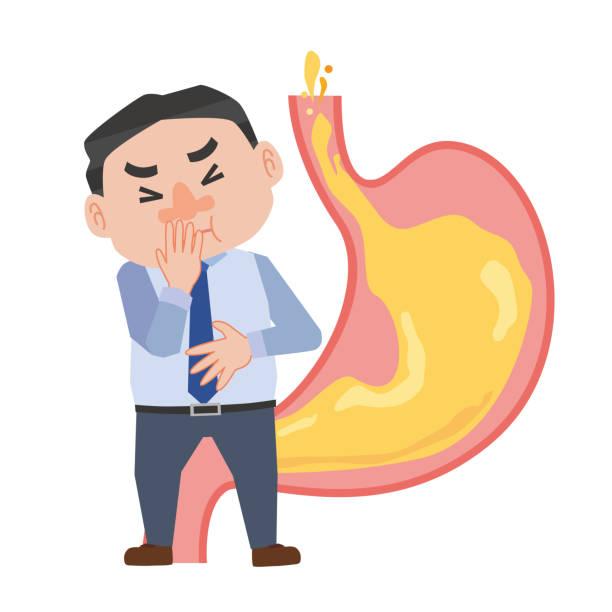
H. pylori primarily colonizes the stomach, but the bacterium or its DNA has also been detected in saliva and dental plaque in some studies. This has led researchers to investigate whether the oral cavity could act as a potential reservoir. However, detecting H. pylori in the mouth does not prove that it causes bad breath or that it permanently colonizes the oral cavity.
A 2008 study published in the Journal of Medical Microbiology examined 326 non-dyspeptic subjects, including 251 people with actual malodour and 75 without halitosis. H. pylori DNA was detected in 21 participants (6.4%). The H. pylori-positive group had significantly higher methyl mercaptan concentrations and higher periodontal measures, including periodontal pocket depth, tooth mobility, and occult blood in saliva. Periodontopathic bacteria, including Prevotella intermedia, were also detected more frequently in this group. However, the observational study did not establish that H. pylori caused the bad breath.
H. pylori has been associated with halitosis in some research, but it has not been established as a direct cause of bad breath. Researchers have investigated several possible explanations:
Oral bacteria and volatile sulfur compounds: Oral bacteria can produce volatile sulfur compounds responsible for much of the odor associated with halitosis.
Periodontal connection: The 2008 study found higher periodontal measures and more frequent detection of certain periodontal bacteria among participants with H. pylori DNA in saliva. This supports an association, not proof of causation.
Dental plaque and biofilm: H. pylori has been detected in dental plaque, prompting research into whether the mouth may act as a potential reservoir. This remains an area of investigation.
Research suggests an association between H. pylori infection and halitosis, but the evidence does not establish that H. pylori causes every case of bad breath.
A 2016 meta-analysis published in Medicine (Baltimore) reviewed 21 eligible studies and found that H. pylori infection was associated with a higher likelihood of halitosis. The analysis also found that halitosis was less common after successful H. pylori eradication in the included studies. However, the findings do not establish a single mechanism for the odor or prove that H. pylori is responsible for every case of halitosis.
There are no specific symptoms that can confirm H. pylori in the mouth. However, some people with H. pylori infection may experience oral and digestive symptoms together.
Possible signs include:
Persistent bad breath
Digestive symptoms
Nausea and early fullness
Gum problems
Bad breath alone cannot confirm an H. pylori infection. Testing is needed to determine whether an active infection is present. Common diagnostic options include:
Urea breath test: A non-invasive and highly useful test that detects active H. pylori infection by measuring labeled carbon dioxide in your breath after you drink a urea-containing solution.
Stool antigen test: Detects H. pylori antigens in a stool sample and can be used both for initial diagnosis and to confirm that treatment has successfully cleared the infection.
Endoscopy with biopsy: During an upper endoscopy, a small stomach tissue sample can be collected and tested for H. pylori. This may be recommended when doctors need to evaluate ulcers, gastritis, bleeding, or other upper-GI symptoms.
Blood antibody test: Detects antibodies against H. pylori, but antibodies can remain in the blood after the infection has been treated. Therefore, it is less useful for confirming an active infection or successful eradication.
H. pylori testing may be appropriate when persistent digestive symptoms occur alongside bad breath, especially if a healthcare professional suspects an active infection.
If persistent bad breath occurs alongside indigestion, bloating, frequent burping, nausea, or upper abdominal discomfort, an H. pylori test may be appropriate. MyDiagnostics offers convenient diagnostic testing to help detect active H. pyloriinfection. Speak with a healthcare professional to determine which test is appropriate for you.
Certain medicines can reduce the accuracy of H. pylori testing and may cause a false-negative result.For urea breath testing and stool antigen testing, PPIs are generally withheld for about 2 weeks, while antibiotics and bismuth-containing medicines should generally be avoided for about 4 weeks before testing, when medically appropriate. Always confirm medication changes with your healthcare professional rather than stopping prescribed treatment on your own.
After H. pylori treatment, testing to confirm eradication should be performed at least 4 weeks after completing therapy, with PPIs withheld for about 2 weeks before testing.
Treatment depends on the underlying cause. If H. pylori is confirmed, it requires medical eradication therapy; if reflux or another digestive condition is responsible, that condition needs to be treated separately.
Eradication therapy: H. pylori treatment generally combines acid suppression with multiple antibiotics and, in some regimens, bismuth. Treatment courses commonly last 14 days. Bismuth quadruple therapy is a commonly recommended first-line option when clarithromycin resistance is high or susceptibility is unknown.Treatment should be selected by a healthcare professional based on previous antibiotic exposure, allergies, local resistance patterns, and other clinical factors.
Complete the full course: Take all prescribed medicines for the recommended duration. Stopping early can increase the risk of treatment failure and antibiotic resistance.
Confirm eradication: A urea breath test or stool antigen test is typically used to confirm that H. pylori has been successfully cleared. Testing should be performed at least 4 weeks after treatment, with PPIs withheld for approximately 2 weeks beforehand to reduce the risk of a false-negative result.
Treat the actual cause: If testing does not show H. pylori and reflux/GERD is responsible for the odor, treatment should focus on managing reflux rather than taking antibiotics unnecessarily.
There is no established standalone treatment for removing H. pylori from the mouth. If an active gastric H. pylori infection is confirmed, treatment involves prescribed eradication therapy rather than antibiotics aimed specifically at the mouth.
Good oral hygiene can still help control common causes of bad breath:
Brush twice daily, floss, and clean the tongue.
Treat gum disease, cavities, or other dental problems.
Consider professional dental cleaning when plaque or tartar contributes to bad breath.
Do not take antibiotics solely for suspected oral H. pylori.
Persistent bad breath accompanied by digestive symptoms may warrant further evaluation. MyDiagnostics offers H. pylori testing options, including the H. pylori stool antigen test, which can be collected as a stool sample for laboratory testing. A healthcare professional can help determine whether a stool antigen test, urea breath test, or another diagnostic approach is appropriate.
If you have persistent digestive symptoms or your healthcare professional recommends H. pylori testing, MyDiagnostics offers H. pylori diagnostic testing, including the H. pylori stool antigen test. The appropriate test depends on your symptoms, medications, treatment history, and clinical evaluation.
If you are looking for how to eliminate bad breath from the stomach, daily habits can help reduce odor while you address the underlying cause.
Stay well hydrated: Drinking enough water helps prevent dry mouth and may reduce the concentration of odor-causing compounds.
Clean your tongue daily: Brush your tongue or use a tongue scraper, including the back of the tongue where bacteria and debris can accumulate.
Adjust meal timing: Eat smaller meals if large meals worsen symptoms, and avoid lying down soon after eating, particularly if you experience acid reflux.
Identify food triggers: Reduce foods that appear to worsen your breath or digestive symptoms. Common triggers include garlic, onions, spicy or fatty foods, alcohol, and coffee.
Use sugar-free gum or mints: Sugar-free gum can stimulate saliva production and provide temporary relief from bad breath. Mints mainly mask the odor and do not treat its underlying cause.
Natural remedies may help manage digestive discomfort or temporarily reduce bad breath, but they do not cure underlying conditions such as H. pylori infection or GERD.
However, they should be considered complementary measures—not a cure for an underlying infection.
Probiotic-rich foods: Yogurt with live cultures, kefir, and other fermented foods may support a healthy gut microbiome. Their effect on H. pylori is still being studied.
Green tea and Manuka honey: Laboratory research has investigated whether these substances can inhibit H. pylori. A 1994 study found that Manuka honey inhibited the growth of H. pylori isolates under laboratory conditions. This does not show that eating Manuka honey can eradicate H. pylori infection in people, and it should not replace prescribed treatment.
Ginger, fennel, and mint: Ginger may help with nausea and digestive discomfort, while fennel and mint can provide temporary breath freshness. These may improve comfort but do not eliminate H. pylori.
Limit NSAID overuse: Frequent or unnecessary use of NSAIDs such as ibuprofen can irritate the stomach lining and increase the risk of ulcers. Use these medicines only as directed by a healthcare professional.
Quit smoking: Smoking can worsen dry mouth and oral odor and is also associated with an increased risk of gastrointestinal problems, including peptic ulcers.
Persistent bad breath should not be ignored, especially when it occurs alongside digestive or other concerning symptoms.
Bad breath lasting more than 2–3 weeks: If the odor continues despite regular brushing, flossing, tongue cleaning, and good oral hygiene, schedule a dental or medical evaluation.
Digestive symptoms: See a healthcare professional if bad breath occurs with stomach pain, bloating, frequent burping, indigestion, or reflux.
Red-flag symptoms: Seek prompt medical attention for unintentional weight loss, black or tarry stools, persistent vomiting, vomiting blood, severe abdominal pain, or difficulty swallowing.
Keep a symptom log: Before your appointment, note when the bad breath occurs, foods that seem to trigger it, meal timing, and associated symptoms such as reflux, nausea, bloating, or abdominal discomfort. This can help your doctor or dentist identify possible causes and decide whether further testing is needed.
Bad breath is usually caused by oral factors, but persistent symptoms accompanied by digestive problems may require further evaluation. If your healthcare professional recommends testing for H. pylori, you can explore the H. pylori stool antigen test or other appropriate diagnostic options through MyDiagnostics. Discuss your symptoms and test choice with a healthcare professional.
Bad breath that seems to come from the stomach may be linked to acid reflux (GERD), H. pylori infection, delayed gastric emptying, or other digestive problems. However, most persistent bad breath originates in the mouth.
If bad breath persists despite good oral hygiene and occurs with acid reflux, bloating, frequent burping, nausea, or indigestion, a digestive cause may be considered. A dental examination can help rule out common oral causes.
H. pylori infection may be associated with bad breath, but it has not been established as a direct cause of every case of halitosis. A 2016 meta-analysis found an association between H. pylori infection and stomach related halitosis, but most persistent bad breath originates in the mouth.
There are no specific mouth symptoms that can confirm H. pylori infection. Bad breath, unpleasant taste, plaque, or gum inflammation can have many other causes. Testing is required to determine whether an active H. pylori infection is present.
H. pylori has been detected in saliva and dental plaque, but this does not prove active oral infection or that it directly causes bad breath. Research continues to investigate whether the oral cavity can act as a reservoir.
There is no established standalone treatment to remove H. pylori from the mouth. Confirmed H. pylori infection requires prescribed eradication therapy, while good oral hygiene and treatment of gum disease can reduce oral bacteria.
Treating bad breath depends on the cause. H. pylori requires prescribed eradication therapy, while GERD-related bad breath may improve with reflux management. Oral causes should also be evaluated and treated.
Stay hydrated, clean your tongue, maintain good oral hygiene, identify food triggers, and consider probiotic-rich foods such as yogurt. Natural remedies cannot replace H. pylori eradication therapy when an active infection is confirmed.
Drink water, clean your tongue, and chew sugar-free gum to increase saliva and temporarily reduce odor. These measures provide short-term relief but do not treat underlying causes such as GERD or H. pylori.
Persistent bad breath despite brushing and mouthwash may result from tongue bacteria, gum disease, dental problems, dry mouth, acid reflux, or other medical conditions. A dental evaluation is a good first step.
If H. pylori was contributing to bad breath, odor may improve after successful eradication, but the timing varies. Persistent bad breath after treatment may have another oral or digestive cause, so follow-up testing and dental evaluation may be needed.
Yes. Acid reflux can contribute to bad breath by allowing stomach contents and acidic material to reach the esophagus and throat. Persistent bad breath should still be evaluated for common oral causes such as gum disease, plaque, and dry mouth.
No. Most persistent bad breath originates in the mouth and is commonly linked to tongue bacteria, plaque, gum disease, cavities, or dry mouth. Stomach-related causes such as GERD are less common.
Suzuki N, et al. Detection of Helicobacter pylori DNA in the saliva of patients complaining of halitosis. Journal of Medical Microbiology. 2008;57(Pt 12):1553–1559. DOI: 10.1099/jmm.0.2008/003715-0.
Dou W, et al. Halitosis and Helicobacter pylori infection: A meta-analysis. Medicine (Baltimore).2016;95(39):e4223. DOI: 10.1097/MD.0000000000004223.
Al Somal N, Coley KE, Molan PC, Hancock BM. Susceptibility of Helicobacter pylori to the antibacterial activity of manuka honey. Journal of the Royal Society of Medicine. 1994;87(1):9–12. DOI: 10.1177/014107689408700106.
Memon MA, et al. Aetiology and associations of halitosis: A systematic review. Oral Diseases. 2023;29(4):1432–1438. DOI: 10.1111/odi.14172.
Chey WD, et al. ACG Clinical Guideline: Treatment of Helicobacter pylori Infection. American Journal of Gastroenterology. 2024;119(9):1730–1753. DOI: 10.14309/ajg.0000000000002968.
Medical Disclaimer: This content is for general informational purposes only and does not replace professional medical advice, diagnosis, or treatment. Persistent bad breath or digestive symptoms should be evaluated by a qualified healthcare professional. Do not self-diagnose or start treatment for H. pylori without appropriate testing and medical guidance.


