Offer
Provide additional details about the offer you're running.
FLASHSALE


Time to read 7 min
Table of contents
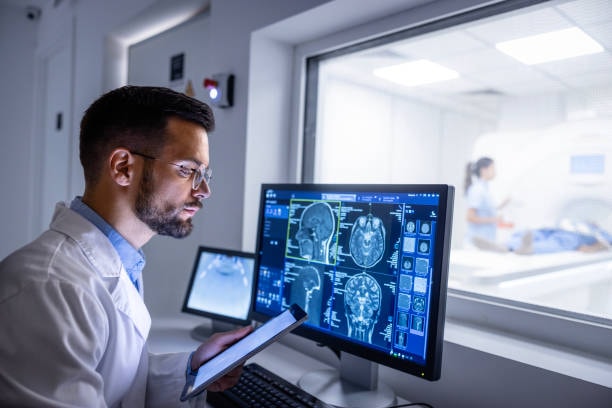
The scanning process of a CT scan and an MRI scan, also referred to as MRI and CT scans, both are diagnostic tests. A CT scan (Computed Tomography) takes various cross-sectional images of the body using X-rays. The scan helps identify infections, injuries, bleeding, fractures, and other internal issues in the body.
On the other hand, MRI (Magnetic Resonance Imaging) is used to get detailed images of nerves, soft tissues, and body organs using strong magnets and radio waves. The scan helps detect medical issues related to soft tissues, the spine, brain, and joints.
People usually get confused about a CT scan and an MRI scan, as both are imaging methods performed in a quite similar setup for similar kinds of symptoms. Most people are unaware that a CT scan uses X-rays while an MRI uses magnets and radio waves.
Here are the common uses of both of these imaging tests:
Detect internal injuries that happen due to falls, accidents, or traumas.
Identify the causes of pain using advanced technologies, including joint pain, back pain, abdominal pain, and severe headaches.
Diagnose abnormal growths and tumors in the various body organs.
Used by healthcare professionals, sometimes with contrast material, to plan radiation therapies, surgeries, and other targeted treatments.
Used to monitor disease progression, including chronic conditions and cancer.
Offers detailed pictures of internal organs, including the kidney, brain, and lungs.
A CT (computerized axial tomography) scan is a diagnostic procedure that uses X-rays and computer processing to get cross-sectional images providing detailed information about your internal body.
Identify fractures and injuries due to trauma, falls, and accidents.
Detect internal bleeding, especially during emergencies.
Identify lung-related concerns, including lung diseases, clots, and tumors.
Diagnose brain health-related medical conditions, such as bleeding and tumors.
Diagnose abdominal and pelvic problems such as kidney stones, liver diseases, appendicitis, and infections.
Detect cancer, check for spreading risk, and monitor cancer treatment.
Assesses heart and blood vessels to detect blockages.
MRI or Magnetic Resonance Imaging is a diagnostic procedure that uses powerful magnets and radio waves to get comprehensive images of soft tissues of the body. This procedure doesn’t involve the use of radiation or X-rays.
Detects brain tumors, stroke, and infections.
Assess headaches, dizziness, disc problems, nerve compression, and spinal cord issues.
Detects internal problems such as joint pain, sports injuries, and arthritis.
Identifies ligament and tendon tears.
Diagnoses congenital defects and abnormal blood vessels.
Identifies kidney, liver, pancreas, and uterine-related issues.
Detects tumors, checks for spread, and monitors treatment.
So now that we are clear about the CT scan and MRI difference, remember that CT provides detailed cross-sectional images. Let's understand the difference between CT and MRI:
A CT scan uses radiation or X-rays to get cross-sectional pictures, while an MRI uses powerful magnets and radio waves, but not radiation.
A CT scan is best used for bone fractures, lung diseases, trauma cases, and abdominal emergencies. An MRI scan is best used for the brain and spinal cord, soft tissues, heart and nerves, detailed tumor assessment, ligaments, tendons, and muscles.
A CT scan is very fast, and the procedure takes only a few minutes, while an MRI scan is much slower and takes around 20-60 minutes.
A CT scan provides detailed images of the lungs, bones, and other solid organs, while an MRI scan offers superior information about soft tissues in the body and is often clearer than a CT scan.
A CT scan involves radiation and sometimes requires contrast dye; thus is only used when necessary, while an MRI scan does not involve radiation but is not considered suitable for patients with metal implants.
Usually, the CT scan is less expensive than an MRI scan.
The CT scan machine is shorter and appears like a donut shape, while the MRI machine is longer and appears like a tunnel.
Here’s the table summary of the difference between CT scan and MRI:
Characteristic |
CT Scan |
MRI Scan |
Technology |
X-rays |
Powerful magnets and radio waves |
Best Use |
Lung problems, internal bleeding, bone fractures, and trauma |
Soft tissues, brain, nerves, spine, muscles, and ligaments |
Imaging Feature |
Perfect for solid organs, lungs, and bones |
Best for nerve structures and soft tissues |
Procedure Time |
A few minutes (2-5) |
20-60 minutes |
Safety |
Generally safe, but only used when necessary |
Not suitable for people with metal implants |
Pricing |
Inexpensive |
Expensive |
Noise Levels |
Low noise |
Tapping and buzzing noises |
When comparing CT scan vs MRI, which is better? Here's the situation-based comparison for a better understanding:
A CT scan is better for checking skull fractures, swelling, and bleeding.
A CT scan is better for emergency stroke as it quickly detects bleeding, and an MRI scan is better for more detailed brain mapping as it detects early strokes.
A CT scan is excellent as it offers clearer images of complex fractures, bones, and spinal injuries.
MRI offers excellent details of the spinal cord, brain, nerves, tumors, and even cancerous tissue, along with nerve compression.
MRI is more effective for diagnosing muscle, tendon, and ligament-associated soft tissue injuries and muscle damage.
MRI is better for getting comprehensive imaging of blood flow and heart muscles, while a CT scan is better for detecting arteries and coronary calcium.
A CT scan is better for recognizing tumors and tracking the cancer spread, while an MRI scan is better for detecting signs of developing cancer, soft-tissue cancers, pelvic tumors, brain tumors, and comprehensive organ imaging.
MRI is safer for children and pregnant women, particularly for frequent imaging. Generally, MRIs are considered safer as they don’t involve the use of radiation. A CT scan involves the use of X-rays, so unnecessary or repeated exposure may not be safer. MRI is not safe for patients who can not lie still for a long period, with cochlear implants, metal implants, or pacemakers.
Generally, the cost of a CT scan and MRI in India varies depending on the type of scan, the diagnostic center, and the city.
Type of Diagnostic Scan |
Price Range |
CT Scan |
Starts at INR 1140 |
CT Brain |
Starts at INR 1500 |
CT Angiography |
Starts at INR 8000 |
Full Body CT Scan |
Starts at INR 8000 |
Basic MRI Scan |
Starts at INR 3000 |
MRI Brain or Spine |
Starts at INR 4000 |
Whole Body MRI |
Starts at INR 12000 |
A CT scan can better capture the fractures, internal bleeding, lung conditions, and bone details; also MRI can not analyze calcified tissues. Medical concerns that a CT scan shows but an MRI cannot are bone fractures, fresh bleeding, lung diseases, kidney issues, gallbladder stones, trauma, emergencies, and patients using metal implants.
The prime difference is that a CT scan involves X-rays to get quick and comprehensive imaging of internal injuries, lungs, and bones, while an MRI involves strong magnets and radio waves to get more comprehensive pictures of soft tissues, muscles, nerves, spine, and brain.
A CT scan is a faster, expensive procedure best suited for bones and emergencies, while an MRI is a more comprehensive procedure best suited for soft tissues, the brain, and nerves.
Generally, an MRI is considered safer than a CT scan, as it does not involve radiation exposure.
Fresh bleeding in the brain, bone fractures, lung issues, calcification, and certain abdominal emergencies can be shown by a CT scan but not an MRI.
MRI is considered highly accurate for soft tissues, while a CT scan is considered more accurate for lungs, bones, and emergencies.
Usually, CT scans are cheaper than MRIs in India.
Yes, sometimes healthcare professionals use both of these scans, one after another, to get better insights into the bones as well as soft tissues.
A CT scan is faster than an MRI procedure.
Generally, MRI is safe with minimal chances of side effects, and interpreting MRI results is more reliable.
Both CT scans and MRIs can detect cancer in various body parts.
Both MRI and CT scans are crucial diagnostic tools that are performed in different scenarios. CT scans are preferable for abdominal concerns, lungs, bones, internal injuries, and detecting bleeding or fractures in emergencies. MRI scans are suitable for soft tissues, muscles, nerves, joints, brain, and spine-related concerns as they offer more comprehensive images.
Consult your doctor or healthcare provider to understand which scanning procedure is suitable for your particular condition. A medical professional considers your medical history, symptoms, and problematic body part and safety, recommending the best fit for you. Book your CT scan or MRI scan at MyDiagnostics today.
***Medical Disclaimer - The following information is for educational purposes only. No information provided on this website, including text, graphics, and images, is intended as a substitute for professional medical advice. Please consult with your doctor about specific medical advice about your condition(s).