Offer
Provide additional details about the offer you're running.
FLASHSALE


Time to read 16 min
Table of contents
A 30s health checklist is a preventive care roadmap designed to detect silent conditions like insulin resistance, hormonal imbalances, early cardiac risk, and nutrient deficiencies before symptoms appear.
In India, sedentary lifestyles and rising metabolic disorders increase long-term health risks. Annual preventive diagnostics help detect early imbalances. They also support fertility planning, longevity tracking, and long-term cost savings.
The 30s are often the most productive years of life. Careers accelerate, family planning begins, and responsibilities increase. But biologically, it is the decade when silent metabolic changes also start.
Individuals in their 30s should establish care with a primary healthcare provider. Annual physical exams help ensure the timely detection and management of potential health issues.
Many chronic diseases, such as insulin resistance, thyroid imbalance, chronic kidney disease, hypertension and dyslipidemia, silently establish themselves during this period. Adopting a proactive health approach at 30 years old is not a luxury but a prerequisite to long-term health and well-being.
Subtle biological changes in the 30s may influence metabolism, stress response, and cognitive resilience over time. The significant changes at the age of 30 are the following:
Turning 30 doesn't cause an instant decline. The efficiency of metabolism decreases, the ability to recover after stress is weakened, and the hormonal processes change gradually.
The lifestyle behaviours that you picked up during the 20s start to have quantifiable results in blood markers. By being aware of these changes, it would be possible to correct the situation before the disease occurs.
In this decade, metabolic age usually differs from chronological age. An inactive professional who gets little sleep might possess biomarkers that suggest he or she is much older.
The trend of early insulin resistance starts to appear, especially in urban India, where the carb-rich diets and sedentary occupations are the order of the day.
Women can have subtle changes in thyroid or early ovarian reserve, and men can have gradual testosterone loss. Lipid profiles may indicate an increase in LDL or triglycerides, which leads to being at risk of cardiac problems in the long term.
Peak bone mineral density occurs in the late 20s, and it can gradually decrease if the levels of vitamin D or calcium are insufficient. Symptomless hypertension may also arise. In fast-growing urbanizing cities of India, these risks are aggravated by prolonged sitting, constant stress and lack of sunlight.
Although the 30s often feel healthy, underlying biochemical risk trends may already be developing. Diseases such as insulin resistance, thyroid imbalance and borderline cholesterol are normally asymptomatic.
Regular health checkups can inspire individuals to make better choices regarding diet, exercise, and stress management.
Preventive care helps identify early changes before they progress into chronic diseases. Early detection allows for timely treatment, which can prevent disease progression and reduce health risks.
Consulting a healthcare professional is essential for guiding proper care, performing health assessments, and ensuring timely intervention. It is always better to be proactive rather than to cure the situation when it is already too late.
Preventive diagnostics detect early risk markers through laboratory testing, even in individuals who feel healthy. Reactive treatment commences when the symptoms are experienced or the disease is diagnosed.
At this point, there is a possibility of already having some metabolic damage. Early screening enables you to step ahead towards a healthy life instead of lifelong medication.
The treatment of developed diabetes, cardiac issues, or high blood pressure is significantly costlier than screening. The treatment at the late stage entails lifetime medication, visits to specialists, and even hospital admission.
Early diagnosis is inexpensive, and it saves on health expenditure in the future. Prevention is a safeguard to your health and your money.
Chronic work stress increases cortisol, which influences blood sugar, weight and thyroid balance. Inadequate sleep and inappropriate meals increase metabolic stress.
This may eventually cause fatigue and insulin resistance. Preventive testing assists in finding out the imbalances related to stress early.
Vitamin D, B12 and iron deficiency have become common due to busy city lives. Digestion and absorption of nutrients may also be impaired by chronic stress.
These shortcomings can lead to exhaustion, a decrease in immunity and poor concentration. Regular screening ensures early correction at an early stage before the symptoms deteriorate.
The 30s are the best time to establish a quantifiable health base. Labs such as HbA1c, lipid profile, thyroid and vitamin levels give us points of reference.
Monitoring these indicators on an annual basis will assist in detecting the slow changes. Long-term preventive and longevity planning is anchored on a good baseline.
One of the most widespread complaints of adults in their 30s is persistent fatigue. Although it can be explained by work or parenting stress, it can also be indicative of biochemical imbalances. Root causes are determined to avoid the long-term decrease in energy and productivity.
In India, a deficiency of vitamin D is very high, and there is a lot of sunlight. The levels which are low cause fatigue, bone weakness and immune dysregulation. Vitamin B12 deficiency is also widespread, especially among vegetarians, causing anaemia and neurological symptoms.
Subclinical hypothyroidism, or even overt thyroid problems, is a frequent occurrence in this decade. Prolonged stress increases cortisol, which affects metabolism. Daytime fatigue may also be aggravated by insulin resistance and unstable blood sugar.
Action Insight: If fatigue persists for several weeks, it is advised to conduct the necessary blood tests, such as vitamin D, B12, thyroid panel, fasting glucose, and HbA1c.
A preventive diagnostics program at the age of 30 is based on the metabolic, hormonal, nutritional, and cardiovascular indicators. Simple blood test measures are essential for early detection and prevention of health problems, such as cholesterol levels, blood sugar, vitamin deficiencies, and cancer markers.
These tests establish an objective baseline and assist in monitoring initial deviations. The aim is early correction, not confirmation of the disease. Specific tests may also be recommended by your doctor based on individual risk factors and family history.
Early insulin resistance and diabetes risk are measured using fasting blood glucose and HbA1c. Fasting blood sugar and fasting plasma glucose are key tests for early detection of diabetes and prediabetes. Screening may begin earlier in individuals who are overweight or have additional risk factors.
A lipid profile tests LDL, HDL, triglycerides and total cholesterol, which are the main predictors of cardiovascular risk. HDL is traditionally considered “good cholesterol” because higher levels are associated with lower cardiovascular risk, though overall lipid balance and inflammation markers are also important.
Monitoring LDL cholesterol helps assess cardiovascular risk and guides preventive interventions. Cholesterol screening is generally recommended from early adulthood (around age 20) and repeated every 4–6 years, or more frequently if risk factors are present.
hs-CRP measures systemic inflammation and can help refine cardiovascular risk assessment in certain individuals. Annual blood pressure monitoring is necessary despite the absence of symptoms.
A thyroid-stimulating hormone test (TSH, Free T3, Free T4) measures the energy balance and metabolism. The reproductive hormone markers (AMH, FSH, LH, estrogen, progesterone, or testosterone) are used to determine the fertility potential and endocrine stability.
It is becoming more important to plan fertility screening and preservation in their 30s, particularly those who put off having children. Premature information makes good reproductive choices.
Vitamin D testing helps assess bone health and immune function status. Vitamin B12 and iron profile assess anemia risk and neurological function. If risk factors such as family history or deficiency exist, bone mineral density screening may be considered.
Organ System |
Test |
Why It Matters in Your 30s |
Metabolic |
Fasting Glucose & HbA1c |
Detects early insulin resistance |
Cardiovascular |
Lipid Profile |
Assesses long-term heart risk |
Inflammatory |
hs-CRP |
Identifies silent inflammation |
Thyroid |
TSH, Free T3, Free T4 |
Evaluates metabolic stability |
Nutritional |
Vitamin D, B12 |
Prevents fatigue & bone loss |
Hematologic |
Iron Profile |
Detects anemia risk |
Renal & Liver |
Liver function tests and kidney function tests |
Screens the organ function |
Reproductive |
AMH/Testosterone |
Evaluates fertility markers |
The physical examination is not a replacement for the comprehensive diagnostics, so an annual examination is significant. Full body checkups are comprehensive health screening packages that go beyond a standard physical, offering a variety of tests to detect health issues early.
A large number of initial metabolic alterations in the 30s are silent and cannot be detected by regular examination. Although a GP visit offers a general health check-up, it might not be able to detect a risk marker of biochemicals in detail.
Routine physical examination usually involves weight, body mass index (BMI), blood pressure and heart rate. Your doctor might check on your medical history, strong family history, lifestyle habits, and present symptoms. Depending on risk factors, basic blood work, e.g. complete blood count (CBC) or fasting glucose, might be ordered.
Nevertheless, more sophisticated markers, such as inflammatory indicators, lipid subfractions, or insulin resistance measurements, are not usually considered unless there are symptoms or known conditions. The emphasis is more on determining the current issues and not the hidden risk trends.
Symptom-checking solves issues that you already have, such as fatigue, gaining weight, losing hair, or having irregular periods. Preventive diagnostics is to identify the changes before the onset of symptoms.
This screening can detect medical conditions before any symptoms appear, allowing for early intervention and better health outcomes. Most of the conditions, like prediabetes, mild dyslipidemia, and early dysfunction of the thyroid, are not even symptomatic for years.
This testing is an assessment of the internal biochemical patterns and is not based on complaints. This strategy transforms the healthcare system into a proactive treatment instead of a reactive one.
The normal physical examination is based on physical examination and a little screening. Instead, a metabolic panel assesses the functioning of organs and the metabolic performance using blood indicators.
Parameters like fasting glucose, liver enzymes, kidney function markers and electrolyte balance are included in it. Simple blood test measures, such as cholesterol levels, blood sugar, vitamin deficiencies, and cancer markers, are part of routine health screenings for early detection and prevention of various health problems.
When it is further developed into a preventive model, it can also cover HbA1c, lipid profile, hs-CRP, thyroid panel, and vitamin levels. These indicators offer measurable information about cardiovascular risk, insulin sensitivity, inflammation, and hormonal balance areas, which cannot be fully evaluated in a regular examination.
Planning for longevity cannot be based on assumptions. Preventive diagnostics sets the health baseline, which can be observed on an annual basis to detect trends. Minor things like gradually increasing HbA1c or LDL can be rectified before they develop disease.
This monitoring helps in promoting specific lifestyle changes, improved stress management and optimization of metabolism in your 30s. You create an evidence-based, early-intervention long-term health plan instead of waiting to get sick.
Biological timing is closely related to reproductive planning. Fertility markers may begin to change during the early to mid-30s. Screening allows informed decision-making as opposed to responsive interventions.
Markers of ovarian reserve, like AMH, give an idea of the quantity of eggs. The changes in hormones may signal changes in the reproductive timeline. Fertility preservation applies to those women who delay pregnancy after 35 years of age or those with family history issues.
Testosterone levels may gradually decline with age and chronic stress. Changes in semen quality and metabolic health may influence reproductive potential. Screening assists in reversible factors like obesity or hormonal imbalance.
The 30s are the best period to change the approach of reacting to care to actually planning your longevity. The majority of biological systems are yet to be fixed, and therefore, early corrections are very effective.
Evidence-based bio-optimization is concentrated on measurable indicators, such as glucose, lipids, inflammation, and hormones. It is not extreme interventions but long-term metabolic stability.
The metabolic age is the efficiency of your body compared to your real age. It depends on the insulin sensitivity, lipid levels, body composition, and lifestyle habits. The metabolic health of two individuals of the same age may differ dramatically.
Monitoring lab markers every year is a way of identifying early deterioration. In case your markers are similar to those of a person of advanced age, lifestyle changes can change the pattern. Early detection prevents minor imbalances from developing into chronic complications.
The onset of insulin resistance is not often symptomatic, and it usually starts in the early 30s. Normal fasting glucose can be observed with a slow increase in HbA1c. In the long run, this predisposes the risk of diabetes and heart disease.
Fasting glucose and HbA1c should be monitored on a regular basis to detect an increase in the level early. Detecting diabetes early through tests like fasting blood sugar, post-meal glucose, and HbA1c allows for timely lifestyle changes to prevent complications. Strong training and changes in diet can be used as lifestyle modifications that can greatly enhance insulin sensitivity. Timely intervention helps to avoid future problems.
Prediabetes is a danger signal, not a disease. When you are 30 years old, your metabolism systems could still recover. Blood sugar level can be brought to normal through weight management, sleeping better and exercising.
Reversal is more possible when it is detected early. Late diagnosis would constrict the recovery period. Preventive screening transforms risk into a chance to rectify.
The changes in cholesterol levels usually start occurring in this decade. High LDL or triglycerides may be asymptomatic but risky in the long run for the heart. Early detection and management of cholesterol levels can significantly reduce the risk of cardiovascular disease.
This risk is further narrowed down using the inflammation markers. Lipid balance can be significantly improved by diet, exercise, and stress management.
Early optimization lowers cumulative cardiovascular risk over time. Starting at 30s prevents future heart damage.
Reference ranges represent population averages, not necessarily optimal health targets. Higher glucose or LDL may still be a risk even at the higher end of the normal range.
Tracking trends is more important than relying on a single report. Responsible bio-optimization is aimed at gradual improvement with the help of a doctor.
Long-term benefits are motivated by sustainable practices and not drastic ones. Small, consistent lifestyle improvements in your 30s can significantly improve long-term health outcomes.
Most adults over 30 are recommended to undergo preventive diagnostics once a year. They might need to be tested more often in case they are obese, have PCOS, thyroid disorders, or a family history of diabetes and heart disease. Scheduling of screening is different depending on the gender, especially the reproductive markers.
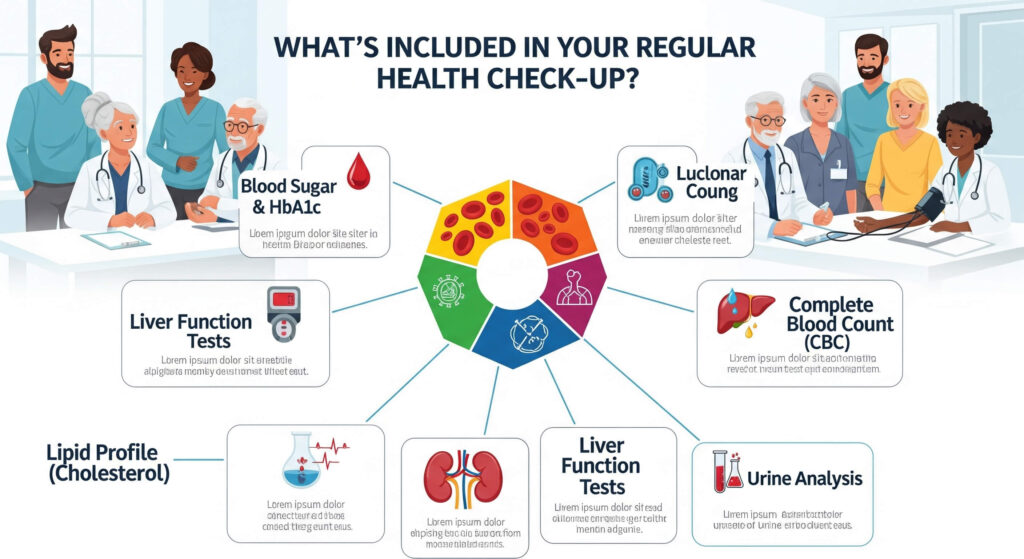
A health checkup for a 30-year-old should include a metabolic panel, lipid profile, thyroid function, vitamin levels, and organ function tests. Full body checkups are comprehensive health screening packages that include a variety of tests, such as those for diabetes, heart health, liver and kidney function, and more.
Comprehensive packages typically range from basic 25–35 tests to advanced 60+ marker panels. The full body checkup cost in India varies significantly.
Basic packages may start around ₹999–₹2,500, while comprehensive preventive packages range between ₹3,500–₹8,000, depending on the city and lab quality. The cost is influenced by the number and type of tests included, as well as the reputation of the healthcare provider.
When evaluating health packages in India, prioritize clinically relevant markers over sheer test count. NABL-accredited laboratories ensure quality control and reliable reference ranges.
A 30-year-old typically requires 25–40 essential tests annually, adjusted for risk profile. Skin cancer screenings are necessary as the risk increases with age and sun exposure, so dermatological exams should be considered. Additionally, eye exams should be conducted at least every two years in your 30s to detect early signs of eye diseases.
Basic vs Comprehensive Preventive Package Comparison
Feature |
Basic Package |
Comprehensive Package |
|---|---|---|
Test Count |
20–30 |
40–70 |
Includes Thyroid |
Sometimes |
Yes |
Includes Vitamin D & B12 |
Rarely |
Yes |
Cardiac Risk Markers |
Basic Lipid |
Lipid + hs-CRP |
Fertility Markers |
No |
Optional Add-on |
Suitable For |
Low-risk individuals |
Urban professionals, family history risk |
Select laboratories that are accredited by NABL in order to have standardized processing. Test panels developed by physicians would be better than those developed by marketing. Open reporting, where reference ranges are clear, improves understanding.
Actionable insights need to be supported by accurate interpretation. Strict safety and hygiene measures should be upheld in the home collection services so as to ensure sample integrity.
MyDiagnostics provides age-specific health checklists for the 30s, clinically curated. Its preventive diagnostics panels are evidence-based as opposed to volume-driven. Procedures on samples are carried out using NABL-accredited labs to guarantee precision.
Safe home collection measures reduce inconvenience and do not compromise quality. The reports are made easy to track and assist a person in creating a long-term health record.
MyDiagnostics service is reliable for the following:
Digital access to reports
Reports delivered within 24-48 hours
Certified phlebotomists
Transparent pricing
10,000+ customers
✔ Blood sugar & HbA1c
✔ Lipid profile
✔ Thyroid panel
✔ Vitamin D & B12
✔ Liver & kidney function
✔ Iron profile
✔ Cardiac risk assessment
✔ Fertility markers (if planning)
✔ Blood pressure monitoring
✔ Lifestyle risk review
✔ Urine tests (for early detection of diabetes, kidney issues, and metabolic disorders)
✔ Skin cancer screening (recommended for adults in their 30s due to increased risk with age and sun exposure)
Your 30s represent a critical inflection point in long-term health. Early screening, informed lifestyle correction, and consistent tracking can prevent decades of chronic disease. Preventive diagnostics are not about fear; they are about informed decision-making, measurable tracking, and proactive health management.
Yes. Conditions like silent hypertension, insulin resistance, and early lipid abnormalities often show no symptoms. Preventive diagnostics help detect risks early and allow timely lifestyle or medical intervention.
High blood pressure, prediabetes, abnormal cholesterol levels, fatty liver disease, inflammatory bowel disease, and Vitamin D deficiency are common silent risks. Routine screening is the only reliable way to detect them early.
Most healthy women benefit from annual preventive blood tests. Those with thyroid concerns, fertility goals, PCOS, or a family history of metabolic disease may require more frequent monitoring.
Yes. Prediabetes detected early can often be reversed through dietary changes, exercise, weight management, and medical supervision. Screening enables early corrective action.
A 30s health checklist includes glucose testing, lipid profile, thyroid panel, Vitamin D and B12 levels, liver and kidney function tests, iron profile, and cardiac risk assessment markers.
Indoor work environments, limited sunlight exposure, and sedentary routines contribute to widespread Vitamin D deficiency among urban professionals in India.
A regular physical exam includes vital sign assessment and general clinical evaluation, while a metabolic panel provides blood-based insights into glucose levels, kidney function, and electrolyte balance.
Yes, fasting for 8–10 hours is typically required for accurate glucose and lipid profile results. Water is generally allowed unless advised otherwise.
Persistent fatigue, reduced muscle mass, mood changes, sleep disturbances, and low libido may indicate hormonal fluctuations. Blood testing confirms whether levels are clinically abnormal.
Regular lipid profile testing, blood pressure monitoring, and inflammation markers such as hs-CRP help evaluate cardiac risk even in the absence of symptoms.
**Medical Disclaimer: The following information is for educational purposes only. No information provided on this website, including text, graphics, and images, is intended as a substitute for professional medical advice. Please consult with your doctor about specific medical advice about your condition(s).