Offer
Provide additional details about the offer you're running.
FLASHSALE


MyDiagnostics offers a 14-day continuous glucose monitor (CGM) in Chandigarh for ₹4,999. A trained practitioner applies the Abbott FreeStyle Libre Pro sensor, a coin-sized wearable patch, on the back of your upper arm at home. It records your glucose every 15 minutes, about 1,344 readings over 14 days, with no daily finger pricks. On day 15, you remove the sensor, and a doctor-reviewed glucose report is emailed within 24 hours.
Sample Required: None
Test Mode: At Home
Turnaround Time: 24 Hours
Fasting Time: None
Other Instructions: None
Recommended for: Type 1/2 Diabetics, Pre-diabetes, Athletes, Weight Loss
The CGM machine price in Chandigarh is ₹4,999 for the 14-day professional CGM service described on this page. The package includes the sensor, professional application, removal, glucose-data download, and a doctor-reviewed report.
You do not need to purchase a separate machine or reader for this professional monitoring service; one sensor covers the intended 14-day monitoring period. It is easy to operate and safe to use.
Abbott describes FreeStyle Libre Pro as a professional system in which the reader remains with the healthcare provider rather than the patient.
The package includes one FreeStyle Libre Pro sensor designed to remain on the back of the upper arm for up to 14 days. It also includes home application by a trained practitioner, followed by sensor removal and data download after the monitoring period.
The resulting glucose profile can be reviewed by a doctor, with nutrition consultation available as an additional service where applicable. Abbott states that the professional system records glucose data every 15 minutes and stores it for subsequent clinical review.
A CGM should not be confused with watches or rings that claim to measure glucose without piercing the skin. The FDA states that it has not authorised, cleared or approved any smartwatch or smart ring intended to measure or estimate blood glucose on its own, and warns that inaccurate readings can create risks for people making diabetes-management decisions.
A professional CGM measures glucose from interstitial fluid through a tiny filament placed under the skin, so it is minimally invasive rather than completely non-invasive. At ₹4,999, the indicative cost is about ₹3.72 per scheduled 15-minute interval over 14 days (1,344 intervals); Abbott's published FreeStyle Libre Pro material reports up to 1,344 stored glucose results over 14 days.
You can book a 14-day professional CGM online and arrange at-home sensor application where the service is available. Before booking, review feedback from previous customers.
Comparing previous customers to help assess service quality and checking whether you are dealing with a manufacturer, distributor, or a professional healthcare service can help you make an informed decision. Book now to request the available Chandigarh home-application slot.
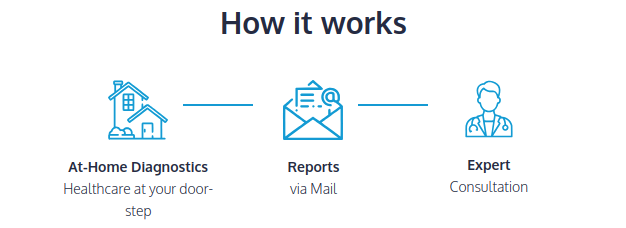
The ordering process is designed to require only three main steps. First, add the CGM service to your booking and provide the requested details for review. Next, select an available home appointment, after which the practitioner applies the sensor, and you wear it for the prescribed monitoring period.
Home application is available in Chandigarh according to current service coverage and appointment availability. Nearby locations such as Mohali, Panchkula and Zirakpur are usually covered for this test. Appointment timing can vary according to practitioner schedules, so the booking confirmation should be treated as the definitive service window.
If you want to buy a personal CGM sensor to apply yourself, you can depend on local availability. There are many blood glucose monitor products currently available, per the information provided by listed sellers.
Some monitors feature LCDs and data storage. Sensors typically last between 10 and 15 days before they need to be replaced. Smartphone compatibility is crucial for Continuous Glucose Monitoring systems that require app interactions.
A professional CGM service differs because the sensor is applied under professional supervision and the collected data can subsequently be downloaded and reviewed as a clinical glucose profile.
Abbott describes FreeStyle Libre Pro specifically as a professional system in which the patient does not interact with the reader or view the stored data during the wear period.
A professional CGM uses a small sensor worn on the upper arm to measure glucose in the fluid surrounding cells rather than taking repeated blood samples.
The FreeStyle Libre Pro records glucose data at 15-minute intervals for up to 14 days and stores the information inside the sensor for later download. This creates a longitudinal glucose profile that can reveal patterns that occasional spot checks may not capture.
The sensor is a small, discreet device applied to the back of the upper arm with an adhesive pad. A thin, flexible filament extends just under the skin and measures glucose in interstitial fluid rather than directly drawing blood. Abbott's India information describes the filament as approximately 5 mm long and 0.4 mm wide.
The FreeStyle Libre Pro records glucose values at 15-minute intervals, allowing monitoring across meals, physical activity and sleep. Four readings per hour correspond to 96 scheduled intervals per day and 1,344 intervals over 14 days; however, Abbott's published product information reports up to 1,344 stored glucose readings over the full wear period.
This continuous pattern is useful because glucose can change between two conventional finger-prick checks. The American Diabetes Association recognises CGM metrics such as time in range, time above range, time below range, mean glucose and glucose variability as useful measures of glycaemic status.
FreeStyle Libre Pro is a professional, blinded CGM system, so the person wearing the sensor does not normally see the stored glucose readings during the monitoring period.
The data remains in the sensor and is downloaded by the healthcare professional after the wear period. This design can allow your normal eating, activity and sleep routine to continue without reacting to each glucose value.
The Abbott FreeStyle Libre system is designed to be worn during normal daily activities, including sleep and appropriate physical activity, and Abbott describes the sensor as water-resistant. Avoid deliberately knocking, pulling or scrubbing the sensor because physical damage or loosening can affect data collection.
If you have an MRI, CT scan or diathermy treatment planned, follow the specific device instructions; Abbott's safety information states that the FreeStyle Libre 14-day system must be removed before these procedures.
The home application begins after the booking information has been reviewed and an appointment has been confirmed. A trained practitioner places the sensor on the back of the upper arm and explains how to protect the site during the 14-day monitoring period.
You can choose the right product type based on your requirements. After completion, the sensor is removed, and the stored data is downloaded for report preparation.
The CGM application is quick, but calling it completely needleless is technically inaccurate because a tiny filament is inserted just beneath the skin. The applicator performs the insertion rapidly, after which the filament remains beneath the skin while the sensor stays on the surface.
Most people experience only brief discomfort, although individual sensitivity varies. Abbott describes the FreeStyle Libre Pro filament as approximately 5 mm long and 0.4 mm wide.
CGM allows glucose monitoring without repeatedly drawing blood for each reading, but it should not be described as completely non-invasive. The sensor uses a small filament under the skin to measure interstitial-fluid glucose, making it a minimally invasive form of continuous monitoring.
A CGM can substantially reduce the need for repeated finger-prick measurements during the monitoring period. Instead of obtaining a separate capillary blood sample for each check, the sensor collects glucose information from interstitial fluid at regular intervals.
The ADA recognises CGM as an established glucose-monitoring technology used alongside or instead of conventional blood glucose monitoring in appropriate clinical situations.
Consumers should be cautious about products claiming to measure blood glucose through a smartwatch, smart ring or other completely non-invasive technology.
The FDA specifically states that it has not authorised, cleared or approved any smartwatch or smart ring that measures or estimates blood glucose on its own.
A CGM is different because it uses a sensor with a filament placed under the skin to measure interstitial glucose. Therefore, CGM is a clinically established monitoring technology, but it is not technically non-invasive.
The appropriate option depends on whether you need a short professional glucose profile, ongoing personal monitoring or occasional spot measurements.
A professional 14-day CGM can show patterns over several days, while a personal CGM can provide ongoing access to glucose information depending on the device. A conventional glucometer remains useful when a clinician recommends capillary blood-glucose checks or when confirmation of a CGM reading is required.
|
Option |
Monitoring pattern |
Blood sample for each reading |
Overnight pattern |
Typical purpose |
|---|---|---|---|---|
|
14-day professional CGM |
Continuous profile |
No |
Yes |
Clinical pattern assessment |
|
Personal CGM |
Continuous/near-continuous |
No for each sensor reading |
Yes |
Ongoing self-monitoring |
|
Glucometer |
Individual spot checks |
Yes |
Only if tested overnight |
Specific glucose checks |
The ADA notes that CGM can provide information about glucose responses to meals, physical activity and medication changes, while the AHA also recognises both home glucose meters and CGMs as tools for monitoring diabetes.
A CGM and a conventional glucose meter answer slightly different monitoring needs. A glucose meter measures blood glucose from an individual fingerstick sample, whereas CGM provides repeated measurements from interstitial fluid over time.
The FDA describes a conventional blood glucose meter as a device that uses a handheld meter and test strips to measure glucose in a small blood sample.
|
Feature |
Professional CGM |
Glucometer |
|---|---|---|
|
Readings/day |
Up to 96 stored readings/day with Libre Pro |
As often as the user tests |
|
Pain |
Brief sensor application |
Fingerstick each test |
|
Blood needed |
No repeated blood sample |
Yes |
|
Overnight data |
Yes |
Only if tested |
|
Meal-spike visibility |
High because readings are frequent |
Depends on testing schedule |
|
Monitoring period |
Up to 14 days |
Ongoing with strips |
|
Cost |
₹4,999 for this service |
Meter plus recurring strips/lancets |
|
Best for |
Glucose patterns and trends |
Spot blood glucose checks |
The ADA 2026 Standards describe both CGM and blood glucose monitoring as useful tools, with CGM metrics offering additional information about glucose responses to meals, physical activity and medication changes.
The appropriate product type, measurement range, display type, sensor duration and monitoring approach should therefore be selected based on your requirements rather than simply choosing the lowest price.
CGM can be considered when a clinician wants more information about glucose patterns than occasional measurements provide. The ADA's 2026 Standards recognise CGM as an important diabetes technology for many people with diabetes, including people using insulin or treatments that can cause hypoglycaemia.
People with diabetes may benefit from CGM when their healthcare team needs information about glucose variability, time in range, high-glucose periods or low-glucose episodes.
It can be particularly useful when HbA1c does not explain day-to-day glucose patterns or when treatment changes require closer monitoring. The ADA recommends considering CGM for people with diabetes according to their treatment, circumstances and individual needs.
CGM may provide information about how glucose changes around meals and daily activities, but it should not be presented as a standalone diagnostic test for prediabetes or diabetes.
Diagnosis generally relies on established tests such as HbA1c, fasting plasma glucose or an oral glucose tolerance test, depending on the clinical situation. WHO identifies blood glucose testing and HbA1c among the established approaches used for diabetes assessment and management.
For people interested in metabolic patterns, a short CGM period may provide additional information to discuss with a healthcare professional. Food-related glucose responses vary considerably between individuals, so a single CGM period should not be interpreted as proving that a particular food is universally healthy or unhealthy.
Athletes and people working on weight-management goals may use glucose-monitoring information to understand how meals, exercise and recovery coincide with glucose changes.
However, a glucose excursion does not automatically mean that a food is unhealthy or that a particular glucose response requires treatment. Interpretation should consider the individual's overall nutrition, activity, metabolic health and medical context.
For recreational users, the goal should be understanding patterns rather than chasing a particular glucose number. A nutrition professional can help translate the information into practical meal, activity and recovery choices.
Speak with your doctor before using a CGM if you are pregnant, have significant skin problems at the intended application site or have a scan or treatment planned during the wear period.
You should also review medication and supplement considerations with your healthcare professional because some products can affect certain glucose-monitoring systems. Abbott's safety information should be checked for the exact sensor model being used, particularly regarding MRI, CT and diathermy.
A 14-day CGM report can summarise glucose patterns using measures such as time in range, average glucose, time above range, time below range and glucose variability. ADA 2026 identifies these as clinically useful CGM metrics and notes that a 10- to 14-day assessment can be used for glycaemic assessment when sufficient data are available.
|
Report metric |
What it tells you |
|---|---|
|
Time in range |
Percentage of readings within the selected glucose range |
|
Time above range |
Time spent above the target range |
|
Time below range |
Time spent below the target range |
|
Average glucose |
Mean glucose across the available data |
|
Glucose variability |
How widely glucose values fluctuate |
|
Daily patterns |
Repeated meal, activity or overnight trends |
|
AGP-style visualisation |
Condensed view of glucose patterns over the monitoring period |
For many nonpregnant adults with diabetes, ADA 2026 uses 70–180 mg/dL (mg/dL) as the standard time-in-range band, but individual targets may differ. The report should therefore be interpreted in context rather than treating one percentage or graph as a diagnosis.
The next step is to discuss the findings with your doctor, especially if there are repeated lows, significant highs or unexpected glucose variability. Nutrition support can also help translate meal-related patterns into practical changes without making medication decisions from the CGM report alone.
MyDiagnostics combines a professional 14-day CGM sensor with home application and report review, reducing the need for the customer to manage sensor insertion independently.
The service is intended to provide a structured glucose snapshot rather than simply selling a sensor as a standalone electronic product. The final service inclusions, practitioner availability, home-visit coverage and current rating should always be checked on the live booking page.
A key difference between a professional CGM service and a marketplace listing is the support around the device. A marketplace search may show a manufacturer supplier, distributor supplier, trading company, supplier trading company, manufacturer distributor or listed seller, but those labels do not by themselves indicate clinical expertise.
When comparing products currently available, check the actual manufacturer, product name, intended use, sensor duration and included clinical services. Supplier's ratings and feedback, feedback from previous customers and delivery time can help evaluate logistics, while medical authenticity should be established from manufacturer documentation and professional guidance.
You generally do not need to fast simply to have a CGM sensor applied, because the purpose of the monitoring period is to observe glucose patterns during your normal routine.
Unless your healthcare professional gives different instructions, avoid applying lotion or heavy creams to the intended upper-arm site and wear clothing that allows easy access. A simple record of meals, exercise, sleep and symptoms can make the subsequent report more useful.
There is no need to deliberately change your eating pattern before or during the monitoring period simply to produce a better-looking report. The value of a professional CGM assessment comes from observing your usual patterns and identifying clinically relevant trends.
Before application, tell the practitioner about relevant medicines, supplements, skin problems and any planned imaging. If you have an MRI, CT scan, X-ray or diathermy procedure scheduled, discuss sensor removal requirements beforehand because Abbott advises removing the professional sensor before certain imaging exposures.
Book the MyDiagnostics 14-day CGM Sensor for convenient application at home, continuous glucose monitoring and a detailed report to help you understand your glucose trends.


