Offer
Provide additional details about the offer you're running.
FLASHSALE


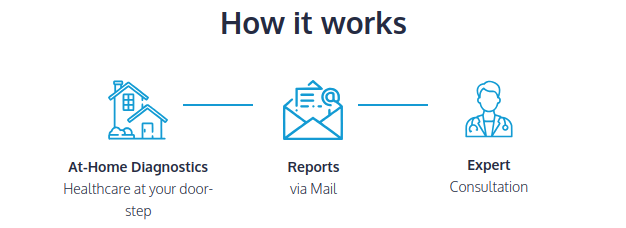
MyDiagnostics offers a 14-day continuous glucose monitoring (CGM) service in Ghaziabad for ₹4,999. The package includes an Abbott FreeStyle Libre Pro sensor, home sensor application and removal by a qualified practitioner, and a doctor-reviewable glucose report within 24 hours after sensor removal.
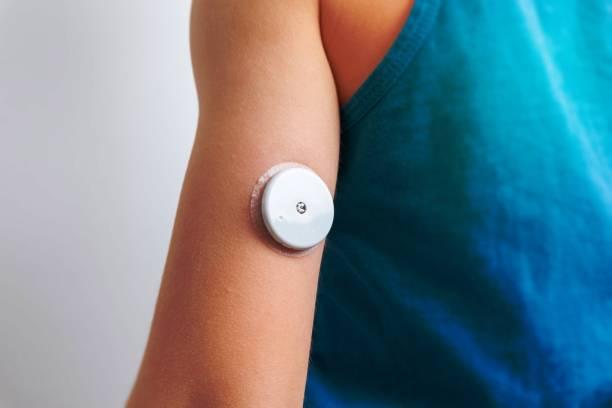
The FreeStyle Libre Pro is a masked (blinded) professional CGM. It records glucose data during the monitoring period, but readings are not visible to the wearer in real time. The data are downloaded after sensor removal to generate a report. The sensor records glucose every 15 minutes, providing up to 1,344 readings over 14 days.
Need help choosing the right CGM? Call MyDiagnostics at 080-4716-6161.
Book CGM in Ghaziabad: View the MyDiagnostics CGM service.
The MyDiagnostics CGM service costs ₹4,999 for 14 days, equivalent to approximately ₹357 per day. This is a service package rather than a sensor-only purchase.
The package includes:
One 14-day CGM sensor.
Home sensor application by a qualified practitioner.
Monitoring support during the wear period.
Home sensor removal after the monitoring period.
Glucose data analysis and a doctor-reviewable CGM report.
Assistance with sensor-related queries.
The report is provided within 24 hours after sensor removal.
A sensor-only purchase may not include application, removal, monitoring support or report preparation. The MyDiagnostics package combines the sensor with these service elements, helping customers access professional application and a report without arranging each step independently.
Compare the complete package price, included services and support before choosing a CGM.
To book a CGM service at home through MyDiagnostics:
MyDiagnostics provides home sensor application in Ghaziabad through scheduled appointments. Customers can contact the service team at 080-4716-6161 to confirm whether their PIN code is covered and arrange an appointment.
People searching for a glucose monitor patch in Ghaziabad can compare pharmacies, online sellers and professional CGM services.
|
Purchase option |
What is included |
Application and support |
|---|---|---|
|
Pharmacy |
Sensor or glucose-monitoring device, depending on the product |
Self-application or separate assistance may be required |
|
Online marketplace |
Product specified in the listing |
Application guidance and after-sales support vary by seller |
|
MyDiagnostics |
14-day CGM sensor and associated monitoring service |
Home application, sensor removal, monitoring support and a report |
For people searching for effective diabetes management machine home delivery in Ghaziabad, the MyDiagnostics' service brings the sensor to the home and includes application by a qualified practitioner.
The right continuous glucose monitor depends on whether you need a historical glucose-pattern report or readings you can check yourself throughout the day.
|
Feature |
MyDiagnostics professional CGM technology |
Real-time self-use CGM |
|---|---|---|
|
Monitoring approach |
Blinded professional monitoring |
Readings available to the user through a compatible system |
|
Live glucose readings |
No |
Yes, depending on the model |
|
Live glucose alerts |
No |
Available on compatible models |
|
Data access |
Downloaded after monitoring for report preparation |
Accessible during wear through the compatible device or app |
|
Best suited for |
Clinician-directed assessment of glucose patterns |
People who need ongoing access to glucose readings as part of their care |
Choose the MyDiagnostics Libre Pro service if your clinician wants to assess historical glucose patterns over 14 days and you do not need to view readings during the monitoring period.
Explore a real-time CGM instead if you need to see glucose readings while wearing the sensor. Visit the Abbott FreeStyle Libre product range for India to compare available systems and their features.
Product features, indications and compatibility vary by model. Discuss the most appropriate system with your healthcare professional.
A wearable glucose monitor is a sensor worn on the body to measure glucose in interstitial fluid over time.
The sensor uses a small filament positioned just beneath the skin to measure glucose in interstitial fluid. The Libre Pro records glucose data every 15 minutes during its 14-day wear period.
Interstitial glucose can lag behind blood glucose, particularly when glucose levels change rapidly. As a result, CGM and finger-prick glucometer readings may differ at a given moment.
Follow the manufacturer’s instructions and the practitioner’s guidance for showering, exercise, sleep and sensor care.
The Libre Pro sensor is water-resistant and can be worn while bathing, showering or swimming. The manufacturer's documentation specifies immersion up to 1 metre of water for no longer than 30 minutes. Avoid deeper or prolonged immersion.
Remove the sensor before MRI, CT scans, X-rays or diathermy treatment, in accordance with the Abbott FreeStyle Libre Pro instructions.
The system is intended for professional use in adults aged 18 and older with diabetes. Abbott's documentation states that it has not been evaluated for use in pregnancy or in people receiving dialysis and is not recommended for critically ill patients. Consult a healthcare professional before use if any of these circumstances apply.
A CGM records glucose without routine finger-prick blood tests during the monitoring period. However, it is minimally invasive, not completely non-invasive, because the sensor uses a filament inserted under the skin.
The professional Libre Pro sensor is applied to the back of the upper arm. Once in place, it records glucose data automatically. The wearer cannot see live readings during the 14-day period, and the data are downloaded after sensor removal for the report.
MyDiagnostics lists its 14-day professional CGM service at ₹4,999. The sensor is minimally invasive and is not a completely non-invasive glucometer.
On 21 February 2024, the U.S. Food and Drug Administration (FDA) issued a safety communication on smartwatches and smart rings claiming to measure blood glucose. The FDA stated that it had not authorised, cleared or approved standalone smartwatches or smart rings intended to measure or estimate glucose on their own.
This FDA communication concerns the U.S. market. In India, medical devices are regulated under the Drugs and Cosmetics Act, 1940, and the Medical Devices Rules, 2017, administered through the Central Drugs Standard Control Organization (CDSCO) and the applicable regulatory framework. See the official CDSCO medical device information.
Do not assume that an FDA statement establishes a product's regulatory status in India. Check the device's applicable Indian regulatory status and intended use.
A CGM report helps summarise glucose patterns during the monitoring period. Depending on the reporting software and available data, professional CGM reports may include the following metrics.
The International Consensus on Time in Range by Battelino et al., published in Diabetes Care in 2019, provides guidance on standardised CGM metrics and interpretation.
Time in Range (TIR): The percentage of readings within a specified glucose range.
Time Below Range (TBR): The percentage of readings below the target range, including clinically important low-glucose thresholds.
Time Above Range (TAR): The percentage of readings above the target range.
Glucose Management Indicator (GMI): An estimate derived from mean sensor glucose. It is not the same as a laboratory HbA1c result.
Glucose variability: A measure of glucose fluctuations, commonly expressed as the coefficient of variation (CV).
Daily, overnight and post-meal patterns: Historical glucose trends that may help a clinician identify recurring rises and falls.
For many adults with type 1 or type 2 diabetes, the 2019 international consensus suggests the following targets:
|
CGM metric |
General adult target |
|---|---|
|
Time in Range, 70–180 mg/dL |
More than 70% |
|
Time Below Range, below 70 mg/dL |
Less than 4% |
|
Time Below Range, below 54 mg/dL |
Less than 1% |
|
Time Above Range, above 180 mg/dL |
Less than 25% |
|
Time Above Range, above 250 mg/dL |
Less than 5% |
|
Glucose variability (CV) |
36% or lower |
Older adults and people at high risk of hypoglycaemia require different considerations. The consensus suggests a TIR target above 50% and TBR below 70 mg/dL under 1% for this group, with particular emphasis on reducing hypoglycaemia.
Pregnancy uses a different target range of 63–140 mg/dL. The consensus suggests a TIR target above 70% for pregnant women with type 1 diabetes, but evidence for some pregnancy populations remains limited. Targets must be individualised by the treating clinician.
These are clinical reference targets, not universal goals for every individual. A clinician should interpret the report in the context of medical history, medication, symptoms and treatment goals.
Book CGM in Ghaziabad: View the 14-day MyDiagnostics CGM service.
A CGM may help people with diabetes when a healthcare professional recommends continuous glucose monitoring to assess glucose patterns and support treatment decisions.
Adults with type 1 or type 2 diabetes who need an assessment of glucose patterns.
People whose clinician wants to examine glucose changes around meals, sleep or physical activity.
Individuals whose treatment plan would benefit from historical glucose data.
Selected patients undergoing a clinician-directed metabolic assessment.
Consult a healthcare professional before using the professional Libre Pro system if you are pregnant, receiving dialysis, critically ill, considering CGM for a child, or have significant skin sensitivity or allergies at the application site.
People who use insulin or other glucose-lowering medicines should understand that Libre Pro does not provide live readings or low-glucose alerts. Continue the blood-glucose monitoring routine advised by your clinician during sensor wear. Do not change medication based only on a historical CGM report.
CGM, a glucometer and an HbA1c test provide different information.
|
Feature |
CGM |
Finger-prick glucometer |
HbA1c test |
|---|---|---|---|
|
What it measures |
Glucose in interstitial fluid over time |
Blood glucose at the time of testing |
Glycated haemoglobin, reflecting longer-term glucose exposure |
|
Reading pattern |
Repeated readings during sensor wear |
A reading each time a test is performed |
One laboratory result |
|
Finger-prick requirement |
Sensor insertion; routine finger-prick testing is not required for sensor data collection |
Usually requires a finger prick |
Requires a blood sample |
|
Overnight patterns |
Captures glucose patterns during sensor wear |
Only if a test is performed overnight |
Does not show individual overnight patterns |
|
Meal-related insights |
Shows glucose patterns around meals |
Shows glucose at the time of testing |
Does not show individual meal-related changes |
|
Main purpose |
Understand glucose trends and variability |
Check glucose at a specific time |
Assess longer-term glucose control |
|
MyDiagnostics CGM service price |
₹4,999 for 14 days |
Varies by meter and supplies |
Varies by laboratory and location |
For related testing options, explore the MyDiagnostics HbA1c test and ask the service team about fasting and post-prandial (PP) blood-sugar testing.
When comparing a prickless blood sugar levels monitor in Ghaziabad, consider the following:
Sensor life: Check the supported wear period for the exact model.
Intended use: Distinguish between professional, blinded CGM and real-time self-use CGM.
Clinical and regulatory status: Choose a recognised device appropriate for its intended use and check applicable Indian regulatory requirements.
Professional application: Confirm whether the service includes home sensor application.
Report and interpretation: Check what data the report contains and share it with your treating clinician.
Cost per day: Compare the complete service cost rather than the sensor price alone.
Local support: Confirm appointment coverage and sensor-removal arrangements for your PIN code.
A completely non-invasive glucose-monitoring claim should be evaluated carefully. A device that tracks activity, heart rate or other health metrics is not necessarily capable of measuring blood glucose.
MyDiagnostics lists a 14-day professional CGM service for ₹4,999. The package includes home sensor application and removal, monitoring support and a report provided within 24 hours after sensor removal.
A qualified practitioner applies and removes the sensor at home, with appointments arranged through the service team.
The Libre Pro sensor records glucose every 15 minutes for up to 14 days. The data are downloaded after sensor removal because the professional system is blinded during wear.
The report summarises the available glucose data to help your treating doctor assess historical glucose patterns and discuss appropriate next steps. The report should be interpreted alongside medical history, symptoms, medicines and other relevant investigations.
For questions about the MyDiagnostics CGM service, call 080-4716-6161.
Review the MyDiagnostics refund and reschedule policy before confirming your appointment. The applicable terms govern cancellations, rescheduling and refunds.


