Offer
Provide additional details about the offer you're running.
FLASHSALE


MyDiagnostics offers a 14-day continuous glucose monitor (CGM) sensor in Lucknow for Rs. 4,999. A trained professional applies the small sensor patch to your upper arm at home. It records glucose every 15 minutes for 14 days without daily finger pricks. After removal, you receive a report showing your sugar spikes, time-in-range and overnight lows.
Sample Required: None
Test Mode: At Home
Turn Around Time: 24 Hours
Fasting Time: None
Other Instructions: None
Recommended for: Type 1/2 Diabetics, Pre-diabetes, Athletes, Weight-Loss
The CGM machine price in Lucknow is ₹4,999 for the 14-day CGM service currently listed by MyDiagnostics. The package includes the CGM sensor, sensor application, readings and removal at home, with the report available within 24 hours after sensor removal.
The ₹4,999 price is for the monitoring service and sensor rather than a conventional glucometer that you keep and reuse.
WHO recognises blood glucose monitoring and access to appropriate diabetes technologies as important parts of diabetes care, while its diabetes-monitoring guidance also highlights the importance of collecting and using glucose data to improve diabetes management.
|
Included |
Details |
|
CGM sensor |
Abbott FreeStyle Libre Pro sensor |
|
Wear period |
Up to 14 days |
|
Sensor application |
Professional home application |
|
Glucose monitoring |
Continuous interstitial glucose recording |
|
Sensor removal |
Home removal included |
|
Report |
14-day glucose profile and trends |
|
Report TAT |
Within 24 hours after sensor removal |
|
Blood sample |
Not required |
|
Fasting |
Not required for the CGM service |
|
Personal reader |
Not included as a device to keep |
|
Additional visits |
Confirm separately if required |
The Abbott FreeStyle Libre Pro is designed to record glucose values every 15 minutes for up to 14 days, creating a detailed glucose profile for clinical review. Abbott describes the professional system as a tool that helps healthcare professionals identify glucose trends, overnight hypoglycemia patterns and post-meal glucose spikes.
CGM and blood glucose meters measure glucose differently, so they should not be treated as identical tests.
A glucometer provides an individual blood glucose result each time you perform a finger prick, whereas CGM provides a much larger set of interstitial glucose measurements over the wear period. The table below is an illustrative monitoring comparison, not a claim that one method is medically appropriate for everyone.
|
Feature |
14-Day CGM |
Glucometer + Strips |
|
Monitoring period |
Up to 14 days |
Depends on testing frequency |
|
Routine finger pricks |
Generally avoided during CGM wear |
Required for each test |
|
Data overnight |
Automatically recorded |
Requires waking and testing |
|
Readings/data points |
About 96 readings/day with a 15-minute recording interval |
Only when a test is performed |
|
Pattern visibility |
High — shows trends and fluctuations |
Limited to individual test points |
|
Meal-related patterns |
Easier to identify |
Requires timed testing |
|
Exercise-related changes |
Can be followed continuously |
Requires repeated testing |
|
Glucose variability |
Can be assessed from continuous data |
Difficult to assess without frequent testing |
|
Personal equipment |
Sensor is worn for 14 days |
Meter can be reused |
The ADA notes that a 10- to 14-day CGM assessment can provide useful information about time in range and other glucose metrics when sufficient data are captured.
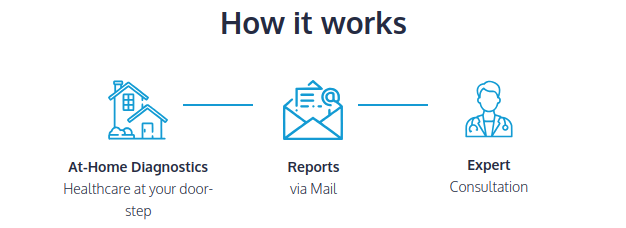
Booking a CGM sensor home application in Lucknow is designed to avoid a routine clinic visit for sensor placement. You can order the service online or contact the MyDiagnostics support team, confirm an appointment slot and arrange for a qualified professional to apply the sensor at home. The sensor then remains in place for up to 14 days before removal and report generation.
For continuous sugar testing at home in Lucknow, the service currently lists no blood sample requirement and a 24-hour turnaround after sensor removal.
Step-by-Step Booking
1. Order online or call: Select the Lucknow CGM service online or contact the support team.
2. Confirm your slot: The team confirms the available home-visit appointment.
3. Professional visit: A qualified professional visits your home and applies the sensor to the back of the upper arm.
4. Sensor application: The application is a quick procedure, and the sensor can remain in place for up to 14 days.
5. Wear the sensor: Continue normal daily activities while glucose data are recorded.
6. Removal: After the wear period, arrange the included sensor-removal visit.
7. Report: The recorded information is processed into a glucose report, with the listed turnaround time being 24 hours after sensor removal.
The ADA states that CGM can provide useful information about glucose responses to meals, physical activity and medication changes, making longitudinal glucose data valuable for clinical assessment.
MyDiagnostics provides CGM services in Lucknow, with availability subject to the address or pincode entered during booking.
Because home-visit coverage can change by operational zone and appointment availability, customers should confirm their exact locality before scheduling the sensor application. This approach avoids promising service in a locality that may not be covered on the selected date.
The Lucknow CGM service supports sensor application at home, while the product information also describes a clinic option for sensor-related appointments.
The professional application is performed following the applicable clinical review process. If you prefer a clinic appointment instead of a home visit, confirm the currently available location and slot with the support team before booking.
A CGM glucose monitor patch is a small wearable sensor placed on the back of the upper arm. The FreeStyle Libre Pro sensor uses a thin filament inserted just beneath the skin to measure glucose in interstitial fluid rather than directly drawing blood from the fingertip. Abbott states that the sensor records glucose every 15 minutes and can remain in place for up to 14 days.
The data provide a more complete picture than occasional glucose checks because the sensor records throughout the day and night. This can help reveal patterns that may be missed when glucose is checked only before or after selected meals. CGM data should still be interpreted in the appropriate clinical context because interstitial glucose and blood glucose are not identical measurements.
With a 15-minute recording interval, the sensor provides approximately 96 readings per day, equivalent to approximately 1,344 readings over 14 days. Abbott's India information describes the FreeStyle Libre Pro as recording glucose every 15 minutes for up to 14 days.
This volume of data helps show glucose trends during sleep, meals, exercise and other daily activities. It is particularly useful for identifying recurring patterns rather than relying on isolated glucose measurements. The exact number of usable readings can vary if the sensor has interruptions or does not remain active for the entire period.
|
Feature |
CGM |
Blood Glucose Meter |
|
Measurement |
Interstitial glucose |
Capillary blood glucose |
|
Sampling |
Automatic at regular intervals |
Manual testing |
|
Finger pricks |
No routine repeated pricks during wear |
Required for each test |
|
Overnight information |
Automatically recorded |
Requires overnight testing |
|
Trend information |
Yes |
Limited |
|
Meal spikes |
Can show patterns continuously |
Requires timed tests |
|
Glucose variability |
Can be calculated from continuous data |
Needs multiple readings |
|
Wearable |
Yes |
No |
A blood glucose meter measures glucose in a blood sample from the fingertip, whereas CGM measures glucose in interstitial fluid beneath the skin. Because there can be a physiological delay between blood and interstitial glucose, CGM values may not exactly match a finger-stick reading at a particular moment.
CGM is often described as a prickless or needleless sugar-monitoring option, but it is important to use accurate wording. The sensor is applied once using an applicator, which places a very thin filament under the skin; after application, repeated finger-prick blood draws are generally not required for routine monitoring with the professional system. Abbott describes the FreeStyle Libre Pro as requiring no finger-stick calibration.
The application may cause a brief sensation, but the procedure is designed to be quick and minimally uncomfortable for most users. If symptoms do not match the sensor reading or a healthcare professional advises confirmation, a finger-stick blood glucose measurement may still be required.
Smartwatches and smart rings that claim to measure blood glucose without piercing the skin should not automatically be considered equivalent to clinically authorised CGM systems. The FDA states that it has not authorised, cleared or approved any smartwatch or smart ring intended to measure or estimate blood glucose on its own.
A clinically used CGM still uses a sensor inserted beneath the skin to measure interstitial glucose. This is why CGM is better described as minimally invasive rather than completely non-invasive. Consumers should avoid relying on unapproved wearable devices for medical glucose-management decisions.
CGM can be particularly useful for people with diabetes who need a clearer picture of glucose patterns, including people using insulin or treatments that can cause hypoglycemia. The ADA notes that CGM is particularly useful in people at risk of hypoglycemia and supports its use across multiple diabetes populations.
It can also be convenient for people who find repeated finger-prick testing difficult, including some older adults and people who want to understand overnight glucose patterns. People exploring the relationship between food, activity, sleep and glucose should discuss the purpose and interpretation of CGM data with their healthcare professional.
A 14-day CGM report can provide a broader view of glucose behaviour than isolated fasting or post-meal readings. Depending on the report format and data available, it can show time in range, time above range, time below range, glucose management indicator (GMI), mean glucose and glucose variability. The ADA identifies these as useful CGM metrics for assessing glycemic status.
The report can also highlight recurring daily patterns, including overnight changes and glucose rises after meals. These observations can help a healthcare professional assess whether further testing, lifestyle changes or treatment review may be appropriate.
|
Report Metric |
What It Indicates |
|
Time in Range (TIR) |
Percentage of time glucose remains within the selected target range |
|
Time Above Range (TAR) |
Time spent above the selected glucose range |
|
Time Below Range (TBR) |
Time spent below the selected glucose range |
|
GMI |
A CGM-derived estimate that approximates average glucose-related A1C |
|
Mean glucose |
Average glucose recorded during the monitoring period |
|
Glucose variability |
How much glucose levels fluctuate |
|
Daily glucose pattern |
How glucose changes across the day |
|
Overnight pattern |
Glucose behaviour during sleep |
|
Meal-related pattern |
Glucose response following meals |
|
Exercise-related pattern |
Changes associated with physical activity |
For many nonpregnant adults with diabetes, the ADA uses 70–180 mg/dL as the standard time-in-range band and states that a goal of more than 70% time in range is appropriate for many adults, although individual targets must be personalised.
CGM data should not be interpreted as a standalone diagnosis or as an instruction to change medication without appropriate medical advice. A healthcare professional can review patterns such as persistent hyperglycemia, hypoglycemia, glucose variability and meal-related excursions alongside the person's symptoms, medications and medical history.
The ADA specifically notes that standardised CGM reports can help people with diabetes and healthcare professionals interpret glucose data and guide clinical management.
A continuous sugar test at home in Lucknow may be useful for people with type 1 or type 2 diabetes who need more detailed glucose information than occasional finger-stick testing provides.
It can also be considered when a clinician wants to understand glucose patterns after treatment changes, during periods of suspected glucose fluctuation or when hypoglycemia is a concern. The ADA recognises CGM as increasingly important across type 1 and type 2 diabetes care.
People with prediabetes, those working on weight management and physically active individuals may also be interested in observing glucose responses, but CGM should not be presented as a diagnostic replacement for established diabetes tests such as HbA1c or laboratory blood glucose testing.
WHO states that diabetes diagnosis relies on blood glucose-based testing such as fasting plasma glucose, oral glucose tolerance testing, HbA1c and appropriately used random plasma glucose.
People who are pregnant, under 18, receiving dialysis or experiencing significant skin problems at the proposed sensor site should consult a healthcare professional before using the FreeStyle Libre Pro. Abbott's professional safety information states that the FreeStyle Libre Pro system has not been evaluated for use in pregnant women, people on dialysis or people younger than 18 years.
Anyone with adhesive sensitivity, significant skin irritation, infection, wounds or other concerns around the application site should also discuss suitability before sensor placement.
People using glucose-lowering medicines, particularly insulin or medicines associated with hypoglycemia, should discuss how CGM readings should be interpreted and acted upon with their treating clinician.
The CGM application does not require a blood sample, and the current MyDiagnostics product information lists no fasting requirement for the service. However, some MyDiagnostics pages have previously displayed preparation guidance such as fasting before sensor insertion, so the booking confirmation and current service instructions should take precedence rather than assuming that fasting is medically necessary.
The application area should be clean and dry, and the sensor should be placed only at the recommended site by the qualified professional. Abbott advises keeping the application site clean and dry and avoiding areas with scars, moles, stretch marks, lumps or skin abnormalities.
Keep the back of the upper arm accessible and avoid applying creams, oils or moisturisers immediately over the intended application area. Tell the professional about any known adhesive sensitivity, skin condition or problem around the proposed site. There is no blood sample collection for the CGM service, and the current Lucknow product listing does not require fasting.
The FreeStyle Libre Pro sensor is water-resistant and can generally be worn during bathing, showering, swimming and exercise, subject to the manufacturer's water-exposure limits. Abbott India states that the sensor can be exposed to up to 1 metre of water but should not be immersed for longer than 30 minutes.
Avoid pulling, knocking or deliberately loosening the sensor adhesive, particularly during activities involving repeated friction around the upper arm. If the sensor becomes loose or falls off, contact the service team rather than attempting to reinsert or reuse the sensor.
For the FreeStyle Libre Pro, Abbott's safety information states that the sensor must be removed before MRI, CT and diathermy because exposure may damage the sensor or affect its function.
Abbott also specifically states that the sensor should be removed before an X-ray because the effect of X-ray exposure on the system was not evaluated for this professional system.
This guidance is device-specific and should not be generalised to every CGM model. Some newer FreeStyle Libre sensors have different imaging instructions, so always follow the instructions for the exact sensor being worn and inform the imaging centre that you are wearing a CGM.
Do not attempt to reinsert a sensor that has been completely removed from the skin. Contact MyDiagnostics support at +91 8047166161 as soon as possible so the team can advise you on the next step. Abbott's information indicates that once a FreeStyle Libre Pro sensor has been removed, it should not simply be reused or reapplied.
MyDiagnostics provides a home-based CGM service in Lucknow with professional sensor application and removal, making it possible to complete the monitoring period without repeated clinic visits. The currently listed package includes the sensor, application, readings, removal and a report with a stated 24-hour turnaround after sensor removal.
The service uses the Abbott FreeStyle Libre Pro professional CGM system, which records glucose in interstitial fluid every 15 minutes for up to 14 days. Abbott designed the professional system to generate glucose profiles that can help healthcare professionals assess trends and patterns, including overnight and post-meal changes.
Book your 14-day CGM in Lucknow with MyDiagnostics for home sensor application, professional removal and a detailed glucose report. For booking assistance, current home-visit availability and service-area confirmation, call +91 8047166161.


