Offer
Provide additional details about the offer you're running.
FLASHSALE


Rs. 200
Regular price Rs. 100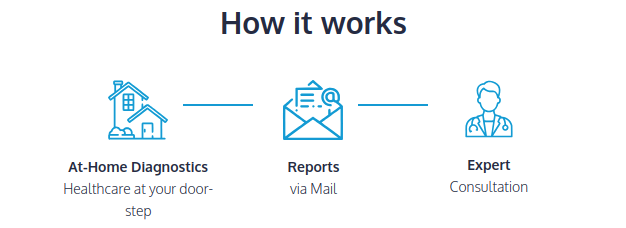
The Double Marker Test (10–13 weeks + 6 days), Triple Marker Test (15–20 weeks), and Quadruple Marker Test (15–22 weeks) are non-invasive maternal serum screening tests used during pregnancy to estimate the risk of chromosomal conditions such as Down syndrome (Trisomy 21), Trisomy 18, Trisomy 13, and certain neural tube defects. These tests are screening tests—not diagnostic tests—and typically cost between ₹900 and ₹5,600 in India.
Double marker test: hCG + PAPP-A, done 10–13 weeks+ 6 days, ₹900–₹1,800 approx.
Triple marker test: AFP + hCG + uE3, done 15–20 weeks, ₹1,000–₹2,900 approx.
Quadruple marker test: AFP + hCG + uE3 + Inhibin-A, done 15–22 weeks, ₹1,600–₹5,600 approx.
All three are blood-only tests, no fasting needed, available at home.
Pregnancy is an exciting journey, but it also comes with important health decisions. One of the earliest steps in prenatal care is screening for certain chromosomal and genetic conditions that may affect your baby.
Double, Triple, and Quadruple Marker Tests are maternal serum screening tests that analyze specific substances in a pregnant woman's blood to estimate the risk of conditions such as Down syndrome (Trisomy 21), Trisomy 18 (Edwards syndrome), Trisomy 13 (Patau syndrome), and certain neural tube defects like spina bifida.
These tests are safe, non-invasive, and require only a simple blood sample. Depending on how far along your pregnancy is, your doctor may recommend a Double Marker Test during the first trimester or a Triple or Quadruple Marker Test during the second trimester.
At MyDiagnostics, you can conveniently book your prenatal screening test with home sample collection, NABL-accredited laboratory testing, and secure digital reports delivered directly to your device.
Book your Double, Triple, or Quadruple Marker Test at Home with MyDiagnostics and receive reliable prenatal screening without visiting a diagnostic centre.
A Double Marker Test is a first-trimester maternal serum screening test that measures free β-hCG and PAPP-A to estimate the baby's risk of Down syndrome, Trisomy 18, and Trisomy 13.
The test measures two important substances present in the mother's blood:
|
Marker |
Full Name |
Why It Is Measured |
|---|---|---|
|
Free β-hCG |
Free Beta Human Chorionic Gonadotropin |
Produced by the placenta. Abnormal levels may indicate an increased risk of chromosomal abnormalities. |
|
PAPP-A |
Pregnancy-Associated Plasma Protein A |
A protein produced by the placenta. Low levels may be associated with chromosomal disorders and adverse pregnancy outcomes. |
These blood test results are combined with:
Maternal age
Gestational age
Maternal weight
Ethnicity
Smoking status (if applicable)
Whether the pregnancy was conceived naturally or through IVF
Nuchal Translucency (NT) ultrasound measurement
Together, these factors generate a combined risk score rather than a simple positive or negative result.
The Double Marker Test estimates the likelihood of:
Down syndrome (Trisomy 21)
Edwards syndrome (Trisomy 18)
Patau syndrome (Trisomy 13)
It may also provide information that helps identify pregnancies requiring closer monitoring for certain placental complications, although its primary purpose is screening for chromosomal abnormalities.
It is important to understand that the Double Marker Test is a screening test—not a diagnostic test. A high-risk result does not mean the baby definitely has a genetic condition. Instead, it indicates that further evaluation may be recommended.
Many parents wonder whether the Double Marker Test and Dual Marker Test are different.
Both names refer to the same prenatal blood test. The terms are used interchangeably by hospitals, laboratories, and healthcare providers.
The Double Marker Test is usually combined with a Nuchal Translucency (NT) ultrasound, performed between 10 and 13 weeks + 6 days of pregnancy.
The NT scan measures the amount of fluid behind the baby's neck. Babies with chromosomal abnormalities often have increased nuchal translucency.
When the blood test is combined with the NT scan, the screening accuracy improves significantly compared with either test alone. This combination is often referred to as the Combined First Trimester Screening Test.
According to the American College of Obstetricians and Gynaecologists (ACOG) Practice Bulletin No. 226 (2020), developed in collaboration with the Society for Maternal-Fetal Medicine (SMFM), first-trimester combined screening using maternal serum markers and nuchal translucency ultrasound detects approximately 82–87% of pregnancies affected by Down syndrome, depending on gestational age, maternal characteristics, and ultrasound quality.
The timing of the Double Marker Test is critical because the levels of PAPP-A and free beta-hCG change rapidly during pregnancy, and it is usually paired with an ultrasound scan (NT scan) in the same first-trimester window.
This screening tool measures beta hCG alongside PAPP-A to estimate the chance of certain chromosomal abnormalities. The results are then interpreted with maternal age, gestational age, ultrasound findings, and other factors to give a risk estimate. It is important to remember that this is not a diagnostic tool, so it cannot confirm a condition on its own.
|
Pregnancy Week |
Recommendation |
|---|---|
|
10 weeks |
Earliest recommended |
|
11–13 weeks |
Ideal testing period |
|
13 weeks + 6 days |
Last recommended day |
|
14 weeks or later |
Not recommended |
The best time to undergo the Double Marker Test is between 10 weeks and 13 weeks + 6 days of pregnancy, with the NT scan performed during the same period.
The test is validated only during the first trimester. After approximately 14 weeks, the concentrations of PAPP-A and free β-hCG no longer provide the same predictive value, making the screening significantly less accurate.
For this reason, laboratories generally do not recommend performing a Double Marker Test after the first-trimester screening window has passed.
Missing the first-trimester screening window does not mean prenatal screening is no longer possible, since the Double Marker Test is validated for early pregnancy screening.
Your obstetrician may recommend:
Triple Marker Test (15–20 weeks)
Quadruple Marker Test (15–22 weeks)
Non-Invasive Prenatal Testing (NIPT), if clinically appropriate
The choice depends on your gestational age, medical history, and your healthcare provider's recommendations, with timing helping support early chromosomal risk assessment. When screening suggests a higher risk, your doctor may advise additional diagnostic tests or further diagnostic tests to confirm findings.
Proper timing also improves the predictive value of screening by supporting early detection and timely medical guidance. This is why the Double Marker Test matters most in the first-trimester window, when it can guide the next steps sooner.
The Double Marker Test price in India varies depending on the laboratory, city, accreditation standards, and whether the test is performed alone or combined with an NT scan.
|
Test |
Typical Price in India |
|---|---|
|
Double Marker Test (Blood Test Only) |
₹900–₹1,800 |
|
Double Marker Test + NT Scan Package |
₹3,000–₹6,000 |
Several factors influence the overall cost:
City: Prices are generally higher in metropolitan cities than in smaller towns.
Laboratory Accreditation: NABL, CAP, or ISO-accredited laboratories may charge slightly more due to stringent quality standards.
Home Collection: At-home blood sample collection may include a nominal convenience fee, though many providers offer it free as part of promotional packages.
Bundled Packages: Combining the Double Marker Test with an NT scan or other prenatal investigations can affect the total price.
Choosing a quality-assured laboratory is often more important than selecting the lowest-priced option, as accurate prenatal risk assessment depends on standardized laboratory procedures and proper interpretation.
The Triple Marker Test is a second-trimester prenatal blood screening test that measures AFP, free β-hCG, and uE3 to estimate the risk of chromosomal abnormalities and neural tube defects.
Unlike the Double Marker Test, which measures two blood markers, the Triple Marker Test evaluates three substances in the mother's blood.
|
Marker |
Full Name |
Clinical Importance |
|---|---|---|
|
AFP |
Alpha-Fetoprotein |
Helps assess the risk of open neural tube defects such as spina bifida and anencephaly. |
|
Free β-hCG |
Human Chorionic Gonadotropin |
Used in assessing the risk of Down syndrome and Trisomy 18. |
|
uE3 |
Unconjugated Estriol |
A hormone produced by the placenta and fetus that contributes to the assessment of chromosomal abnormalities. |
Using maternal age and gestational age along with these markers, laboratories calculate the likelihood of:
Down syndrome (Trisomy 21)
Edwards syndrome (Trisomy 18)
Open neural tube defects, including spina bifida
Certain abdominal wall defects in the developing fetus
Like the Double Marker Test, the Triple Marker Test is not diagnostic. It estimates the probability of a condition rather than confirming its presence.
Your healthcare provider may recommend a Triple Marker Test if:
You missed the first-trimester Double Marker Test.
An NT scan was not performed.
First-trimester screening was unavailable.
Additional second-trimester screening is advised based on your pregnancy history.
You begin antenatal care after the first trimester.
Although many women today opt for Non-Invasive Prenatal Testing (NIPT) due to its higher detection rate for common chromosomal conditions, the Triple Marker Test remains an important and widely available prenatal screening option, particularly where NIPT is not accessible or affordable.
The Triple Marker Test should ideally be performed during the second trimester, when maternal serum marker levels provide the most accurate screening information.
|
Pregnancy Week |
Recommendation |
|---|---|
|
15 weeks |
Earliest recommended |
|
16–18 weeks |
Ideal testing period |
|
20 weeks |
Latest recommended |
Most obstetricians recommend performing the test between 15 and 20 weeks, with 16 to 18 weeks considered the optimal window for screening.
|
Feature |
Double Marker Test |
Triple Marker Test |
|---|---|---|
|
Trimester |
First |
Second |
|
Weeks |
10–13+6 |
15–20 |
|
Blood Markers |
2 |
3 |
|
Screens For |
Down syndrome, Trisomy 18, Trisomy 13 |
Down syndrome, Trisomy 18, Neural tube defects |
|
Usually Combined With |
NT Scan |
Not routinely combined with NT |
The Triple Marker Test is not a replacement for the Double Marker Test. Instead, it serves as an appropriate screening option for women who were unable to complete first-trimester screening or who require additional evaluation during the second trimester.
The Triple Marker Test price in India generally ranges between ₹1,000 and ₹2,900, depending on the laboratory, location, and any additional prenatal screening services included.
The final price may vary based on:
City and regional pricing
Laboratory accreditation (NABL, CAP, ISO)
Home sample collection availability
Package inclusions
Consultation or interpretation services
Always choose a trusted diagnostic provider that follows standardized quality protocols to ensure reliable prenatal screening results.
The Quadruple Marker Test (Quad Test) measures AFP, free β-hCG, uE3, and Inhibin-A to provide a more accurate second-trimester screening for Down syndrome and neural tube defects.
Like the Triple Marker Test, it analyzes substances present in the mother's blood. However, it measures four markers instead of three, making it a more comprehensive second-trimester screening option.
|
Marker |
Full Name |
Clinical Significance |
|---|---|---|
|
AFP |
Alpha-Fetoprotein |
Helps detect open neural tube defects such as spina bifida and anencephaly. |
|
Free β-hCG |
Human Chorionic Gonadotropin |
Used to estimate the risk of Down syndrome and Trisomy 18. |
|
uE3 |
Unconjugated Estriol |
A hormone produced by the fetus and placenta that helps assess fetal development and chromosomal abnormalities. |
|
Inhibin-A |
Dimeric Inhibin A |
The fourth marker that significantly improves the detection rate for Down syndrome compared with the Triple Marker Test. |
The laboratory combines these marker levels with important maternal information, including:
Maternal age
Gestational age
Maternal weight
Ethnicity
Presence of diabetes
Number of fetuses (singleton or multiple pregnancy)
Using these factors, a personalized risk estimate is calculated.
The Quadruple Marker Test helps estimate the risk of:
Down syndrome (Trisomy 21)
Edwards syndrome (Trisomy 18)
Open neural tube defects, including spina bifida and anencephaly
Certain abdominal wall defects, such as gastroschisis and omphalocele
Like all maternal serum screening tests, it does not diagnose these conditions. Instead, it identifies pregnancies that may benefit from additional testing.
The primary advantage of the Quadruple Marker Test is the inclusion of Inhibin-A, an additional placental hormone.
Research has shown that adding Inhibin-A improves the screening performance for Down syndrome, increasing the overall detection rate while maintaining a similar false-positive rate.
For this reason, many healthcare providers now prefer the Quadruple Marker Test over the Triple Marker Test when second-trimester maternal serum screening is required.
The test is commonly referred to by several names:
Quadruple Marker Test
Quad Test
Quad Screen
Quadruple Screening Test
These terms all refer to the same prenatal blood test.
The Quadruple Marker Test is performed during the second trimester, after the first-trimester screening window has passed.
|
Pregnancy Week |
Recommendation |
|---|---|
|
14 weeks |
Earliest accepted by some laboratories |
|
15–20 weeks |
Preferred testing period |
|
15–22 weeks |
Widely accepted screening window |
|
After 22 weeks |
Generally not recommended |
Although some laboratories accept samples beginning at 14 weeks, most professional guidelines recommend performing the test between 15 and 22 weeks, with 16–18 weeks often considered the optimal period.
Your healthcare provider may recommend the Quad Test if:
You missed the first-trimester Double Marker Test.
You did not undergo an NT scan.
You present for prenatal care during the second trimester.
You require second-trimester chromosomal screening.
Additional evaluation is recommended based on your medical or pregnancy history.
The Quadruple Marker Test is particularly valuable for women who were unable to undergo first-trimester screening but still wish to receive non-invasive prenatal risk assessment.
The Quadruple Marker Test price in India varies depending on the laboratory, city, accreditation standards, and whether home sample collection is included. The approximate Quadruple Marker Test Cost is ₹1,600–₹5,600.
Several factors influence pricing:
Laboratory quality and accreditation (NABL, CAP, ISO)
Metropolitan versus non-metropolitan cities
Home blood sample collection
Report interpretation services
Additional prenatal screening packages
Because it analyzes four biomarkers, the Quadruple Marker Test is generally more expensive than the Triple Marker Test, but it offers improved screening performance for Down syndrome.
Choosing the right prenatal screening test primarily depends on how many weeks pregnant you are. None of these tests is inherently "better" than another—they are designed for different stages of pregnancy.
If you are within the first trimester (10–13+6 weeks), the Double Marker Test combined with an NT scan is the recommended screening approach.
If you have missed the first-trimester screening window, your obstetrician may recommend a Triple Marker Test or Quadruple Marker Test during the second trimester.
|
Test Name |
Pregnancy Weeks |
Markers Tested |
Screens For |
Approximate Price in India |
|---|---|---|---|---|
|
Double Marker Test |
10–13+6 weeks |
Free β-hCG, PAPP-A |
Down syndrome (Trisomy 21), Trisomy 18, Trisomy 13 |
₹900–₹1,800 |
|
Triple Marker Test |
15–20 weeks |
AFP, Free β-hCG, uE3 |
Down syndrome, Trisomy 18, Neural tube defects |
₹1,000–₹2,900 |
|
Quadruple Marker Test |
15–22 weeks |
AFP, Free β-hCG, uE3, Inhibin-A |
Down syndrome, Trisomy 18, Neural tube defects |
₹1,600–₹5,600 |
|
If You Are... |
Recommended Test |
|---|---|
|
10–13+6 weeks pregnant |
Double Marker Test + NT Scan |
|
15–20 weeks and missed first-trimester screening |
Triple Marker Test |
|
15–22 weeks and require more comprehensive second-trimester screening |
Quadruple Marker Test |
Important: Missing the Double Marker Test does not mean you've lost the opportunity for prenatal screening. The Triple and Quadruple Marker Tests are recommended alternatives during the second trimester—they are not better or worse, simply appropriate for a later stage of pregnancy.
One of the most common misconceptions is that a Double, Triple, or Quadruple Marker Test can diagnose a genetic disorder.
These are maternal serum screening tests, meaning they estimate the probability that the baby may have a particular chromosomal condition or neural tube defect.
|
Screening Test |
Diagnostic Test |
|---|---|
|
Estimates risk |
Confirms whether a condition is present |
|
Non-invasive blood test |
Invasive procedure involving fetal cells |
|
Safe for mother and baby |
Small risk of miscarriage with invasive procedures |
|
Used for all pregnancies |
Usually recommended after a high-risk screening result |
Maternal serum screening remains an important part of prenatal care because it is:
Safe and non-invasive
Affordable compared with advanced genetic testing
Widely available
Helpful in identifying pregnancies that may benefit from further evaluation
Recommended as part of routine prenatal screening for many pregnant women
Current guidelines from the American College of Obstetricians and Gynaecologists (ACOG) recommend that all pregnant women, regardless of age or baseline risk, should be offered prenatal genetic screening and diagnostic testing options after appropriate counselling.
Non-Invasive Prenatal Testing (NIPT) is another prenatal screening test that analyzes cell-free fetal DNA circulating in the mother's blood.
Compared with maternal serum screening, NIPT generally offers:
Higher sensitivity for Down syndrome
Lower false-positive rates
Earlier testing from around 10 weeks of pregnancy
However, NIPT is also a screening test—not a diagnostic test. A positive NIPT result still requires confirmation through diagnostic procedures such as CVS or amniocentesis.
The most appropriate screening strategy depends on your gestational age, medical history, ultrasound findings, and your healthcare provider's recommendations.
MyDiagnostics offers affordable prenatal screening with transparent pricing, certified laboratory testing, and convenient home blood sample collection.
|
Test |
Typical Price |
|---|---|
|
Double Marker Test |
₹900–₹1,800 |
|
Triple Marker Test |
₹1,000–₹2,900 |
|
Quadruple Marker Test |
₹1,600–₹5,600 |
|
Prenatal Screening Packages* |
Price on Request |
Package availability may vary depending on your city and laboratory partner.
Every prenatal screening booked through MyDiagnostics includes:
Home blood sample collection by trained phlebotomists
Testing at NABL-accredited laboratories
High-quality laboratory processing
Secure digital reports
Online booking support
Dedicated customer assistance
|
Feature |
Details |
|---|---|
|
Sample Type |
Blood |
|
Sample Collection |
At Home |
|
Fasting Required |
No |
|
Prescription Required |
May be required based on local regulations or physician recommendation |
|
Report Delivery |
Digital |
|
Turnaround Time |
Typically 2–5 working days* |
Prenatal screening is an important part of routine antenatal care. While Double, Triple, and Quadruple Marker Tests were once primarily recommended for women considered high risk.
Current international guidelines recommend that all pregnant women be offered prenatal genetic screening and diagnostic testing options, regardless of maternal age or baseline risk, after appropriate counselling. This recommendation is supported by ACOG Practice Bulletin No. 226 and the Society for Maternal-Fetal Medicine (SMFM).
The decision to undergo screening should be made after discussing the benefits and limitations with your obstetrician. Your healthcare provider may particularly recommend these tests if you have one or more of the following risk factors.
The risk of chromosomal abnormalities, especially Down syndrome (Trisomy 21), increases with maternal age. Women who will be 35 years or older at the expected time of delivery are generally offered prenatal screening and, when appropriate, counselling about diagnostic testing options.
If you, your partner, or a close family member has a history of chromosomal abnormalities or inherited genetic conditions, prenatal screening may help assess the pregnancy's risk and determine whether further testing is appropriate.
Women who have previously had a pregnancy affected by conditions such as:
Down syndrome (Trisomy 21)
Edwards syndrome (Trisomy 18)
Patau syndrome (Trisomy 13)
Certain neural tube defects
may benefit from additional prenatal screening and individualized counseling in subsequent pregnancies.
If an ultrasound identifies findings such as:
Increased nuchal translucency (NT)
Structural abnormalities
Soft markers for chromosomal conditions
Your doctor may recommend maternal serum screening or more advanced prenatal testing.
Certain maternal conditions may influence pregnancy management, including:
Pre-existing diabetes
Autoimmune disorders
IVF pregnancy
Multiple pregnancy (twins or more)
These factors may affect screening interpretation, and your healthcare provider will determine the most appropriate screening strategy.
Even if you have no known risk factors, prenatal screening remains valuable because many babies with chromosomal abnormalities are born to women without identifiable risks.
According to the American College of Obstetricians and Gynaecologists (ACOG), all pregnant patients should be offered both prenatal genetic screening and diagnostic testing options, regardless of maternal age or risk category.
Receiving your prenatal screening report can understandably feel overwhelming. However, it is important to remember that Double, Triple, and Quadruple Marker Tests estimate risk—they do not diagnose a condition.
Your report should always be interpreted by your obstetrician in combination with your medical history, gestational age, and ultrasound findings.
|
Risk Ratio |
Meaning |
|---|---|
|
1 in 2,000 |
Approximately one pregnancy out of every 2,000 with similar results may be affected. This is generally considered low risk. |
|
1 in 250 |
Depending on the laboratory threshold, this may be reported as high risk, meaning additional testing may be recommended. |
Most laboratories report results in one or both of the following ways:
A low-risk result indicates that your pregnancy has a lower probability of the screened conditions. However, no prenatal screening test can eliminate the possibility of:
Chromosomal abnormalities
Birth defects
Genetic disorders not included in the screening panel
Routine antenatal care and scheduled fetal ultrasounds remain essential.
A high-risk result means the estimated probability is higher than the laboratory's screening threshold. When people hear double marker test results described as "Double Marker Test negative," it usually means a low-risk screening result, not a diagnosis. It does not mean your baby definitely has a genetic condition.
Instead, your doctor may recommend:
Detailed fetal ultrasound
Genetic counseling
Non-Invasive Prenatal Testing (NIPT)
Chorionic Villus Sampling (CVS)
Amniocentesis
Further evaluation helps determine whether additional testing is necessary.
|
Risk Result |
Interpretation |
|---|---|
|
1 in 2,000 |
Lower estimated risk |
|
1 in 1,000 |
Lower estimated risk |
|
1 in 250 |
May be classified as higher risk depending on laboratory cut-off |
|
1 in 100 |
Higher estimated risk |
Blood marker levels are often expressed as MoM (Multiple of the Median). MoM compares your marker level with the expected median value for women at the same stage of pregnancy.
Healthcare providers evaluate:
AFP MoM
Free β-hCG MoM
PAPP-A MoM (Double Marker)
uE3 MoM
Inhibin-A MoM (Quadruple Marker)
The pattern of these values helps estimate the likelihood of specific chromosomal conditions.
Many women who receive a high-risk screening result ultimately deliver healthy babies. Because these are screening tests, false-positive and false-negative results can occur. Your obstetrician will guide you through the most appropriate next steps based on your individual pregnancy.
Your pregnancy deserves reliable laboratory testing and compassionate care. At MyDiagnostics, we make prenatal screening simple, accurate, and convenient by bringing diagnostic services to your doorstep.
Home blood sample collection by trained phlebotomists
NABL-accredited laboratory testing
Accurate maternal serum screening
Digital reports with secure online access
No fasting required
Affordable pricing with transparent costs
Dedicated customer support throughout your pregnancy journey
Whether you need a Double Marker Test, Triple Marker Test, or Quadruple Marker Test, MyDiagnostics offers dependable prenatal screening designed to help you and your healthcare provider make informed decisions.
Book your Double, Triple, or Quadruple Marker Test online with MyDiagnostics today and enjoy convenient home sample collection, trusted NABL-accredited testing, and fast digital reports—all from the comfort of your home.


