Offer
Provide additional details about the offer you're running.
FLASHSALE


Time to read 9 min
Table of contents
Do you know that in India, cardiovascular disease causes around 27% of deaths? Studies suggest that atrial fibrillation detected through ECG screening is present in approximately 4.9% of adults aged 60 years and older.
The heart muscles contract rhythmically and pump blood throughout the body. Tiny electrical impulses manage this rhythm. Heart diseases and abnormal heart rhythms can affect those signals.
If your heart beats too slowly or too fast, it indicates that you have chest pain. To know the actual cause of this problem, doctors recommend an ECG or electrocardiogram test. But do you know what an ECG test is?
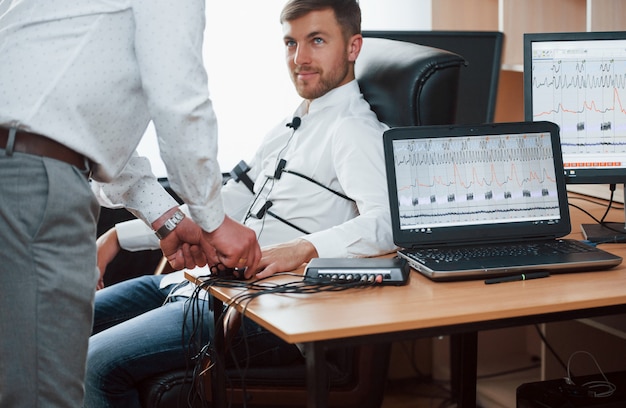
The electrocardiogram, or ECG, measures the electrical activity of the heart and helps to identify cardiac issues. In this test, the technician will cover your legs, arms, and chest with small adhesive and wire leads connected to the ECG equipment. This equipment records the electrical activity of the heart muscle and displays it as a trace on the screen or paper.
The ECG test normal range should be 60 to 100 bpm. If your ECG test results are normal, the doctor will discuss these things with you. To improve the state of the heart, the doctor will suggest you with proper medications.
Concerned about your heart health? MyDiagnostics offers advanced Electrocardiogram (ECG) testing with accurate reporting, experienced technicians, and quick diagnosis support to help detect heart abnormalities early.
We have already mentioned that an ECG is a non-invasive, painless method to assist in the diagnosis of common cardiac issues. It is not an outpatient procedure or a part of the hospital stay.
Benign Early Repolarization (BER) is common in young, athletic men and can lead to ST-segment elevation on an ECG.
However, the steps may vary according to the patient's health and the doctor's procedures. A typical ECG procedure is the following;
The patients need to remove the clothing from the upper body and put on a gown.
Then the patient will lie on a table. In this position, the patient must remain silent and calm throughout the ECG to prevent changes to the trace.
The technician will attach the electrodes to the chest, arms, and legs and connect the lead cables and electrodes.
Once the leads are connected, the technician will enter the patient's identification information into the machine's display.
Now the ECG will start, and the tracing will be completed within a short time.
Once the tracing is finished, the technician will remove the leads and electrodes, and the patient can put on their clothes.
The American Heart Association explains that electrocardiograms are important tools for detecting abnormal heart rhythms, heart attacks, and other cardiac conditions.
If you consider the purpose of the ECG test, it is one of the key heart tests used to assess the heart's electrical activity and overall heart function. The common purposes of ECG tests include;
To measure the accurate heart rate, whether it’s fast or slow
To measure the heartbeat rhythms, whether they are regular or irregular
To identify conditions involved with the electrical signals of the heart, and to help with screening or monitoring over time in people with risk factors such as a family history of heart disease
Measure the size and position of the heart’s chambers
Measure the strength and timing of the electrical signals in the heart
To detect heart issues like inflammation of the heart, heart attack, cardiac arrest, and abnormal heart rhythm.
Detects cardiomyopathy, a condition where the heart muscle weakens and enlarges. This condition affects the pumping efficiency.
Various techniques can be used to perform the electrocardiogram test. Small electrodes and sticky sensors are attached to the patient's arms, legs, and chest to perform the test.
The electrodes are wired together to an ECG recording device. Before the test, the patient can eat and drink as usual. The exam requires only a few minutes.
Different types of ECG tests include;
Resting ECG: This is a standard 12-lead ECG used to record the heart’s electrical signals at one point in time. In this test, your doctor will ask you to lie down, and you can’t move, as the electrical impulses from other muscles interfere with the test. The doctor will attach electrodes to your chest, arms, and legs during the test to record the heart’s electrical activity.
Exercise stress test: This type of ECG lets the doctor understand how the heart responds to physical exertion. In this ECG process, you need to walk on a treadmill. This test helps to notice if exercise triggers any abnormal heart rhythms or changes in your ECG that wouldn’t be seen during a resting ECG.
Event monitor: In this particular ECG process, you need to wear a device and activate it when you experience heart palpitations or chest pain. You need to press the button on the device to record your heart rhythm, which can help capture an irregular heartbeat that may not appear on a routine lead ECG. It will help your doctor determine the cause of your symptoms.
Holter monitor: In this process, you have to wear a portable ECG device for 24 to 48 hours. By wearing this device, you can even continue your daily activities. This test helps to identify intermittent heart issues that may not appear during a short resting ECG, and doctors may use it with other tests when they need a more complete picture of symptoms that come and go.
The World Health Organization highlights that cardiovascular diseases are the leading cause of death globally, emphasizing the importance of early heart screening and diagnosis.
A doctor may recommend the EKG test based on your symptoms and medical history, and healthcare providers may also use it to evaluate abnormal results or abnormal ECG results in the right clinical context.
A feeling of the heart racing, fluttering, thumping, or palpitations
Fatigue
Chest pain
Shortness of breath
Fainting
Lightheadedness
Nausea
ECG testing also supports early detection, which can allow timely intervention and better long-term heart health outcomes.
Common ECG abnormalities include signs of arrhythmias, conduction blocks, and myocardial ischemia, which can be identified through specific changes in the waveforms and intervals on the ECG printout.
According to doctors, the normal heartbeat should range between 60 and 100 bpm. However, normal ECG values are considered normal in context, because ECG baselines vary across populations with differences in sex, age, anatomy, hormones, and overall body size. The normal ECG results vary in men and women.
The normal PR interval ranges from 120 to 200 milliseconds, indicating the time it takes for electrical impulses to travel from the atria to the ventricles. The QRS duration, which represents the time for ventricular depolarization, should be less than 100 milliseconds in women and less than 110 milliseconds in men.
QT interval readings usually range from 324 to 441 milliseconds in healthy adult males, and corrected QT (QTc) intervals are typically shorter in men than in women.
For adult males, the normal PR interval ranges from 120 to 200 milliseconds (ms).
The normal heart rate range for adult males is 60 to 100 beats per minute (bpm).
In men, the normal ECG result should range between 49 and 100 bpm, and in women, it should range from 55 to 108 bpm.
In men, the P wave duration is generally less than 130 ms, and in women, it is also typically under 130 ms; this wave represents atrial activation.
The normal QRS duration for males is less than 100 ms, indicating effective ventricular contraction.
The P-wave axis should range from -29 to 85 degrees in men, and in women, it should range from -18 to 81 degrees.
Some normal variants exist in men, including early repolarization with a normal st segment pattern or mild ST elevation, especially in young athletic males; higher ST elevation is also often seen in this group and may be a benign finding.
Anatomical differences, such as greater muscle mass in the left ventricle, can produce higher voltages and slightly longer QRS patterns in males.
ECG tests are commonly used to screen for underlying heart issues or monitor heart conditions over time, especially in patients with risk factors such as a family history of heart disease.
ECG tests are commonly used to screen for underlying heart issues or monitor heart conditions over time, especially in patients with risk factors such as a family history of heart disease. Some significant benefits of the electrocardiogram test are;
For people with certain heart diseases, an ECG helps to monitor progress accurately.
This test helps to diagnose coronary artery disease.
ECG tests provide improved diagnostic accuracy and reliable test results that help doctors make detailed treatment plans, and ECG findings can also point to common ECG abnormalities that need follow-up interpretation.
The ECG test is time-efficient as it takes only a few minutes.
ECG test is painless and non-invasive.
ECG test is generally safe and has minimal risks.
This test allows doctors to identify different heart conditions like coronary artery disease, arrhythmias, conduction blocks, and ischemic changes, including st segment depression.
An ECG test shows how well medications and therapies control the heart rhythm or function.
ECG test is inexpensive, hence, it’s an accessible option for many patients.
Findings such as atrial fibrillation, heart failure patterns, or an abnormal ECG should be interpreted along with symptoms and the rest of the clinical picture.
Some potential risks associated with an electrocardiogram test are;
Limited information: While an electrocardiogram provides valuable information about the heart’s electrical activity, it may not offer an accurate picture of the cardiac function. A single ECG does not always provide a complete picture and may need other tests.
False positives or negatives: An electrocardiogram may yield false positives or negatives that lead to misinterpretation of results. It can happen due to various factors like technical issues, patient movement, or electrolyte imbalances, which may contribute to an abnormal ECG.
Overutilization: In some cases, there may be risks of overutilization of EKGs that lead to unnecessary testing, healthcare costs, and potential anxiety.
Dependency on timing: Electrocardiograms capture the heart’s electrical activity at a specific point in time. They may not detect transient or intermittent abnormalities that do not coincide with the test period. Any unclear EKG test results should be reviewed by healthcare providers rather than interpreted in isolation.
ECG testing is a vital diagnostic tool that helps to identify and treat cardiac diseases. It takes only a few minutes to complete.
ECG testing is a vital diagnostic tool that helps identify and monitor various heart conditions, including arrhythmias, coronary artery disease, and abnormal heart rhythms. The test is quick, painless, non-invasive, and widely used for early heart disease detection.
At MyDiagnostics, advanced Electrocardiogram (ECG) testing is performed using modern diagnostic equipment under expert supervision to ensure accurate and reliable results. Early ECG screening and timely medical consultation can play an important role in protecting long-term heart health.
If you experience symptoms such as chest pain, fainting, shortness of breath, or irregular heartbeat, consult your healthcare provider and consider a timely cardiac evaluation.
The normal ECG value is 60 to 100 beats per minute.
A good ECG result is 60 to 100 bpm.
In an electrocardiogram result, a normal ECG shows the key components in expected ranges, so you should check the P wave, QRS complex, ST segment, T wave, QT interval, rhythm, and heart rate. The P wave represents atrial activation, and a normal sinus rhythm usually has upright P waves in leads I and II. A U wave may appear after the T wave, and a normal U wave can be a healthy variant. Sinus arrhythmia can also be a normal finding, while atrial fibrillation lacks distinct P waves and may cause an irregular heartbeat. Abnormal findings should be interpreted with medical history and a healthcare provider, especially when symptoms or high blood pressure are present.
An electrocardiogram is generally safe and has minimal risk.
** Medical Disclaimer * - The following information is for educational purposes only. No information provided on this website, including text, graphics, and images, is intended as substitutes for professional medical advice. Please consult with your doctor about specific medical advice pertaining to your condition(s)*