Offer
Provide additional details about the offer you're running.
FLASHSALE


Time to read 10 min
Table of contents
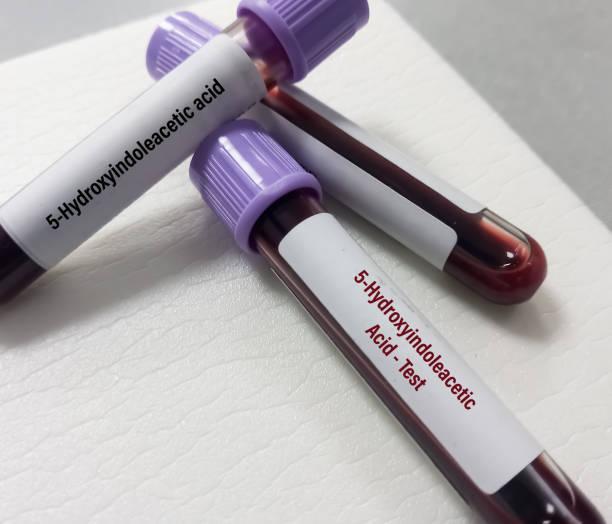
5-HIAA (5-hydroxyindoleacetic acid) is the primary metabolite of serotonin, measured through a 24-hour urine test to assess serotonin production in the body. It is commonly used to help diagnose carcinoid tumors and monitor carcinoid syndrome. Understanding 5-HIAA levels, preparation requirements, and influencing factors is essential for accurate results and early detection of neuroendocrine disorders.
5-HIAA (5-Hydroxyindoleacetic Acid) is the main breakdown product of serotonin, a neurotransmitter that regulates mood, digestion, and blood vessel function.
The 5-HIAA urine test measures how much of this substance is excreted in urine over 24 hours. It is mainly used to help detect Carcinoid Tumors, which can produce excess serotonin.
It’s a simple urine test that helps identify abnormal serotonin levels in the body, often linked to carcinoid tumors and related symptoms like flushing and diarrhea.
5-HIAA (5-Hydroxyindoleacetic Acid) is the primary end product formed when the body breaks down serotonin. 5-HIAA is a metabolite of serotonin, meaning it is produced after serotonin has been used and chemically degraded in the body, mainly in the liver.
The process begins with tryptophan, an essential amino acid obtained from food.
Tryptophan is converted into serotonin through a series of enzymatic steps.
After serotonin performs its role (in mood regulation, gut motility, etc.), it is broken down into 5-HIAA.
This pathway can be summarized as: Tryptophan → Serotonin → 5-HIAA
Once formed, 5-HIAA enters the bloodstream and is filtered by the kidneys, then excreted in urine. Because of this, measuring urinary 5-HIAA provides insight into how much serotonin the body is producing and metabolizing.
The 5-HIAA urine test is clinically important because it serves as a biochemical marker of excess serotonin production, which is a hallmark of certain neuroendocrine conditions.
The test plays a key role in identifying Neuroendocrine Tumors, especially Carcinoid Tumors.
These tumors often originate in the gastrointestinal tract or lungs.
They can produce large amounts of serotonin, far beyond normal physiological levels.
This excess serotonin is broken down into 5-HIAA, which shows up as elevated levels in urine.
When serotonin levels become significantly elevated, patients may develop Carcinoid Syndrome.
Key Symptoms are:
Severe, persistent diarrhea
Skin flushing (especially face and neck)
Wheezing or asthma-like breathing issues
Heart valve damage (particularly right-sided valves)
These symptoms occur because serotonin affects blood vessels, gut motility, and respiratory pathways.
Doctors typically order the 5-HIAA test when:
A patient shows classic carcinoid syndrome symptoms
There is suspicion of a neuroendocrine tumor based on imaging or clinical signs
Monitoring is required for known tumor progression, treatment effectiveness, and recurrence after therapy
Assessing serotonin-related disorders typically involves two approaches: the 5-HIAA 24-hour urine test and the serotonin blood test. Each measures a different aspect of serotonin physiology.
Measures 5-HIAA, the final breakdown product of serotonin.
Requires collecting all urine over 24 hours for accurate quantification.
Most useful for detecting Carcinoid Tumors and Carcinoid Syndrome.
Reflects total serotonin production over time, making it more reliable than single-point tests.
Measures circulating serotonin levels in the bloodstream at a single point in time.
Often influenced by platelet storage, diet, stress, and medications.
Less consistent for diagnosing serotonin-secreting tumors, but it may be used as a supportive or initial test.
|
Aspect |
5-HIAA Urine Test |
Serotonin Blood Test |
|
What it measures |
Serotonin metabolite (5-HIAA) |
Active serotonin in the blood |
|
Accuracy for NETs |
High (gold standard) |
Moderate / variable |
|
Best use case |
Diagnosing & monitoring Neuroendocrine Tumors |
Supplemental or screening tool |
|
Time frame |
24-hour collection (integrated result) |
Single blood sample (snapshot) |
|
Sensitivity to diet/meds |
Yes (but controlled with prep) |
High (more variability) |
|
Limitations |
Inconvenient collection, dietary restrictions |
Fluctuations, lower specificity |
|
Recommended for |
Strong suspicion of carcinoid syndrome or tumor monitoring |
When a urine test is inconclusive or unavailable |
A 24-hour urine test measures substances excreted in urine over a full day. Instead of a single sample, it captures all the urine produced in 24 hours, giving a more accurate picture of ongoing metabolic processes like serotonin breakdown into 5-HIAA.
To ensure accuracy, the collection must follow a strict protocol:
In the morning, urinate and discard this first sample.
This marks the official start time.
Save every urine sample in the provided container.
Use a clean, dry container if transferring is needed.
Keep the collection container refrigerated or in a cool place during the entire period.
At the same time, the next day, collect one last urine sample and add it to the container.
Return the full collection to the lab as instructed.
Serotonin production and its breakdown into 5-HIAA fluctuate throughout the day. A 24-hour collection:
Captures total serotonin turnover, not just a momentary level
Reduces the impact of temporary spikes from diet or stress
Improves detection of conditions like Carcinoid Syndrome and Neuroendocrine Tumors
This makes it far more clinically reliable than a single urine or blood sample.
Errors in collection can significantly affect results:
Missing even one sample → leads to inaccurate (usually low) results
Including the first void by mistake → distorts timing
Improper storage (not refrigerated) → can degrade the sample
Spilling or incomplete transfer → reduces total volume accuracy
Incorrect timing (not exactly 24 hours) → affects interpretation
Accurate 5-HIAA test results depend heavily on proper preparation. Certain foods and drugs can artificially raise or lower 5-HIAA levels, leading to false positives or misleading results.
Some foods are naturally rich in serotonin or its precursors, which can temporarily increase 5-HIAA excretion in urine.
Bananas
Walnuts
Pineapple
Avocados
Kiwi
(Also often restricted: tomatoes, eggplant, plums)
These foods can elevate serotonin metabolism, causing false-positive results even in people without any underlying condition.
Avoid restricted foods for at least 48–72 hours before and during the test. Continue dietary restrictions throughout the full 24-hour urine collection period. This ensures that measured 5-HIAA reflects internal production, not dietary intake.
Some drugs may cause false positives/negatives.
Drugs that may cause false positives are:
Acetaminophen (paracetamol)
Cough syrups containing guaifenesin
Certain antidepressants (affect serotonin pathways)
Drugs That May Cause False Negatives:
Some medications can suppress serotonin metabolism, lowering 5-HIAA levels
Caffeine (coffee, tea, energy drinks): can stimulate metabolic activity and interfere with results
Nicotine (smoking, tobacco): may alter serotonin release and metabolism
Disclaimer: Always consult a physician before stopping prescribed medications. Do not stop any prescribed medications on your own.
Understanding a 5-HIAA urine test requires context, lab ranges, clinical symptoms, and possible confounding factors; all matter.
Typical reference range: ~2–15 mg per 24 hours
Some labs use narrower ranges (e.g., 3–9 mg/24 hours)
Differences in laboratory methods and calibration
Variations in population baselines
Dietary and pre-test preparation differences
Low levels are less commonly clinically significant but may indicate:
Reduced serotonin production
May be associated with mood disorders (depression-related serotonin imbalance) and certain neurological conditions
Clinical reliability, sensitivity, and when follow-up imaging or tests are needed:
The 24-hour urine 5-HIAA test has good specificity for serotonin-secreting tumors when properly prepared
Sensitivity is moderate; some tumors may not produce large amounts of serotonin.
If results are elevated or symptoms persist, doctors may recommend:
Imaging studies (CT scan, MRI) to locate tumors
Additional biomarkers (e.g., chromogranin A)
Repeat 5-HIAA testing for confirmation
You should consider testing if you have symptoms suggestive of Carcinoid Syndrome or related conditions.
Symptom-based recommendations and preventive screening:
Frequent skin flushing
Chronic diarrhea without a clear cause
Wheezing or asthma-like symptoms
Unexplained rapid heart rate
Preventive / Clinical Screening:
If there’s suspicion of Neuroendocrine Tumors based on prior tests
Monitoring known Carcinoid Tumors
Follow-up after treatment to check recurrence
Convenience: No need to travel while managing a 24-hour collection
Better compliance: Easier to follow instructions in your own environment
Privacy: Comfortable sample handling at home
Requires multiple visits or strict timing logistics
Less convenient for a full 24-hour urine collection
May increase the chances of collection errors
For a test like 5-HIAA, home collection often leads to more accurate, complete samples.
Here's why you should consider MyDiagnostics's comprehensive test panels:
Reliable Testing: Clinically validated methods for accurate 5-HIAA measurement
Convenient Home Collection: End-to-end support for 24-hour urine sample handling
Fast Turnaround Time: Quick reporting so you can act on results sooner
User-Friendly Booking: Simple online scheduling with clear instructions and support
Visit the MyDiagnostics website
Select the 5-HIAA urine test
Choose home sample collection
Pick a convenient date and time
Confirm booking and receive preparation guidelines
High 5-HIAA levels often indicate excessive serotonin production, commonly associated with carcinoid tumors or carcinoid syndrome. However, certain foods and medications can also cause temporary elevations.
You must collect all urine over 24 hours in a provided container, starting after the first void of the day. Missing samples can affect accuracy, so strict adherence is essential.
Yes, foods like bananas, walnuts, pineapple, and avocados contain high levels of serotonin or its precursors, which can increase metabolites and lead to false-positive results if consumed before the test.
Certain medications like acetaminophen (Tylenol), cough syrups (guaifenesin), and some antidepressants may interfere with results. Always consult your doctor before altering your medication schedule.
5-HIAA testing is primarily used to detect carcinoid tumors and serotonin overproduction in the gut. It is rarely used to diagnose depression, which requires different clinical and neurological assessments.
Results are typically available within a few days after the laboratory receives your completed 24-hour urine sample, depending on the specific testing provider.
The normal range generally falls between 2 and 15 mg per 24 hours. However, reference ranges can vary slightly depending on the laboratory and the specific testing method used.
While severe stress may slightly influence serotonin metabolism, it is not considered a primary cause for the significantly elevated 5-HIAA levels typically seen in medical conditions like carcinoid syndrome.
Serotonin is an active neurotransmitter involved in regulating mood, digestion, and blood flow. 5-HIAA is the inactive byproduct (metabolite) created when the liver breaks down serotonin, which is then expelled in urine.
Yes, both caffeine and nicotine can interfere with the accuracy of the test and are usually restricted for a few days before and during the sample collection. Always follow your lab’s specific preparation guidelines.
***Medical Disclaimer - The following information is for educational purposes only. No information provided on this website, including text, graphics, and images, is intended as a substitute for professional medical advice. Please consult your doctor for specific medical advice regarding your condition(s).