Offer
Provide additional details about the offer you're running.
FLASHSALE


Time to read 6 min
Table of contents
IgE-mediated food allergy is an instant immune reaction when the body produces IgE antibodies against certain foods. It is a high-speed error of the immune system. IgE antibodies trigger mast cell and histamine release. Most food allergy symptoms typically appear within a few minutes to 2 hours after consuming the trigger food. The reaction may range from mild to potentially life-threatening reactions.
An IgE-mediated allergy is an immune response in which the body produces IgE antibodies against a particular food protein, causing symptoms. These are called immediate-type hypersensitivity reactions, as symptoms usually appear within minutes to 2 hours after exposure to the problem food.
The IgE antibodies activate mast cells, leading to the instant release of histamine and some other inflammatory chemicals. These immune reactions are detectable by standard blood tests and skin prick tests, which measure IgE antibody levels.
The initial exposure to the food allergen is considered the silent phase in which the immune system becomes primed to react, even without causing symptoms.
When the body is first exposed to the problematic food protein, antigen-presenting cells (APCs) capture and process the food protein and carry it to the immune cells. They profile it as a potential threat.
In some people, this interaction favors a Th2-skewed immune response, telling B cells to produce IgE antibodies instead of IgG (non-allergic antibodies). This bias is usually influenced by genetics, gut barrier integrity, and microbiome balance.
The newly produced IgE antibodies bind to mast cells like keys waiting for a lock. They embed themselves on the cell surface, making the body sensitized without causing symptoms.
Let's understand how the body becomes prepared for an allergic reaction without causing symptoms yet:
IgE sits on mast cells in tissues and basophils in blood. After that, IgE remains on these cells for weeks to months, acting as extremely specific sensors for that specific food protein.
Symptoms do not occur at this stage because allergens have not yet cross-linked IgE molecules on the cell surface. Mast cells remain stable without cross-linking and do not release histamine and other mediators. The immune system is fully primed in this phase, which means the next exposure to the trigger protein can induce an immediate food allergy reaction.
When the body is re-exposed to the same food, a silent allergy appears as a visible allergic reaction.
When the same food protein enters the body, it bridges two IgE antibodies sitting on the surface of mast cells and basophils. This IgE cross-linking is the perilous switch that warns the immune cells against a true threat.
Cross-linking leads to mast cell degranulation and basophil activation. It releases pre-formed and newly produced inflammatory mediators, mostly histamine, along with leukotrienes, prostaglandins, and cytokines.
These mediators immediately increase blood vessel permeability, smooth muscle contraction, nerve stimulation, and mucus secretion. It leads to classic symptoms of an allergic reaction, including swelling, vomiting, hives, wheezing, and anaphylaxis (severe allergic reaction).
These mediators cause a two-phase allergic response – a rapid histamine-driven reaction followed by a gradual cytokine-mediated inflammatory phase.
Here are the three key mediators:
Histamine: This is the immediate responder released within seconds of mast cell degranulation. Histamine causes immediate itching, swelling, redness, and hives. It increases blood vessel permeability and smooth muscle contraction, driving the instant onset of food allergy symptoms.
Leukotrienes & Prostaglandins: These are the sustainers responsible for longer-lasting inflammation and mucus. Leukotrienes and prostaglandins are the lipid mediators synthesized after activation. They cause excess mucus production, abdominal cramping, bronchoconstriction, and maintain symptoms beyond the initial histamine gush.
Cytokines: These are the signal amplifiers that call in more immune cells for the last-stage response. Cytokines are chemical messengers that recruit eosinophils and other immune cells to the site. It causes the late-phase reactions, making the symptoms persist or cause severe symptoms even when the initial responses seem to settle.
When the body is exposed to an allergenic food. IgE antibodies induce an instant immune cascade. They trigger a system-wide release of inflammatory chemicals that directly influence tissues and organs, causing physical symptoms.
Here’s the table highlighting how immune mediators affect the tissue levels, directly causing the visible symptoms.
Biological Activity |
Physical Symptoms |
Smooth muscle contraction |
Wheezing, coughing, stomach cramps, and chest tightness |
Vasodilation (widening of blood vessels) |
Flushing, hives, and skin redness |
Increased capillary permeability |
Swelling of lips, eyelids, tongue, or throat |
When IgE-mediated mediator release is widespread, it turns a targeted reaction into a whole-body emergency.
Massive release of histamine and other vasodilators leads to a sudden drop in blood pressure due to generalized vasodilation and extreme capillary leakage. It causes fainting, dizziness, or shock.
Simultaneously, mediators trigger smooth muscle contraction in the airways and severe swelling in the throat. This dual effect, airway narrowing and tissue swelling, leads to rapid and difficult breathing.
The combination of circulatory failure and airway obstruction is called anaphylaxis. Oxygen delivery to vital organs may fall within minutes without immediate treatment, causing severe anaphylaxis symptoms.
The immediate phase is when the response occurs within minutes of exposure. It involves rapid symptoms, including hives, swelling, vomiting, wheezing, and flushing. These symptoms may partially resolve after the histamine levels drop. The late phase allergic response is when patients experience recurrent symptoms without re-exposure.
Sometimes, after the initial symptoms resolve, cytokines and chemokines released during the initial phase continue to act. These signals recruit more immune cells to the affected tissues, allowing a late-phase reaction. Symptoms may appear 4-8 hours later.
Eosinophils produce toxic granule proteins and inflammatory mediators that lead to constant swelling, tissue irritation, airway hyperreactivity, and persistent redness and itching.
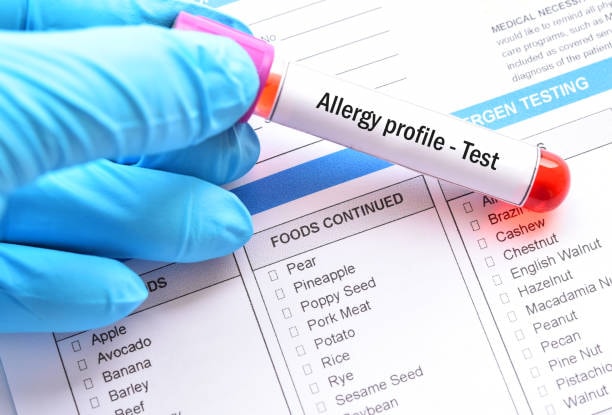
IgE blood testing is the most direct way to measure this cellular priming without risking a reaction. Testing the IgE pathway is the key to diagnosis as it directly assesses whether the immune system is primed for an immediate allergic reaction.
Specific IgE blood tests detect circulating IgE antibodies against specific food proteins. A positive result indicates that mast cells and basophils are already prepared with allergen-specific IgE even when the patient is not reacting currently.
Proper testing detects true immediate-type hypersensitivity, carrying the risk of instant and severe reactions, including anaphylaxis. It allows better avoidance strategies, emergency, and epinephrine preparedness.
IgE-mediated food allergies should be evaluated and managed under the supervision of trained healthcare professionals due to the risk of anaphylaxis.
Book a MyDiagnostics comprehensive IgE allergy panel at an affordable price and get clear insights.
Sensitization is when the immune system produces IgE antibodies to certain foods without any symptoms on exposure. A true allergy is when IgE antibodies cause symptoms such as swelling, wheezing, hives, and anaphylaxis after eating the trigger food.
Throat tightens because histamine and leukotrienes release cause throat tissue swelling and airway muscle contraction. It narrows the airways within minutes.
An IgE reaction can increase your heart rate as histamine release causes instant blood vessel dilation, dropping the blood pressure. It prompts the heart to beat faster to compensate.
***Medical Disclaimer - The following information is for educational purposes only. No information provided on this website, including text, graphics, and images, is intended as a substitute for professional medical advice. Please consult with your doctor about specific medical advice about your condition(s).