




Food Intolerance Test (IgG): Comprehensive 217 Food Allergens Blood Sensitivity Panel
Test Parameters

Uncover the Hidden Triggers Behind Your Symptoms
Persistent bloating, unexplained headaches, stubborn acne, or digestive discomfort after meals are often dismissed as "normal." However, for many, these are signs of hidden food sensitivities—delayed immune reactions that standard allergy tests typically fail to detect.
The Food Intolerance Test (IgG) – 217 Food Allergens Blood Sensitivity Panel by MyDiagnostics is specifically designed to uncover these silent triggers. Using advanced ELISA-based IgG testing, this comprehensive panel analyzes your immune response to 217 commonly consumed vegetarian and non-vegetarian foods. This diagnostic tool helps you identify exactly what your body tolerates and what it doesn't, ensuring you have the accurate results needed to reclaim your health.
Is Your Daily Diet Making You Sick?
Do you feel unwell for hours—or even days—after eating, without being able to pinpoint the exact cause? You aren't alone. Many people struggle with chronic, unexplained symptoms that are actually hidden immune responses to everyday foods.
Common symptoms of food sensitivity include:
-
Digestive Distress: Persistent bloating, gas, or IBS-like issues.
-
Neurological: Migraines, frequent headaches, or "brain fog."
-
Energy & Mood: Chronic fatigue and sudden mood swings.
-
Skin Flare-ups: Stubborn acne, eczema, or unexplained rashes.
Certain foods can be the underlying cause of these symptoms, even if the connection is not immediately obvious.
Patients with chronic, unexplained symptoms are ideal candidates for food intolerance testing.
Most people do not react immediately to food, as seen in classic allergies. Instead, they may be experiencing food sensitivity, also known as IgG-mediated food intolerance. Multiple foods may be involved in triggering these chronic symptoms, making it difficult for patients to identify the culprits without testing.
Why These Symptoms Are Often Missed
Unlike food allergies, reactions to food intolerances are typically delayed. These symptoms usually appear 2 to 72 hours after consumption. This delay is due to the body's immune response to a particular food consumed, which makes it extremely difficult to link symptoms to specific ingredients.
For example:
-
Gluten sensitivity may show up as bloating or fatigue the next day.
-
Lactose intolerance can trigger skin or gut symptoms hours later.
-
Certain spices or proteins may quietly cause inflammation over time.
This is why many people undergo years of trial-and-error dieting without answers. A targeted food sensitivity blood test helps break this cycle by identifying immune reactions that aren’t visible on routine tests like a standard gluten or lactose intolerance test alone.
What Does the Food Intolerance Test Check?
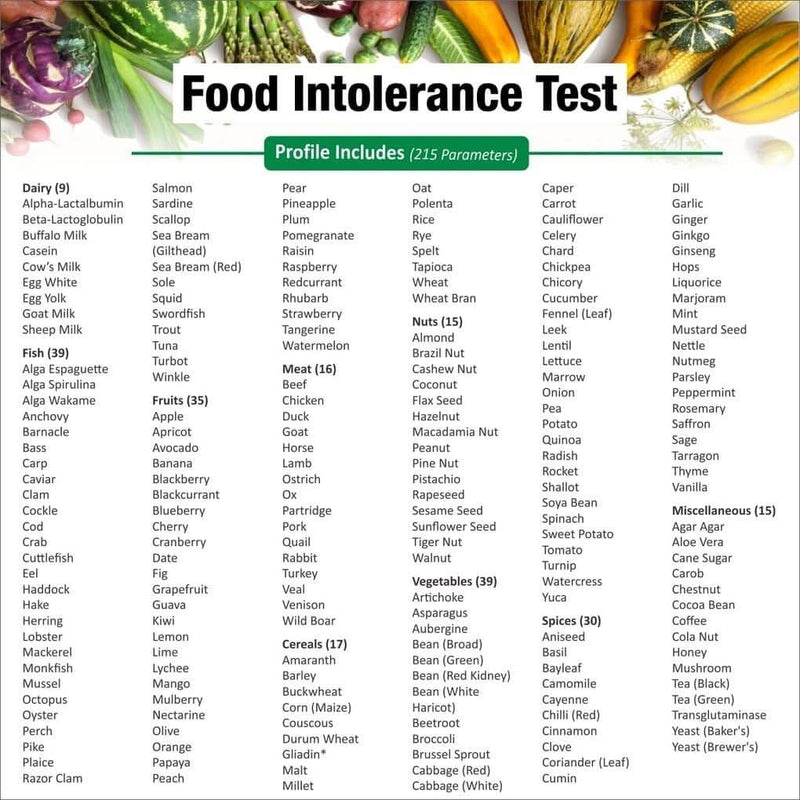
The MyDiagnostics IgG Food Sensitivity Panel tests your blood for immune reactions against 217 foods. This panel is one of the most comprehensive available in India, covering a wide variety of items commonly consumed in Indian households across all major food groups.
The test specifically measures IgG antibodies to detect delayed immune responses that are often missed by standard testing.
Categories of Foods Tested
-
Dairy & Egg: Includes Cow & Buffalo Milk, Cheese, Butter, Yogurt, Casein, Whey, and Egg White/Yolk. These are frequent triggers for bloating, acne, and sinus congestion.
-
Grains & Cereals: Covers Wheat, Gluten, Rice, Oats, Barley, Corn, and Rye. Sensitivity here can cause inflammation and fatigue, even in those without Celiac disease.
-
Non-Vegetarian Foods: Includes Chicken, Mutton, Fish, Prawns, and various seafood. These can contribute to gut inflammation and headaches.
-
Vegetable Proteins, Nuts & Spices: Analyzes Soy, Lentils, Pulses, Peanuts, Almonds, Cashews, and Seeds.
-
Essential Indian Spices: We test common spices like Turmeric, Cumin, Coriander, and Chili. Frequent exposure to these in Indian diets can silently trigger chronic immune responses.

Food Intolerance (IgG) vs. Food Allergy (IgE)
Understanding the fundamental difference between a food intolerance and a food allergy is crucial before choosing the right diagnostic test. While allergies are often well-known, intolerances are frequently the source of "unexplained" chronic health issues.
|
Feature |
Food Allergy (IgE) |
Food Intolerance (IgG) |
|
Reaction Time |
Immediate (minutes to hours) |
Delayed (2–72 hours) |
|
Severity |
Can be life-threatening |
Chronic, low-grade |
|
Common Symptoms |
Hives, swelling, anaphylaxis |
Bloating, IBS, migraines, acne |
|
Test Type |
IgE test |
IgG test |
|
Use Case |
Emergency diagnosis |
Long-term symptom management |
While IgE-mediated allergies are dramatic and easy to identify due to their immediate nature, IgG-mediated food intolerance causes slow, ongoing inflammation. This silent immune response affects your digestion, skin health, and energy levels over time, making it much harder to pinpoint without a specialized 217-marker blood panel

The Science Behind the Test: ELISA Method
The MyDiagnostics panel utilizes the ELISA (Enzyme-Linked Immunosorbent Assay) technique. This is a globally recognized and gold-standard laboratory method specifically designed to measure IgG antibodies in the blood. As a highly precise diagnostic tool, it identifies hidden food sensitivities by detecting specific immune responses to 217 different food antigens.
Why ELISA is the Preferred Method:
-
High Sensitivity & Specificity: It ensures that even low-level immune responses are accurately detected.
-
Individual Food Analysis: The test identifies exact immune triggers rather than broad food groups.
-
Specialized for Delayed Reactions: Unlike other methods, ELISA is perfectly suited for detecting the chronic, delayed IgG responses that cause long-term symptoms.
If you are comparing IgG vs. IgE tests or evaluating the value of a comprehensive panel, the ELISA method provides the deep insights necessary for long-term health and dietary management.
Note on Accuracy: While the ELISA method is highly reliable, factors such as recent dietary habits (e.g., if you haven't eaten a food in months) and sample quality are important for the most accurate results.
How the Food Intolerance Blood Test Works
We’ve designed the process to be simple, convenient, and completely at-home.
Step-by-Step Process
-
Book Online: Schedule your at-home food intolerance test in just a few clicks.
-
Sample Collection at Home: A certified phlebotomist visits your home at your chosen time for a safe and hygienic blood collection.
-
Lab Analysis: Your sample is analyzed using ELISA technology in an NABL / ISO-certified laboratory.
-
Digital Report Delivery: Receive a detailed food intolerance blood test report, categorizing foods as; avoid, rotate, well-tolerated. You will get practical guidance regarding your diet.
Interpreting Food Intolerance Test Results
Understanding your results is the most vital step toward managing your health and making informed dietary choices. Your report provides a clear roadmap of how your immune system reacts to various foods by measuring IgG antibody levels in your blood sample.
Elevated levels of these antibodies indicate that your body may be experiencing immune responses to specific foods, which can lead to symptoms like digestive issues, joint pain, brain fog, and chronic inflammation.
The Traffic Light System: Understanding the Categories
To make your results easy to act upon, we categorize the 217 foods based on your body’s reaction:
🔴 Problematic Foods (High Reactivity): These foods show high IgG levels. Consuming them may trigger significant adverse reactions, including fatigue or skin conditions. It is highly recommended to avoid or significantly reduce these foods to alleviate symptoms.
🟡 Trigger Foods (Moderate Reactivity): These foods cause a moderate immune response. While you may not need to eliminate them forever, rotating or limiting their intake helps manage sensitivities and prevent chronic digestive issues.
🟢 Safe Foods (Low Reactivity): These foods show low IgG levels and are generally well-tolerated. You can include these regularly in your diet without concern.
A Personalized Path to Wellness
For individuals dealing with Irritable Bowel Syndrome (IBS) or chronic inflammation, identifying these triggers through IgG testing can be life-changing. By making targeted dietary changes, you can minimize adverse reactions and improve your overall well-being.
Expert Tip: Interpreting your results is most effective when done in collaboration with a healthcare provider or a professional dietitian. This ensures your dietary modifications are sustainable and tailored to your medical history and lifestyle.
It is important to remember that IgG testing focuses on delayed reactions, which are different from the immediate reactions caught by traditional skin prick tests used for IgE-mediated allergies. In some cases, your healthcare provider may suggest a short-term elimination diet based on your results to confirm which foods are your primary triggers.
Why Choose MyDiagnostics for Food Intolerance Testing?
When identifying food sensitivities, accuracy and expert interpretation are what truly matter. MyDiagnostics offers a gold-standard service for comprehensive food testing in India, ensuring you receive more than just data—you receive a path to recovery.
What Sets MyDiagnostics Apart
-
Clinically Validated Methodology: We use the advanced ELISA technique to ensure highly accurate IgG antibody detection.
-
Medical Oversight: Every report is reviewed by qualified medical professionals to ensure clinical accuracy.
-
Actionable Results: Our "Avoid/Rotate/Safe" classification simplifies complex data into a daily eating plan.
-
Expert Support: Your test includes a complimentary dietitian consultation and elimination diet guidance to help you manage your results effectively.
-
Trusted Pan-India Provider: We are a leading provider of food intolerance tests, serving over 200+ pin codes across India.
We don’t just give you numbers; we help you understand what to eat, what to limit, and how to reintroduce foods safely. Considering the depth of analysis, laboratory transparency, and professional medical review, our food intolerance test price offers unmatched value for anyone dealing with chronic, unexplained symptoms.
Food Intolerance Test Price & Service Locations
Test Price: ₹7,499 (Limited Time Offer)
Service Cities Offered: We provide professional at-home food sensitivity blood test collection in over 200+ pin codes across India. Our primary service cities include; Bangalore, Hyderabad, Chennai, Mumbai, Pune, Ahmedabad, Delhi, Gurgaon, Noida, Ghaziabad, Faridabad, Jaipur, Lucknow, Kolkata, and Chandigarh. Please note that the cost and turnaround time for a food intolerance test may vary depending on your location or city.
Take Control of Your Health Starting with Your Plate
If you have tried everything and still feel unwell after eating, this test may finally provide the clarity you have been looking for.
By identifying your specific food triggers, you can reduce chronic inflammation and build a personalized diet that truly supports your body’s unique needs. Don't let "unexplained" symptoms hold you back any longer.


