Offer
Provide additional details about the offer you're running.
FLASHSALE


Time to read 5 min
Table of contents
Irregular periods are usually caused by hormonal imbalances and associated health conditions such as PCOS and thyroid disorders. Typically, the root cause can be detected with the thyroid function test or a female hormone panel (LH, FSH, estradiol, and prolactin). Early diagnosis is crucial to restore menstrual cycle and reproductive health.
Irregular periods or abnormal menstruation are directly associated with unbalanced hormones and metabolic imbalances that disturb ovulation. The most common causes of irregular periods include PCOS, thyroid problems, chronic stress, nutritional deficiencies, high prolactin levels, and perimenopause.
Persistent irregular menstrual cycles need to be evaluated in a timely manner. It helps recognise underlying causes and plan accurate treatment. Let's dive deep into the causes of irregular periods and diagnostic tests that help identify the root causes and restore women's health.
An irregular period is when a menstrual cycle doesn’t follow a consistent pattern. A normal menstrual cycle usually occurs every 21 to 30 days, and bleeding occurs for 3-7 days. Irregular menstrual cycle is when periods do not happen consistently in this pattern.
Missed periods
Significantly varying menstrual cycles every month
Very short or very long cycles
Abnormal period flow
Bleeding that lasts more than 7 days
Very heavy bleeding
Bleeding after intercourse
Here are the key causes of irregular periods that affect ovulation and the overall health and well-being of women:
PCOS is the most common cause of irregular menstrual cycles. Too much production of androgen indicates PCOS that interferes with ovulation and follicle development. Irregular ovulation causes infrequent, absent, or delayed periods.
Thyroid hormones are directly associated with menstrual cycle regulation. Hypothyroidism involves modified estrogen clearance and slow metabolism that can cause irregular, heavy, or prolonged periods. Hyperthyroidism and thyroid disease usually lead to skipped, lighter, or shorter periods.
Chronic stress triggers the HPA axis (Hypothalamic-Pituitary-Adrenal) that increases cortisol levels. High cortisol levels suppress gonadotropin-releasing hormone (GnRH) from the hypothalamus, which reduces the production of LH and FSH. It leads to delayed or absent ovulation, causing missed or irregular periods.
Perimenopause is the phase before menopause that involves a natural hormonal shift, typically in the late 30s to 40s. Ovarian function becomes inconstant during this phase, causing changes in estrogen and progesterone levels. When ovulation becomes inconsistent, menstrual cycles become irregular.
Hormone balance depends on adequate nutrition, especially iron and vitamin D. Iron deficiency can aggravate irregular cycles and lead to hormonal stress. Vitamin D deficiency is associated with ovulatory dysfunction and hormonal conditions such as PCOS.
Sudden weight changes are responsible for estrogen storage. Quick weight loss can reduce estrogen levels, suppressing ovulation and causing missed periods. Excess weight gain elevates estrogen levels that trouble the hormonal feedback loop and lead to irregular cycles.
High prolactin levels (due to hypothyroidism or pituitary disorders) interfere with ovulation and prevent GnRH secretion. It reduces LH and FSH levels and prevents ovulation, leading to absent, infrequent, or delayed periods.
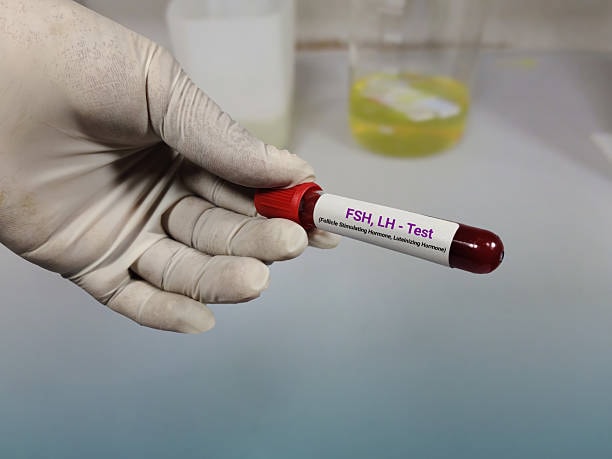
When your periods are inconsistent, hormonal and metabolic tests can help recognise the underlying causes. Here are the gold standard blood tests for irregular periods that are typically considered:
Evaluates ovarian signaling and ovarian reserve.
Abnormal FSH may suggest PCOS, early ovarian aging, or ovarian dysfunction.
Checks for ovulation control.
Elevated LH: FSH ratio is usually associated with PCOS and absent or irregular ovulation.
Assesses standard estrogen levels.
Abnormal estradiol may upset the brain feedback, causing an irregular menstrual cycle.
Detects underactive thyroid or overactive thyroid.
Imbalanced TSH is a common cause of missed, irregular, and heavy periods.
Detects hyperprolactinemia that commonly causes delayed or missed periods.
High prolactin levels suppress ovulation.
Shows ovarian reserve.
Helpful for females with absent or long menstrual cycles.
High AMH is associated with PCOS, and low levels may indicate reduced ovarian reserve.
Look for excess androgen that is particularly helpful if PCOS is suspected.
Excessive androgen interferes with ovulation and normal follicle development.
Analyses insulin resistance, which is a major driver of irregular cycles and hormonal imbalances, especially in women with PCOS.
Check out the comparison table showing different tests, what they detect, and how they are helpful:
Test |
Checks for |
Explanation |
FSH |
Ovarian reserve and signaling |
Unbalanced levels suggest ovulatory dysfunction, reduced ovarian reserve, and PCOS |
LH |
Ovulation hormone |
High LH, FSH ratio indicated irregular ovulation and PCOS |
Estradiol |
Baseline estrogen levels |
Abnormal estrogen interrupts brain-ovary feedback, leading to irregular cycles. |
TSH |
Thyroid function |
Thyroid disorders are associated with irregular, heavy, or missed menstrual periods. |
Prolactin |
Pituitary hormone influencing ovulation |
High prolactin levels suppress ovulation and cause absent or delayed periods. |
AMH |
Follicle count and ovarian reserve |
High AMH is associated with PCOS, and low AMH indicates shorter or irregular cycles. |
Total Testosterone/ Androgen Panel |
Androgen excess |
Raised androgen levels interfere with normal ovulation and follicle development. |
Fasting Insulin/ HOMA-IR |
Insulin resistance |
Detects metabolic causes of hormonal imbalance, particularly in PCOS. |
Experiencing menstrual irregularities or irregular periods? Get precise and reliable answers with a trusted health partner. MyDiagnostics is an accredited diagnostic center offering a range of diagnostic tests for women.
We stand out as a reliable health partner for diagnostic testing as we offer clinical accuracy, reliable results, affordable prices, and customised support. We ensure NABL – certified accuracy and physician-reviewed reports. The results are well presented in a clear format along with reference ranges and clinical interpretations.
Book your female diagnostic test panel now with MyDiagnostics.
Ongoing stress can delay your periods by 2 weeks and even more as it increases cortisol levels in the body. High cortisol disrupts hormonal signaling and suppresses ovulation.
If your blood test report shows an abnormal LH: FSH ratio accompanied by consistently irregular periods.
Occasionally, experiencing irregular periods in your 20s can be due to lifestyle factors, stress, and temporary hormonal changes. Long-term irregularities need to be assessed.
Hormones can be tested while on birth control; the result may not show accurate levels as birth control interferes with LH, FSH, progesterone, and estrogen.
***Medical Disclaimer - The following information is for educational purposes only. No information provided on this website, including text, graphics, and images, is intended as a substitute for professional medical advice. Please consult with your doctor about specific medical advice about your condition(s).