Offer
Provide additional details about the offer you're running.
FLASHSALE


Time to read 9 min
Table of contents
Folic acid is a crucial vitamin that produces healthy red blood cells, allows better cell growth, and improves nerve function. However, too much consumption of folic acid supplements can contribute to some health concerns. The Folic Acid Test (Serum Folate Test) is used to analyze the folic acid levels in your bloodstream through a blood draw.
The folic acid test is performed to determine if your body has an adequate amount of folic acid or not, as a folic acid deficiency may lead to anemia, tiredness, pregnancy-related complications, and various other health concerns, which is why it is important to assess nutritional status.
The folic acid test, usually done along with the vitamin B12 test, specifies:
Folate deficiency
Diagnose megaloblastic anemia
Analyze nutritional level
Ensure proper fetal development during pregnancy
Here’s the key difference between the folic acid serum test and the folic acid blood test:
Common test performed in most laboratories.
Assesses the folate levels in your blood serum.
Identifies folate deficiency.
Checks folate levels.
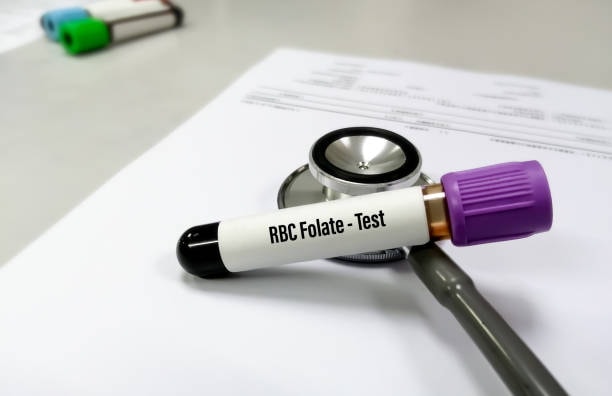
Analyzes folate value inside the RBCs.
Detects long-term folate levels.
A more accurate test to detect true folate deficiency.
Performed less commonly
Here’s the table showing key differences between the serum folate test and the blood folate test:
Characteristic |
Folic Acid Serum Test |
Folic Acid Blood Test |
Purpose |
Measure folate levels in serum |
Measure folate levels in RBCs |
Indication |
Short-term folate levels |
Long-term folate levels |
Accuracy for folate deficiency |
Moderate |
High |
Healthcare professionals usually recommend a folic acid test to determine folate levels and assess your nutritional status in your body. Folate or vitamin B9 is responsible for making healthy RBCs, nerve function, and cell growth.
Generally, doctors recommend a folic acid test for:
Insufficient folate levels in the body can cause immature RBCs, fatigue, pale skin, and shortness of breath.
Generally, the symptoms of folate deficiency include irritability, mouth sores, poor appetite, diarrhea, memory problems, and tingling or numbness.
Folate is extremely crucial during pregnancy for proper fetal development (brain and spinal cord). The test ensures a healthy pregnancy by maintaining adequate levels, which can help prevent birth defects, neural tube defects, and previous pregnancy-related complications.
A folic acid test is also suggested if you have a poor diet, dependence on alcohol, malabsorption issues, digestive problems, or weight loss surgeries, as well as conditions like Crohn's disease.
Here’s a brief explanation of the importance of the folate acid test in pregnancy and the importance of folate before and during pregnancy:
Folic acid is among the most vital nutrients for pregnant women while trying to conceive and during pregnancy. Folate is essential for DNA production. A folic acid test during pregnancy helps maintain adequate folate levels in the body, which is essential for a healthy pregnancy and to prevent folate deficiency-associated complications.
It's important to check folic acid levels in a woman's body while trying to conceive because it helps:
Ensure adequate folate levels in a woman's body before conception.
Prevent neural tube defects (NTD).
Improve fertility and egg health, increasing the chances of conception.
Helps manage risk factors in women with digestive diseases, diabetes, PCOS, and babies with NTD.
A folate test ensures healthy fetal development, especially the brain and spinal cord of the baby, and prevents the risk of neural tube defects.
Low folate levels are associated with high risks of placental problems and early miscarriages, so it can prevent these complications.
Folate deficiency may lead to megaloblastic anemia, causing weakness, breathlessness, and poor oxygen supply to the baby; thus, testing ensures both the mother’s and the baby’s health.
Help doctors determine the right dosage of folate supplementation, especially in women with diabetes, obesity, and certain genetic mutations.
Supports healthy fetal growth as low levels may influence the organ development, growth, and weight of the baby.
Folate is vital for healthy blood cell production, preventing maternal anemia.
Here’s the step-by-step information about the folic acid test:
The blood sample is collected using a sterile needle into a vacuum tube.
The blood sample undergoes centrifugation, which separates the serum that is used for folate evaluation.
Coming to the folic acid test report time, usually the results are available within 24-48 hours.
Typically, fasting is not required for a folic acid test, but sometimes healthcare professionals may consider fasting for better accuracy when blood is drawn. Your doctor or medical professional may ask for fasting in case:
You are on folic acid supplementation.
Other tests are being performed alongside, such as insulin, lipid profile, or fasting blood sugar.
Your healthcare provider's precise evaluation aims to avoid meal-associated fluctuations.
Don’t take folic acid supplementation at least 24 hours before the test.
Don’t consume folate-rich foods before the test.
Fast only if your doctor recommends.
Inform your doctor if you are taking any medications.
Avoid consuming alcohol 24 hours before the test.
Have a normal light meal before the test.
It is the most common folate test, and the normal range is 4 ng/mL – 20 ng/mL.
Less than 4 ng/mL indicates folate deficiency.
Greater than 4 ng/mL indicates sufficient levels
Less than 2 ng/mL indicates a significant deficiency
It is considered more accurate as it shows long-term folate stores. The normal range is between 150 ng/mL to 300 ng/mL.
Greater than 150-200 ng/mL indicates sufficient stores
Less than 150 ng/mL indicates folate deficiency
Low Folate Levels suggest a poor diet, increased requirement, malabsorption, excessive alcohol consumption, hemolytic anemia, or medication interference. Possible symptoms include fatigue, weakness, mouth ulcers, pale skin, irritability, tingling, and numbness, which may also be associated with elevated homocysteine levels.
High Folate Levels are usually associated with recent folic acid supplementation, increased consumption of fortified foods, and liver disease. High levels are not harmful, but in this case, your doctor may recommend a vitamin B12 test to investigate masked B12 deficiency and assess homocysteine metabolism.
Borderline Folate Levels are slightly above the cutoff value. In that case, your healthcare professional may investigate RBC folate, reevaluate your diet, repeat the test if symptoms don’t improve, and order a CBC to investigate anemia.
Here’s the reference table showing the folic acid normal range & interpretation, including the normal value ranges for better understanding.
Test |
Normal Levels |
Low Levels |
Explanation |
Serum Folate Test |
Above 4-5 ng/mL |
Below 4-5 ng/mL |
Poor diet, malabsorption, and pregnancy requirements |
RBC Folate Test |
Above 150-300 ng/mL |
Below 150 ng/mL |
More precise for detecting true deficiencies |
Pregnancy Serum Folate Test |
Above 5-7 ng/mL |
Below 5 ng/mL |
Increased need to prevent neural tube defects |
The folic acid test report indicates your body's folate levels, which help doctors and healthcare professionals understand how your body's folate levels are influencing your health. It further helps maintain normal folate levels, helping your body function properly. The test report usually includes the test value mentioned in ng/mL or nmol/L, reference range, normal, high, or low levels, and clinical interpretation.
Low folic acid levels show folate deficiency that is caused by malabsorption, poor diet intake, too much alcohol consumption, increased requirements during pregnancy, and certain medications.
Normal folic acid levels indicate sufficient folate in the body, which means you are consuming a healthy diet and the right supplementation.
High folic acid levels indicated an accurate folic acid supplementation dosage, proper consumption of folate-rich foods, and fortified foods or vitamin B12 deficiency covered by folate absorption.
Typically, the folic acid test price in India ranges between INR 400 - INR 1500. Advanced methods may cost higher, ranging between INR 3000 - INR 3500. The folic acid test cost varies depending on the type of test, laboratory, diagnostic center, your city, mode of sample collection, offers, and discounts. MyDignostics offers incredible discounts on various health packages promoting a balanced diet.
Here’s the folic acid test price range in various Indian cities:
City |
Price Range |
Delhi, Gurgaon, and Noida |
Starts from INR 480 |
Mumbai |
Starts from INR 1099 |
Bengaluru |
Starts at INR 650 |
Hyderabad |
Starts at INR 399 |
Kolkata |
Starts at INR 650 |
The folic acid level in your body indicates how well your body is making healthy red blood cells. Abnormal folic acid levels may influence various body functions, emphasizing the need for leafy green vegetables.
Megaloblastic anemia involves fatigue, weakness, and dizziness.
Pregnancy complications (risk of neural tube defects, low birth weight, and poor fetal development).
Mouth-related and digestive issues (sore tongue, mouth ulcers, nausea, and poor appetite.
High homocysteine levels are associated with the risk of heart disease, stroke, and blood vessel problems.
May mask vitamin B12 deficiency leading to nerve damage.
Gastrointestinal discomfort, such as bloating and nausea.
Sleep and mood disturbances (trouble sleeping, irritability, or restlessness).
Interact with certain medications (anti-epileptic medicines, cancer drugs, and methotrexate).
Here’s the list of folic acid-related tests:
CBC and vitamin B12 test
Homocysteine levels
Methylmalonic acid test
RBC folate test
Liver function test
Peripheral smear test
The folic acid test checks the amount of folate in your blood that can help detect folate deficiency, anemia, and other health concerns. The folic acid test is a vital test before and during pregnancy as it is extremely essential for fertility, egg health, and fetal development, preventing neural tube defects.
The folic acid test is a simple procedure, and the results are usually available within 24 hours. Abnormal folate levels may be associated with megaloblastic anemia, dietary deficiency, and excessive consumption of folic acid supplementation.
A folic acid test is used to determine the folate levels in blood that help healthcare professionals know how well your body is making healthy red blood cells. The simple blood test can efficiently help diagnose anemia, pregnancy-associated risks, and nutrient deficiencies.
Usually, fasting is not required; however, your healthcare provider may recommend fasting in certain situations.
The normal range for the serum folate test is above 4 ng/mL, and for RBC folate is above 150 ng/mL.
Folate is extremely important for the growth of the fetus and the mother’s health.
Too low folate levels are associated with megaloblastic anemia, pregnancy-related complications, digestive and mouth-related issues, and high homocysteine levels. Too high folate levels can mask the true vitamin B12 deficiency, digestive discomfort, sleep disturbances, and mood disturbances.
Usually, the results are available within 24-48 hours.
Diet can significantly improve low folate levels depending on the severity and causes of the deficiency.
The common symptoms of folic acid deficiency include fatigue, weakness, mouth and tongue concerns, digestive problems, irritability, mood changes, and memory issues.
***Medical Disclaimer - The following information is for educational purposes only. No information provided on this website, including text, graphics, and images, is intended as a substitute for professional medical advice. Please consult with your doctor about specific medical advice about your condition(s).